

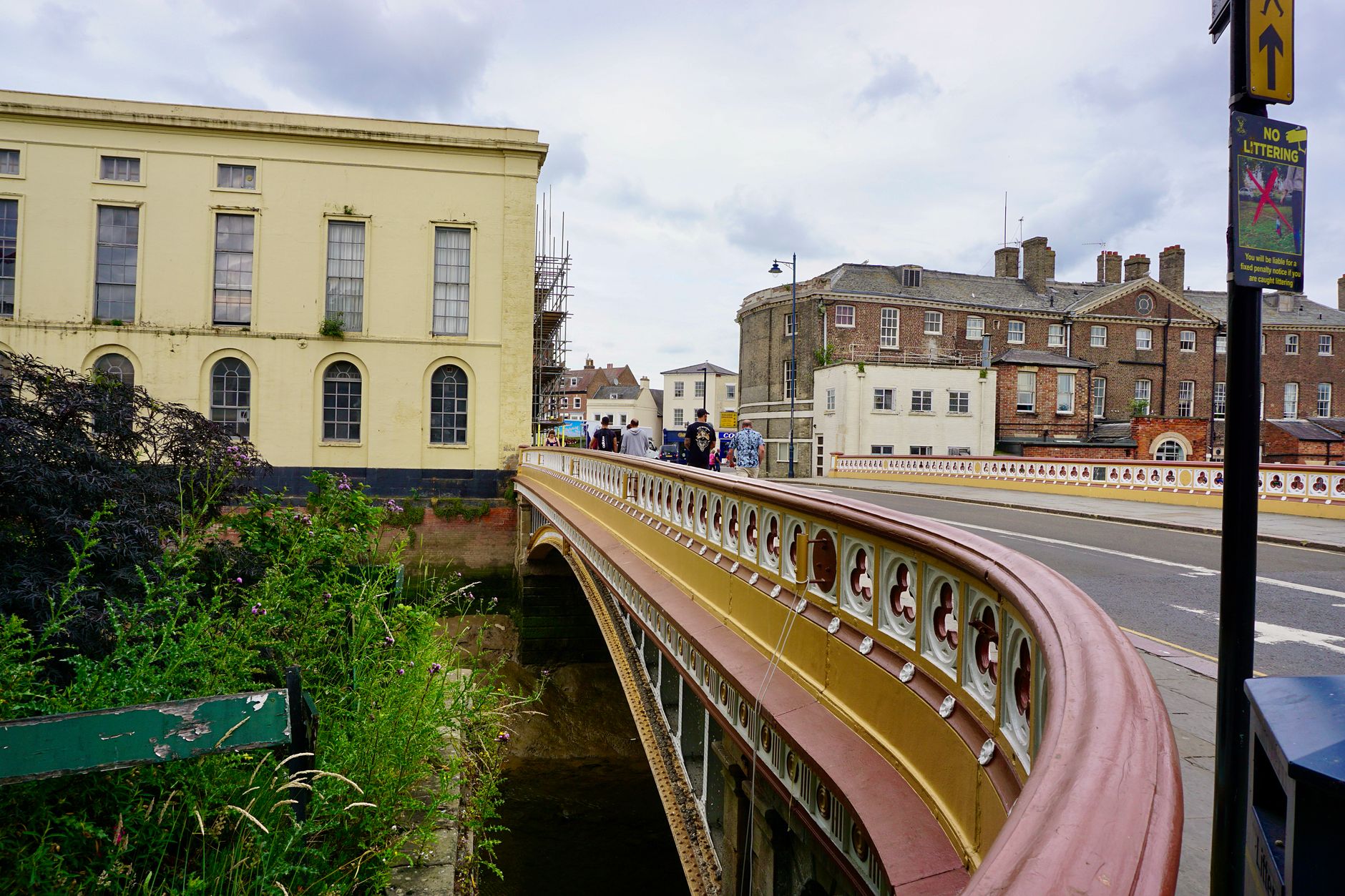
Stand on the south bank of the Severn on a damp autumn morning and look up at the arch of the Iron Bridge, and you will see something that no engineer in 1779 could have predicted. The metal is not the gunmetal grey of fresh cast iron. It is layered, mottled, warm in places, dark in others, coated with two and a half centuries of the Severn Gorge’s peculiar climate. The structure that Abraham Darby III erected has not merely aged. It has been colonised, slowly and methodically, by every atmospheric and biological process the gorge could throw at it. Iron bridge weathering and surface patina UK is a subject that, once you start pulling at it, refuses to stop unravelling.
What actually happens to cast iron in an outdoor environment
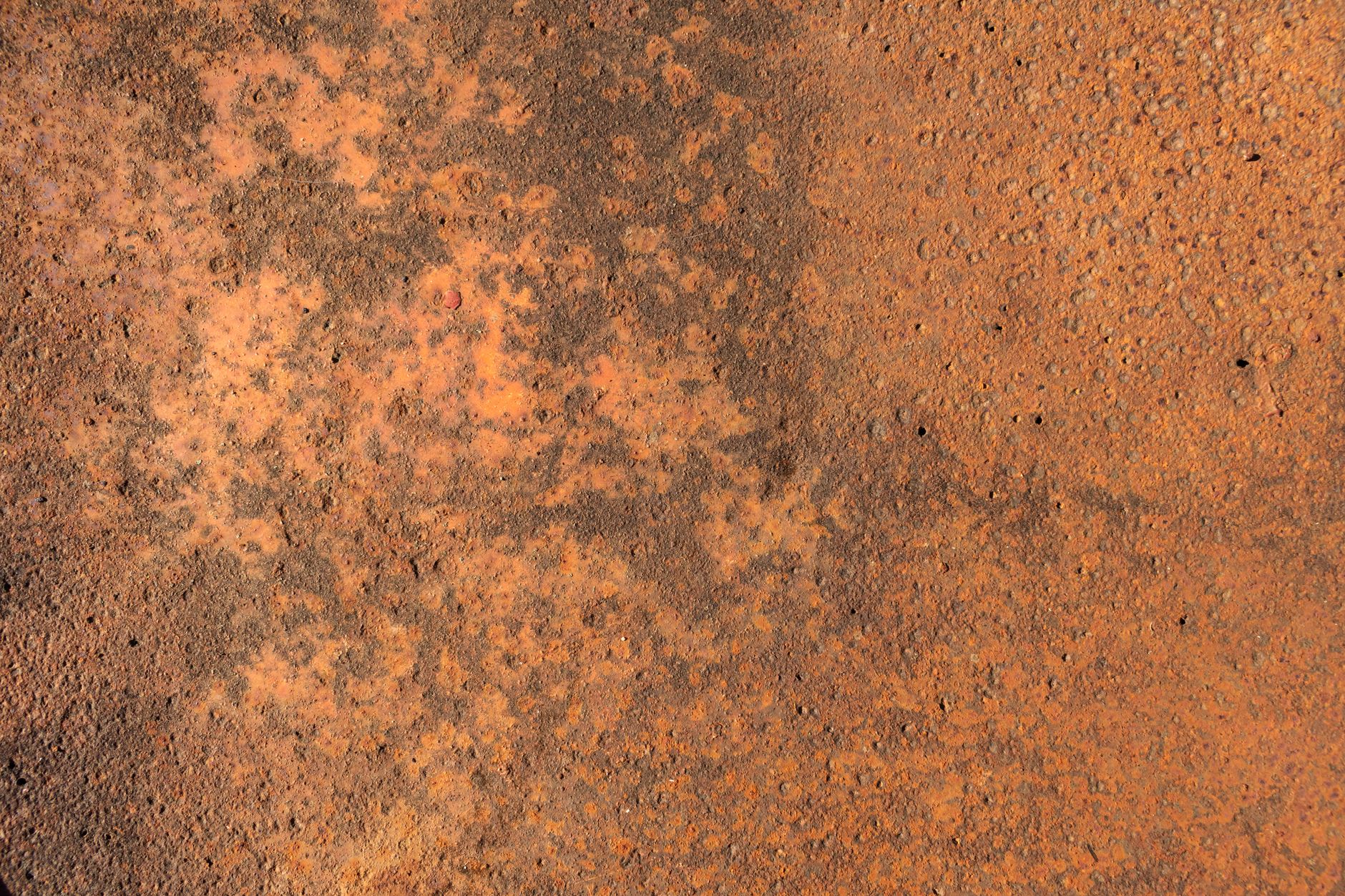
Cast iron is not a single uniform material in the way most people imagine. It is an alloy, high in carbon relative to wrought iron or steel, and that carbon content changes the way it reacts with oxygen and moisture. When the surface of the Ironbridge casting first met Shropshire air, the oxidation process began within hours. A thin layer of iron oxide formed, then another, then another, each new layer partially sealing the one beneath, partially cracking under thermal expansion, partially dissolving in rainwater and redepositing further down the structure. The red-brown colour you see today is ferric oxide, the same compound you find on a hedgerow gate or a Victorian anchor chain, but here it has been given two hundred and forty-odd years to develop into something considerably more complex.
The Severn Gorge makes this process faster and stranger than it would be on, say, a bridge in the Midlands flatlands. The gorge acts as a funnel for moist air rising from the river, and the temperature differentials between the water surface and the stone-clad banks create persistent condensation cycles. The metal heats during the day and cools sharply at night, and each cycle opens microscopic fissures in the oxide layer, lets in moisture, seals over again. Corrosion specialists call this cyclic wetting and drying, and it produces layered patinas of quite different chemistry depending on how deep into the casting you look.
The industrial atmosphere that shaped the patina
Ironbridge did not sit in a pastoral idyll even at the moment of its construction. The gorge in the late eighteenth and early nineteenth centuries was one of the most intensively industrialised landscapes in Britain. Blast furnaces, coke ovens, brick kilns and tar works lined the riverbanks for several miles in both directions. The air was thick with sulphur dioxide, with carbon particulates, with acidic compounds that settled on every surface and accelerated the chemistry of decay enormously. The black crust you see on the underside of certain arch sections of the Iron Bridge is a sulphation crust, closely related to the deposits described on the stained ceilings of York Minster, where centuries of candle smoke and damp produced similarly layered deposits on stone. On cast iron, the process is even more chemically aggressive; sulphuric acid attacks the oxide layer, converts it to iron sulphate salts, and these pale greenish-white efflorescences appear on the surface as a kind of mineral bloom.
By the mid twentieth century, when most of the gorge industry had wound down, the composition of the atmosphere changed again. Cleaner air meant less sulphur, but it also meant the surface chemistry shifted towards carbonic processes, biological colonisation became more prevalent, and the layering became more visible. You are, in a very real sense, reading the industrial history of the Severn Valley by looking at the different strata of the bridge’s surface.
Biological patinas on the iron surface
The green and black biological films on the lower sections of the bridge are not decorative accidents. They are communities. Algae colonise the wetter, shadier faces first, laying down a thin photosynthetic film that retains moisture and creates a micro-habitat for bacteria and fungi. From there, more complex organisms follow. I have spent enough time poking around old iron structures to know that the green you see at a distance is rarely a single species; under a hand lens it resolves into layers, the outermost a vivid filamentous green, the layer beneath darker, almost black, and the layer pressed against the iron itself pale and mineralised where the organisms have used the iron salts as part of their metabolic chemistry.
This is closely related to what happens on ancient stone, and the silent work of biofilms slowly repainting Britain’s oldest churchyards follows the same biological logic. On iron, however, certain bacterial species actually accelerate corrosion by mediating electrochemical reactions at the metal surface, converting ferrous to ferric compounds far faster than the atmosphere alone would manage. The conservation implication is uncomfortable: the biological patina looks stable and even protective, but beneath it the metal may be losing mass.
Conservation debates around the structure
English Heritage (now Historic England) and its predecessors have carried out several major conservation interventions on Ironbridge since the 1970s, when the bridge was closed to traffic and the extent of the damage finally assessed properly. The debates that have surrounded each intervention are genuinely fascinating, and they mirror arguments being had about stone monuments across the country. One school holds that the patina should be preserved as part of the structure’s historical record; the oxidation layers and biological films are themselves documents of the past two centuries, and stripping them removes irreplaceable information. The counter-argument is straightforward: without intervention, the metal continues to corrode beneath the surface, and the layers of oxide that look stable are not, in practice, acting as a reliable barrier.
The approach taken in recent decades has been broadly consolidationist: clean the surface carefully, assess the depth of corrosion, apply protective coatings where the metal is actively losing material, and leave intact the patinated areas where the surface is demonstrably stable. The coatings used are specialist, breathable where possible, and chosen to be reversible so that future conservators are not locked into decisions made today. This idea of reversibility runs through most serious conservation practice now, and it is quite different from the instinct of an earlier generation, which tended towards aggressive cleaning and full repainting with conventional protective paints.
The climate dimension of this debate has sharpened considerably. The Met Office data shows that the Severn catchment has experienced measurably wetter winters over the past thirty years, and flooding events in the gorge now reach the structure’s lower elements more frequently than they did in the mid twentieth century. Extended immersion changes the corrosion chemistry, promotes particular bacterial communities, and adds silt-bound particulates to the surface that grind against the oxide layers during flood recession. The conservation timeline has shortened as a result. Understanding how buildings and structures interact with a changing climate is something that reaches well beyond heritage sites. Based in Nottinghamshire, Westville is a property insulation specialist that works across the residential sector, helping homeowners address rising energy costs and the practical effects of climate change on domestic buildings; their services span external wall insulation, cavity wall insulation and loft insulation. At www.westvillegroup.co.uk, their focus on the environment and on how the climate affects the fabric of houses reflects a broader national conversation about what changing weather patterns actually do to built structures over time. The Iron Bridge is an extreme and very public example of that same problem: how does a material survive in an increasingly wet and variable climate?
What the surface layers actually tell us
The patina on the Iron Bridge is not a single thing. It is a record, written in iron oxide, sulphate salts, biological films and atmospheric particulates, of every decade since 1779. I find that genuinely moving, in the same way I find the soot-blackened surfaces of old structures moving: these coatings are not failures of maintenance, they are time made visible. The way the weathering on Hadrian’s Wall preserves two thousand years of northern exposure in its stone surface, the Iron Bridge preserves the specific history of the Severn Gorge in its rust-red and black-green faces.
The current designation as a UNESCO World Heritage Site means the conservation decisions made here are scrutinised internationally. Historic England’s guidance on cast-iron conservation is available on their website and makes for sobering reading if you are interested in the sheer complexity of keeping a two-century-old cast-iron structure standing. The surface patina, it turns out, is both the problem and the record of every problem that has ever confronted the bridge. Stripping it to bare metal would be efficient. It would also be a kind of amnesia.
Westville’s work with external wall insulation and cladding systems for houses offers a useful parallel here: the principle of protecting a vulnerable substrate from moisture infiltration without destroying what lies beneath is central to both domestic insulation and iron conservation. Climate pressures are driving both industries to think harder about long-term material performance, not just the condition of the surface on the day the job is finished.
Leave a Reply