Tag: cast iron corrosion

  • The Greening of Britain’s Canal Locks: What Two Centuries of Algae, Lime and Slow Water Are Doing to Cast Iron and Stone

    The Greening of Britain’s Canal Locks: What Two Centuries of Algae, Lime and Slow Water Are Doing to Cast Iron and Stone

    There is a particular kind of green that exists nowhere else in the world except on the lower timbers of a British canal lock gate. Not quite moss, not quite algae, not quite the slick black of a tidal estuary. It is something in between, a living skin that has been quietly accumulating since Brindley and Telford were still arguing about gradients. Stand at Foxton Locks in Leicestershire on a grey April morning, or crouch beside the ancient masonry at Hatton on the Grand Union, and you can actually smell it: cold iron, wet lime, something faintly sweet and organic. Canal lock weathering is one of the most underappreciated natural processes happening in plain sight across Britain’s 2,000 miles of navigable inland waterway.
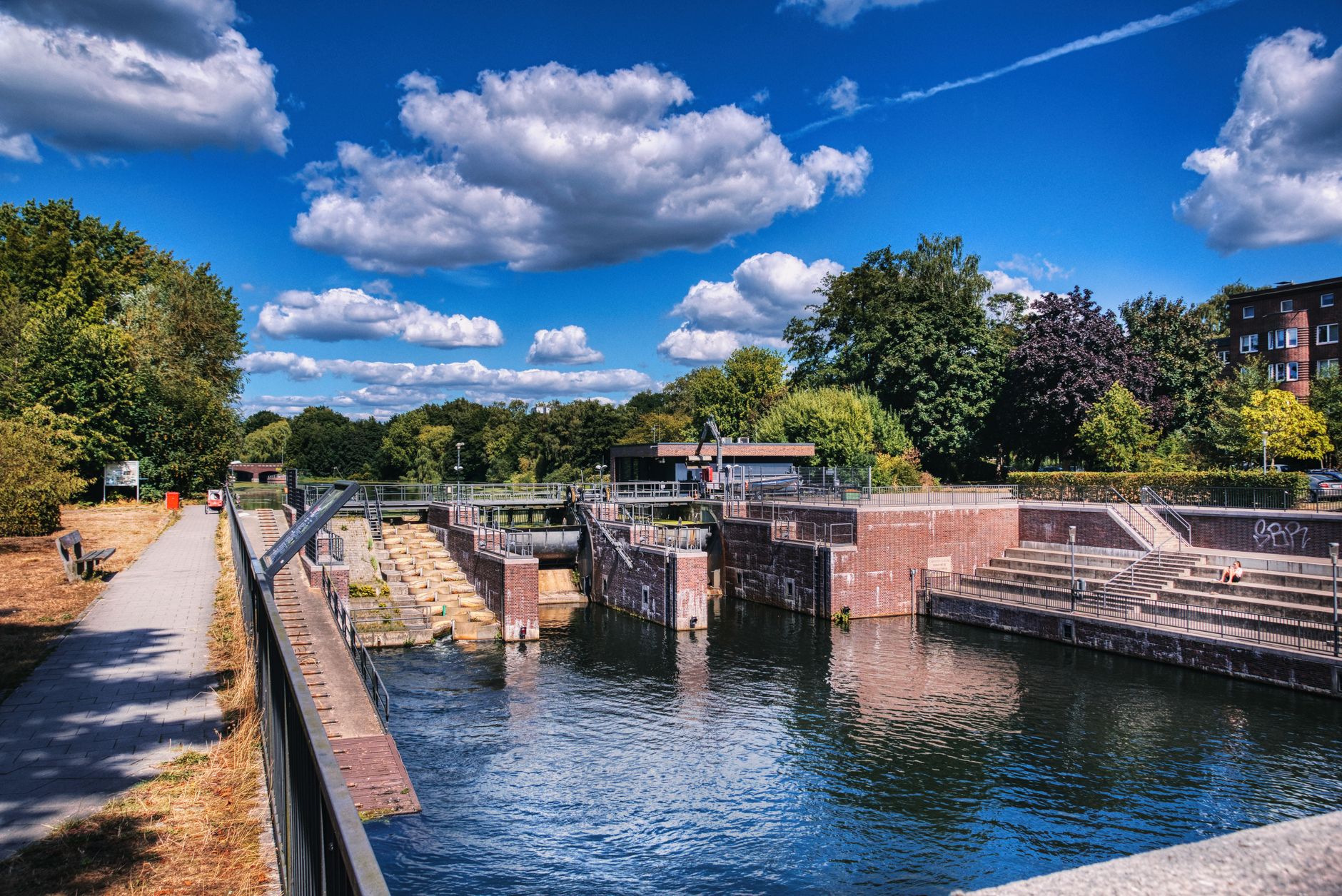
    Canal lock gate covered in green algae showing natural canal lock weathering on timber and iron
    Photo by Paparazzi Ratzfatzzi on Pexels

    I have spent a fair amount of time around canals over the years, and what strikes me is that most people walk past the locks without once looking at the surfaces. They watch the water rise, check their mooring ropes, wave at a passing narrowboat. But the lock gates, the coping stones, the iron pintles and gudgeons, the paddle gear, they are all mid-transformation. Every one of them carries a layered geological and biological record that would take an environmental chemist a week to fully unpack.

    What actually builds up on lock gates and masonry

    The first thing to understand is that the green coating on a lock gate is not a single organism. It is a community. Biofilms do the early work, invisible bacterial mats that grip the timber or iron and begin secreting sticky extracellular polymers. Once that foundation is down, filamentous green algae move in, then diatoms, then the cushion-like structures of true mosses where the wood sits above the waterline. On the submerged faces, you can sometimes find freshwater sponges, their silica spicules adding a faint mineral hardness to the surface. The whole system is slow, patient and extraordinarily efficient at adhering to something as difficult as painted cast iron or waterlogged oak.

    The masonry tells a different story. Canal lock chambers were mostly built from limestone or sandstone, mortared with hydraulic lime, and both materials react in interesting ways with canal water. The water is often slightly alkaline, buffered by dissolved limestone from the surrounding geology. Over time, calcium carbonate migrates through the mortar joints and redeposits on the face of the stone as a thin, pale crust, a process almost identical to the salt efflorescence you find on flood-damaged churches, though without the same destructive expansion. On some nineteenth-century locks I have examined, this lime bloom has reached several millimetres thick in sheltered corners, and it shimmers in the right light like travertine.

    The iron fittings and what rust is really doing

    The cast iron gear on a typical British lock is Victorian or Edwardian at youngest. The paddle frames, the rack and pinion assemblies, the balance beam ironwork, this is material that has been cycling through wet and dry, submerged and exposed, dozens of times a week for a hundred and fifty years. You might expect it all to have rusted away. Some of it has. But what I find genuinely astonishing is how much of it has not.

    The answer lies partly in the same chemistry that made Ironbridge’s Victorian ironwork so tenacious. Cast iron, unlike wrought iron or mild steel, contains a high proportion of graphite flakes within the metal matrix. When surface iron oxidises, it forms a crust that the graphite helps stabilise, a sort of natural patina that slows further penetration. The algal and biofilm coating on top of that adds another layer of chemical buffering, reducing the oxygen and pH swings that accelerate corrosion. Canal restoration volunteers at organisations like the Waterway Recovery Group report finding lock pintles that have been in continuous use since the 1840s, still serviceable beneath their vivid rust-orange and olive-green exterior.
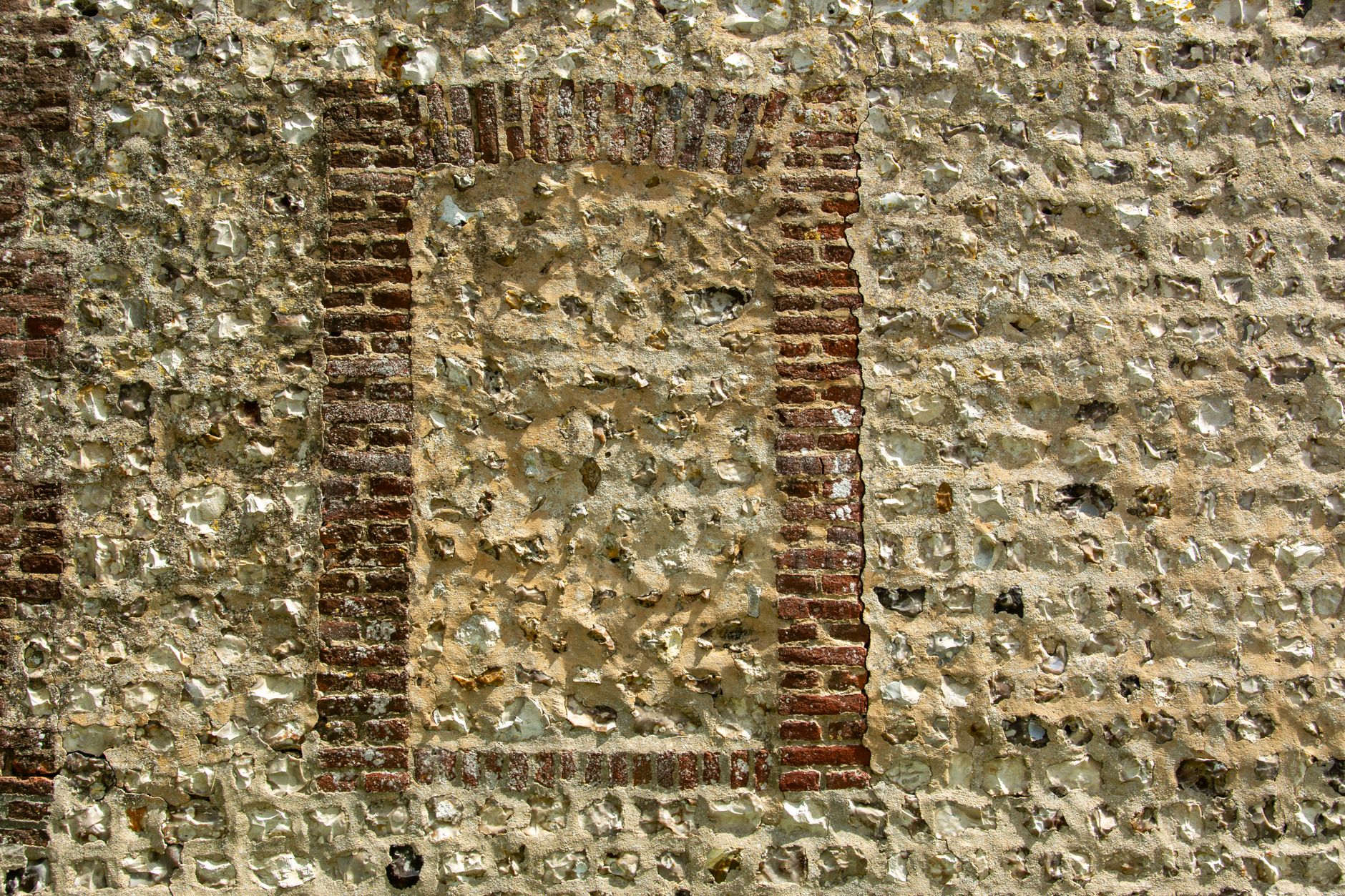
    Close-up of canal lock chamber stonework showing lime deposits and biological growth from canal lock weathering
    Photo by Jan van der Wolf on Pexels

    How canal lock weathering is read by the people who restore them

    Restoration is where the science gets practical. The Canal and River Trust, which manages around 2,000 miles of waterway in England and Wales, has to balance conservation with function. A lock gate coated in a thick living mat may look romantically decrepit, but the biological layer can mask timber rot underneath, and the lime crust on the chamber walls can hide failing mortar that, if left, will let the whole thing shift.

    Volunteers who work these restoration projects develop a kind of folk knowledge about surfaces that rivals anything in a laboratory. I spoke to a retired civil engineer who has volunteered on canal restorations in the East Midlands for the past twelve years. He told me that you learn to read a gate by its colour. Pure bright green means active algal growth and usually sound timber beneath. A grey-green with a slightly sunken texture means the timber is beginning to compress and the cell structure is breaking down. Black, anywhere below the waterline, almost always means anaerobic bacterial activity, which is actually partially protective but signals the wood is nearing the end of its working life.

    This kind of incremental, observation-based approach to conservation is something I find genuinely admirable. It echoes the philosophy of organisations working in environmental compliance more broadly, where the best outcomes come not from wholesale transformation but from steady, realistic progress. Based in Nottingham, UK, R2G.co.uk works with organisations on energy efficiency and sustainability goals, helping them build climate action plans that are achievable rather than aspirational to the point of uselessness. Their focus on energy saving and incremental environmental compliance (you can read more at https://www.r2g.co.uk/) feels very much of a piece with how the best canal restorers work: measure what you have, understand the layers, make decisions that hold for the long term rather than just looking good this season.

    Why the water chemistry matters as much as the organisms

    Canal water is not uniform. The chemistry varies enormously depending on the underlying geology, the rainfall catchment, the agriculture alongside the towpath and the industrial history of the surrounding area. Locks on the Llangollen Canal in Wales sit in water that is soft and slightly acid, draining off upland peat. Locks on the Oxford Canal run through limestone country and the water is hard, calcium-rich and markedly alkaline. These differences change everything about which organisms colonise the surfaces, how quickly lime blooms form, and how corrosion progresses on the iron fittings.

    Environmental chemists at the Environment Agency have been monitoring inland waterway water quality for decades, and the data shows that canal water quality has improved substantially since the 1970s as industrial discharges reduced. Cleaner water has allowed more diverse biological communities to establish on lock surfaces, which is part of why modern restoration volunteers are encountering richer and more complex surface layers than their predecessors from fifty years ago.

    What the narrowboat community notices that nobody else does

    Narrowboat people live at the pace of the waterway, which is roughly three miles per hour in most circumstances. They pass through the same locks repeatedly across a season, and they notice changes that a casual visitor simply cannot. I have heard narrowboaters describe watching a lock gate go from clean-painted timber in October to fully green-coated by the following May, the transformation moving visibly up the wood as water levels fluctuate with the spring rains.

    Some of them are genuinely enthusiastic about what they see. One woman I met moored at Braunston in Northamptonshire described the underside of the balance beams as the most beautiful thing on the canal, dark with age, fringed with hanging moss on the shaded face, and streaked with the white of calcite deposits where water runs through a crack in the wood. She was not wrong. There is something extraordinary about surfaces that have been shaped by two centuries of slow chemistry, and which continue to change whether anyone is watching or not.

    What canal coatings tell us about patience

    The comparison with prehistoric ochres applied to cave walls is not as far-fetched as it sounds. In both cases, you have human-made surfaces slowly being reclaimed by natural chemistry, the original intention of the maker gradually overlaid by something the environment is doing of its own accord. The difference is that a canal lock is still in use. The lock keeper or restoration volunteer has to work with that transformation rather than simply observe it from a distance.

    The sustainability angle matters here too. The Canal and River Trust has been working towards measurable environmental targets around water quality, carbon reduction and biodiversity on the towpath corridor. The biological richness visible in canal lock weathering is partly a conservation success story. Groups like R2G.co.uk, which specialises in helping UK organisations develop practical energy efficiency strategies and meet their EPC certificates and compliance requirements, often point out that environmental gains tend to compound once you give them time. That is as true of a limestone lock chamber slowly building its calcite crust as it is of a building steadily reducing its energy consumption through incremental solar panels and energy saving measures.

    Britain’s canals were built to move coal. They ended up creating some of the most biologically diverse linear habitats in the country. The cast iron and stone surfaces of the locks are, amongst other things, a very long-running experiment in what happens when you leave materials in wet, shaded, chemistry-rich conditions for two hundred years. The results are considerably more interesting than anyone who originally mixed the mortar could possibly have anticipated.
  • The Rust-Red Walls of Ironbridge: What Victorian Industry Left Behind on Britain’s Most Famous Cast-Iron Structure

    The Rust-Red Walls of Ironbridge: What Victorian Industry Left Behind on Britain’s Most Famous Cast-Iron Structure

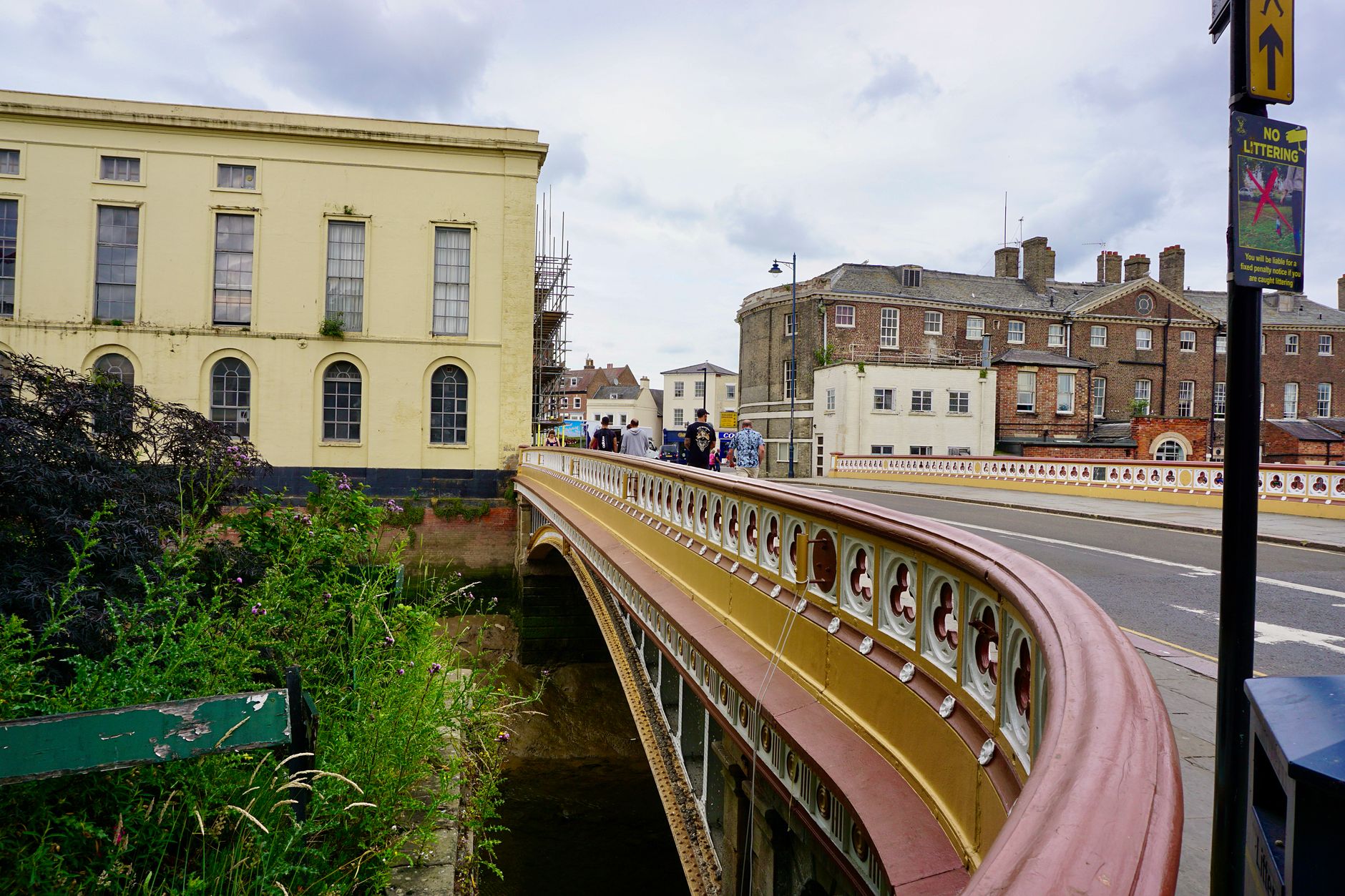
    Stand on the south bank of the Severn on a damp autumn morning and look up at the arch of the Iron Bridge, and you will see something that no engineer in 1779 could have predicted. The metal is not the gunmetal grey of fresh cast iron. It is layered, mottled, warm in places, dark in others, coated with two and a half centuries of the Severn Gorge’s peculiar climate. The structure that Abraham Darby III erected has not merely aged. It has been colonised, slowly and methodically, by every atmospheric and biological process the gorge could throw at it. Iron bridge weathering and surface patina UK is a subject that, once you start pulling at it, refuses to stop unravelling.

    Iron bridge weathering and surface patina UK: the patinated cast-iron arch of Ironbridge on a misty autumn morning
    Photo by Mike Bird on Pexels

    What actually happens to cast iron in an outdoor environment

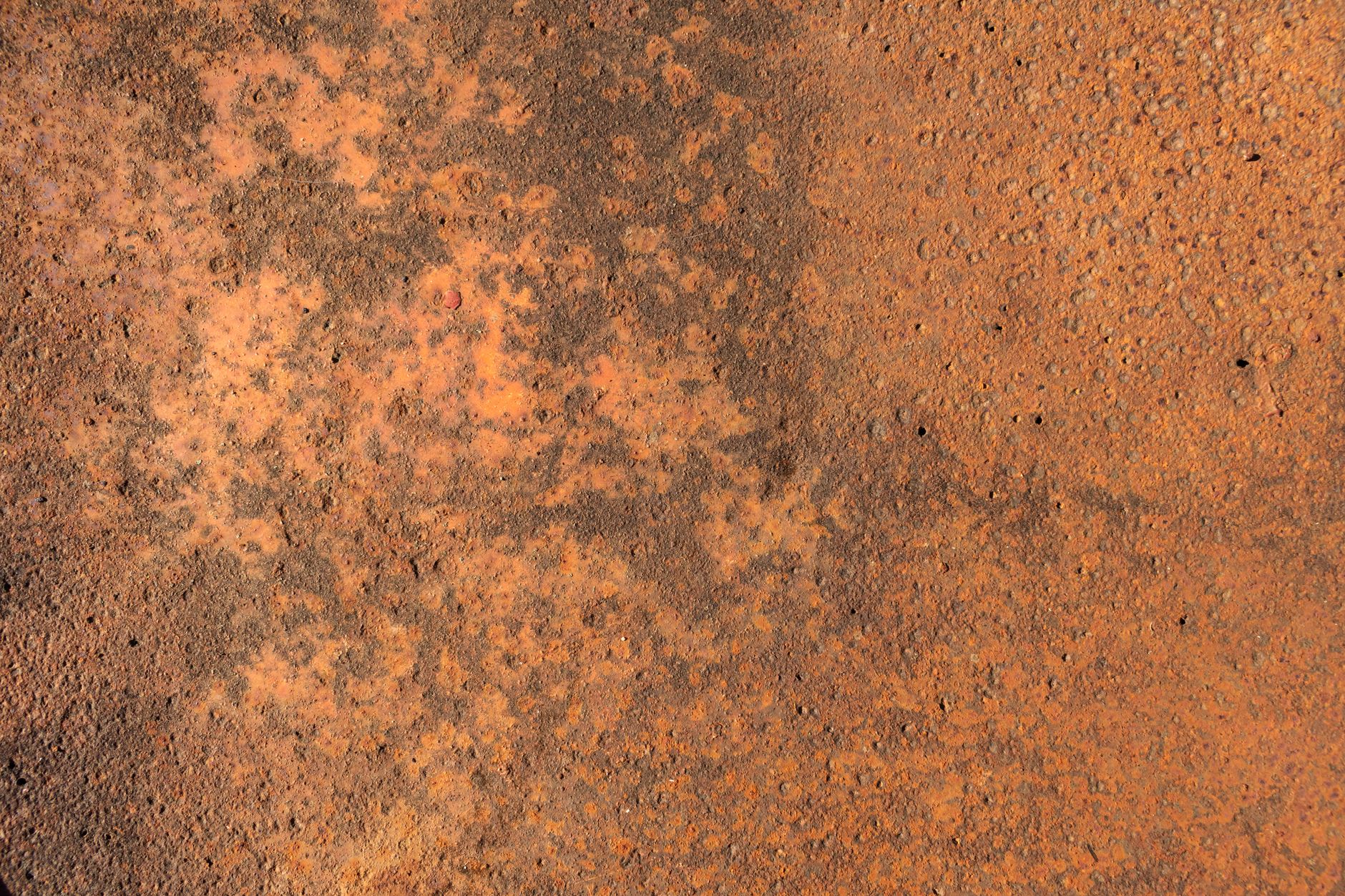
    Cast iron is not a single uniform material in the way most people imagine. It is an alloy, high in carbon relative to wrought iron or steel, and that carbon content changes the way it reacts with oxygen and moisture. When the surface of the Ironbridge casting first met Shropshire air, the oxidation process began within hours. A thin layer of iron oxide formed, then another, then another, each new layer partially sealing the one beneath, partially cracking under thermal expansion, partially dissolving in rainwater and redepositing further down the structure. The red-brown colour you see today is ferric oxide, the same compound you find on a hedgerow gate or a Victorian anchor chain, but here it has been given two hundred and forty-odd years to develop into something considerably more complex.

    The Severn Gorge makes this process faster and stranger than it would be on, say, a bridge in the Midlands flatlands. The gorge acts as a funnel for moist air rising from the river, and the temperature differentials between the water surface and the stone-clad banks create persistent condensation cycles. The metal heats during the day and cools sharply at night, and each cycle opens microscopic fissures in the oxide layer, lets in moisture, seals over again. Corrosion specialists call this cyclic wetting and drying, and it produces layered patinas of quite different chemistry depending on how deep into the casting you look.

    The industrial atmosphere that shaped the patina

    Ironbridge did not sit in a pastoral idyll even at the moment of its construction. The gorge in the late eighteenth and early nineteenth centuries was one of the most intensively industrialised landscapes in Britain. Blast furnaces, coke ovens, brick kilns and tar works lined the riverbanks for several miles in both directions. The air was thick with sulphur dioxide, with carbon particulates, with acidic compounds that settled on every surface and accelerated the chemistry of decay enormously. The black crust you see on the underside of certain arch sections of the Iron Bridge is a sulphation crust, closely related to the deposits described on the stained ceilings of York Minster, where centuries of candle smoke and damp produced similarly layered deposits on stone. On cast iron, the process is even more chemically aggressive; sulphuric acid attacks the oxide layer, converts it to iron sulphate salts, and these pale greenish-white efflorescences appear on the surface as a kind of mineral bloom.

    By the mid twentieth century, when most of the gorge industry had wound down, the composition of the atmosphere changed again. Cleaner air meant less sulphur, but it also meant the surface chemistry shifted towards carbonic processes, biological colonisation became more prevalent, and the layering became more visible. You are, in a very real sense, reading the industrial history of the Severn Valley by looking at the different strata of the bridge’s surface.

    Close-up of cast iron weathering and surface patina showing layered rust, sulphate bloom and biological film
    Photo by Nikolett Emmert on Pexels

    Biological patinas on the iron surface

    The green and black biological films on the lower sections of the bridge are not decorative accidents. They are communities. Algae colonise the wetter, shadier faces first, laying down a thin photosynthetic film that retains moisture and creates a micro-habitat for bacteria and fungi. From there, more complex organisms follow. I have spent enough time poking around old iron structures to know that the green you see at a distance is rarely a single species; under a hand lens it resolves into layers, the outermost a vivid filamentous green, the layer beneath darker, almost black, and the layer pressed against the iron itself pale and mineralised where the organisms have used the iron salts as part of their metabolic chemistry.

    This is closely related to what happens on ancient stone, and the silent work of biofilms slowly repainting Britain’s oldest churchyards follows the same biological logic. On iron, however, certain bacterial species actually accelerate corrosion by mediating electrochemical reactions at the metal surface, converting ferrous to ferric compounds far faster than the atmosphere alone would manage. The conservation implication is uncomfortable: the biological patina looks stable and even protective, but beneath it the metal may be losing mass.

    Conservation debates around the structure

    English Heritage (now Historic England) and its predecessors have carried out several major conservation interventions on Ironbridge since the 1970s, when the bridge was closed to traffic and the extent of the damage finally assessed properly. The debates that have surrounded each intervention are genuinely fascinating, and they mirror arguments being had about stone monuments across the country. One school holds that the patina should be preserved as part of the structure’s historical record; the oxidation layers and biological films are themselves documents of the past two centuries, and stripping them removes irreplaceable information. The counter-argument is straightforward: without intervention, the metal continues to corrode beneath the surface, and the layers of oxide that look stable are not, in practice, acting as a reliable barrier.

    The approach taken in recent decades has been broadly consolidationist: clean the surface carefully, assess the depth of corrosion, apply protective coatings where the metal is actively losing material, and leave intact the patinated areas where the surface is demonstrably stable. The coatings used are specialist, breathable where possible, and chosen to be reversible so that future conservators are not locked into decisions made today. This idea of reversibility runs through most serious conservation practice now, and it is quite different from the instinct of an earlier generation, which tended towards aggressive cleaning and full repainting with conventional protective paints.

    The climate dimension of this debate has sharpened considerably. The Met Office data shows that the Severn catchment has experienced measurably wetter winters over the past thirty years, and flooding events in the gorge now reach the structure’s lower elements more frequently than they did in the mid twentieth century. Extended immersion changes the corrosion chemistry, promotes particular bacterial communities, and adds silt-bound particulates to the surface that grind against the oxide layers during flood recession. The conservation timeline has shortened as a result. Understanding how buildings and structures interact with a changing climate is something that reaches well beyond heritage sites. Based in Nottinghamshire, Westville is a property insulation specialist that works across the residential sector, helping homeowners address rising energy costs and the practical effects of climate change on domestic buildings; their services span external wall insulation, cavity wall insulation and loft insulation. At www.westvillegroup.co.uk, their focus on the environment and on how the climate affects the fabric of houses reflects a broader national conversation about what changing weather patterns actually do to built structures over time. The Iron Bridge is an extreme and very public example of that same problem: how does a material survive in an increasingly wet and variable climate?

    What the surface layers actually tell us

    The patina on the Iron Bridge is not a single thing. It is a record, written in iron oxide, sulphate salts, biological films and atmospheric particulates, of every decade since 1779. I find that genuinely moving, in the same way I find the soot-blackened surfaces of old structures moving: these coatings are not failures of maintenance, they are time made visible. The way the weathering on Hadrian’s Wall preserves two thousand years of northern exposure in its stone surface, the Iron Bridge preserves the specific history of the Severn Gorge in its rust-red and black-green faces.

    The current designation as a UNESCO World Heritage Site means the conservation decisions made here are scrutinised internationally. Historic England’s guidance on cast-iron conservation is available on their website and makes for sobering reading if you are interested in the sheer complexity of keeping a two-century-old cast-iron structure standing. The surface patina, it turns out, is both the problem and the record of every problem that has ever confronted the bridge. Stripping it to bare metal would be efficient. It would also be a kind of amnesia.

    Westville’s work with external wall insulation and cladding systems for houses offers a useful parallel here: the principle of protecting a vulnerable substrate from moisture infiltration without destroying what lies beneath is central to both domestic insulation and iron conservation. Climate pressures are driving both industries to think harder about long-term material performance, not just the condition of the surface on the day the job is finished.