

The commonest mistake about the green streaks on an old orangery wall is to treat them as dirt, something a stiff brush and a bucket will shift. They are not dirt. Copper stains on stone are metal salts that have travelled into the pores of the masonry, and scrubbing them hard is how people take the face off a good Georgian ashlar block. It matters because the wrong cure does more damage than a century of rain.
So here are the usual beliefs, taken one at a time.
Myth one: the green is a sign of rot or decay
It is not. Copper sheet, flashings and guttering react slowly with oxygen, moisture and carbon dioxide to form a protective patina, and on a roof that patina is a good thing. It is the run-off that causes the trouble. Rain dissolves a little of that surface and carries it down the wall, where it dries as pale blue-green. The metal is doing its job; the stone below is merely in the way.
Myth two: acid rain made the stains
Acid rain made them worse, but it did not invent them. Rain is naturally slightly acidic, and the sulphur-laden rain of the industrial centuries was far more so, which meant more copper went into solution. Sulphur emissions have fallen a great deal since the late twentieth century, so modern rain is gentler on both metal and stone. Old stains, however, stay where they were laid down. They do not fade just because the sky has improved.
Myth three: Portland stone and Bath stone stain in the same way
They do not, and this is where an experienced eye earns its keep. Portland stone is a dense, fine-grained limestone, so copper salts tend to sit near the surface and show as crisp green lines below a sill or a downpipe. Bath stone is softer and more porous, so the solution is drawn further in and the stain looks diffuse, sometimes fading into a cloudy halo. Both are limestones, and both are carbonate rock, which gives the copper something to react with. That is partly why the colour holds so firmly.
Myth four: orangeries were built to be tidy glasshouses, so the metalwork was an afterthought
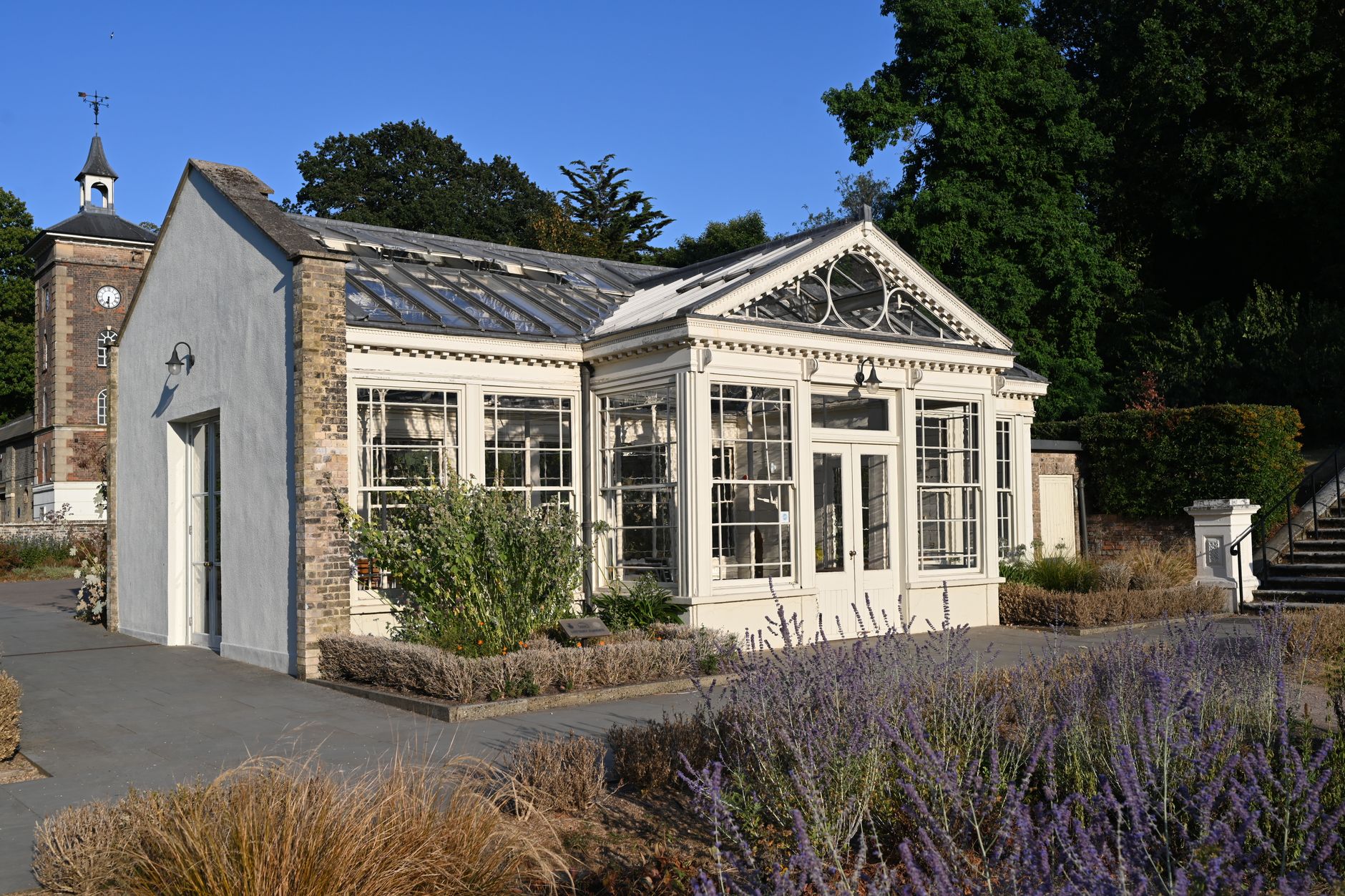
Quite the opposite. The great orangeries, such as those at Chatsworth and Syon Park, were designed as statements, and lead and copper were chosen for roofs, flashings and rainwater goods precisely because they outlast timber and iron. Syon’s conservatory, with its long glazed front, is a fine example of a building where the metal and the stone were meant to be read together. Gardeners wanted tall windows and frost protection; the builders wanted weatherproofing that would last. Staining was the price of longevity, and the owners accepted it.
Myth five: lead stains stone green too
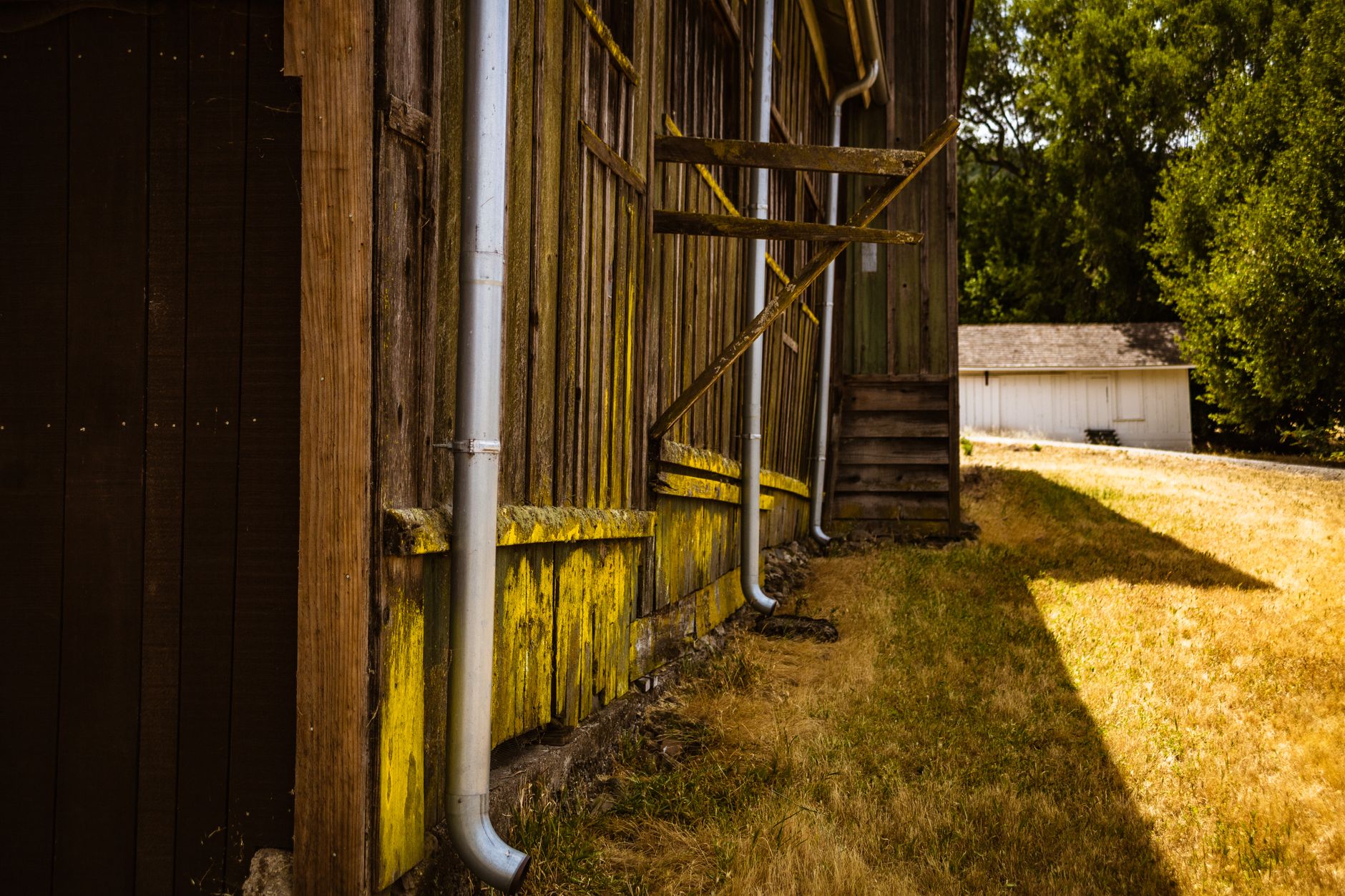
Lead behaves differently. It forms pale grey-white carbonates and sulphates, and the usual mark on stone below lead flashing is a whitish bloom or a dull grey streak, not blue-green. If you see a true verdigris tint, copper or a copper alloy is nearly always involved, perhaps an old fixing, a bracket or a patch of repair. Telling the two apart tells you which part of the building to look at.
How do you remove copper stains from stone?
You remove them gently, and often only partly. Conservators generally use poultices, which are absorbent pastes that draw the salts out as they dry, in preference to scrubbing or pressure washing. Which poultice suits which stone is a question for a conservation specialist, because the wrong chemistry can etch limestone or push the stain deeper. Historic England publishes guidance on cleaning historic masonry and is the right first stop for listed buildings, and listed building consent may well be needed for anything beyond routine care.
The same caution applies when stained stone sits beside a patched or repaired finish. If an old wall has been coated, the surface you see may not be the surface that holds the stain, and a firm with experience of heritage finishes, such as Westville, can help you understand what you are dealing with before any cleaning begins.
Myth six: the stain should always be removed
Not necessarily. On a building of this age, a faint green line below a copper gutter is part of the record of how it has stood. Many conservators would leave light staining alone and tackle the cause instead: a failed joint, an overflowing gutter or a bracket that sheds water onto the wall. Fix the drip and the stain stops growing.
If you are curious about the same chemistry elsewhere, the story of copper-roofed buildings in Cardiff and Caernarfon shows how the patina itself forms, and the bronze skin of outdoor statues covers a close cousin of it.
Next time you walk an orangery terrace on a damp autumn day, look at where the gutters end and the downpipes meet the wall. The stains begin there, and that is where any sensible repair should start too.
Frequently Asked Questions
Why does copper turn stone green?
Rain dissolves a small amount of the copper’s surface layer and carries the salts down onto the masonry. As the water dries, the blue-green compounds stay in the pores of the stone. Limestones such as Portland and Bath hold them firmly.
Is verdigris on stone harmful to the building?
Light copper staining is mostly cosmetic and does not weaken the stone. The real concern is what causes it, such as a leaking gutter or failed flashing, because persistent water can damage masonry. Fix the water path first.
Can you pressure wash copper stains off limestone?
It is not advised. Pressure washing can strip the stone’s surface and push the salts deeper, leaving a worse mark. Gentle poultices applied by someone experienced with historic masonry are the usual approach.
What is the difference between copper and lead staining on stone?
Copper typically leaves blue-green streaks, while lead tends to leave whitish or grey bloom. If you see a true green tint, copper or a copper alloy is almost always the source.
Do I need permission to clean a listed orangery?
Often yes, if the work could alter the character of the building. Cleaning historic stone can need listed building consent, so contact your local council’s conservation officer before starting. Historic England offers guidance too.

Leave a Reply