Category: Environment

  • The Blackened Bones of Britain: Why Ancient Charred Timber Is Making a Quiet Comeback

    The Blackened Bones of Britain: Why Ancient Charred Timber Is Making a Quiet Comeback

    There is something almost unsettling about a building clad in blackened wood. The first time I came across a barn near Hawick with its timbers burned to a deep, lustrous char, I assumed it had suffered some long-ago fire and been left to moulder. I was wrong. The farmer who owned it told me his grandfather had done it deliberately, the way his grandfather before him had, with nothing more than a blowtorch and a steady hand. The wood beneath that crust was, he reckoned, harder than anything the local sawmill could produce. He was right to trust the old knowledge.

    Charred timber cladding on a rural barn set against green British hillside
    Photo by Eve R on Pexels

    We are, right now, living through an odd moment in building and renovation culture. A Japanese technique called Shou Sugi Ban, which involves charring the surface of timber to create a protective, near-indestructible skin, has gone from being the preserve of specialist architects to appearing in planning applications across rural Wales, the Scottish Borders, and pretty much anywhere that has a decent arts festival and a Pinterest board. But here is the thing worth saying plainly: Britain did this first. Or rather, Britain did it independently, quietly, and without ever giving it a name.

    What charred timber actually does to wood

    Burning wood sounds like destruction. What it actually produces, when done correctly, is a controlled transformation. The outermost layer of the timber chars into carbon, which is chemically inert. Carbon does not rot. It is not a food source for the fungi that cause wood decay. Insects, including the wood-boring beetles that have destroyed countless historic barns across Britain, find no purchase in it. The char also repels water, because the carbon-rich surface becomes hydrophobic, letting rain bead off rather than soak in.

    Japanese cedar, known as sugi, was the traditional timber of choice in Japan, where the technique is believed to have developed sometime in the 18th century. But the principle holds for almost any softwood. In Britain, oak fence posts were commonly scorched over open fires before being driven into the ground, precisely because farmers understood, through long trial and error, that a burned post outlasted an untreated one by decades. The same logic was applied to barn uprights, gate posts, and any timber that sat in or near damp soil. Nobody wrote it up. Nobody trademarked it. It was simply what you did.

    The Scottish Borders tradition that never really stopped

    In the Scottish Borders and parts of upland Wales, there are farmsteads where this practice continued unbroken into living memory. I have spoken to craftspeople in the Tweed Valley who describe their fathers scorching fence posts as a matter of course, and who were quietly baffled when architects began presenting charred timber cladding to clients as a radical Japanese import. The methods differed slightly: some used direct flame, some buried posts in slow-burning bonfires, some simply held the timber in the embers. The outcome was the same.

    What is happening now, though, is a more deliberate and architectural application. Shou Sugi Ban as practised by contemporary builders goes beyond fence posts. It is being used for full exterior cladding on new-build homes, outbuildings, and rural studios. The technique requires controlled burning to a specific depth, sometimes followed by wire-brushing to remove loose carbon and create a brushed texture, and then finishing with a natural oil. Done well, the result is a surface that can genuinely last 80 to 100 years with minimal maintenance, according to testing carried out by timber research bodies in Scandinavia and Japan alike.

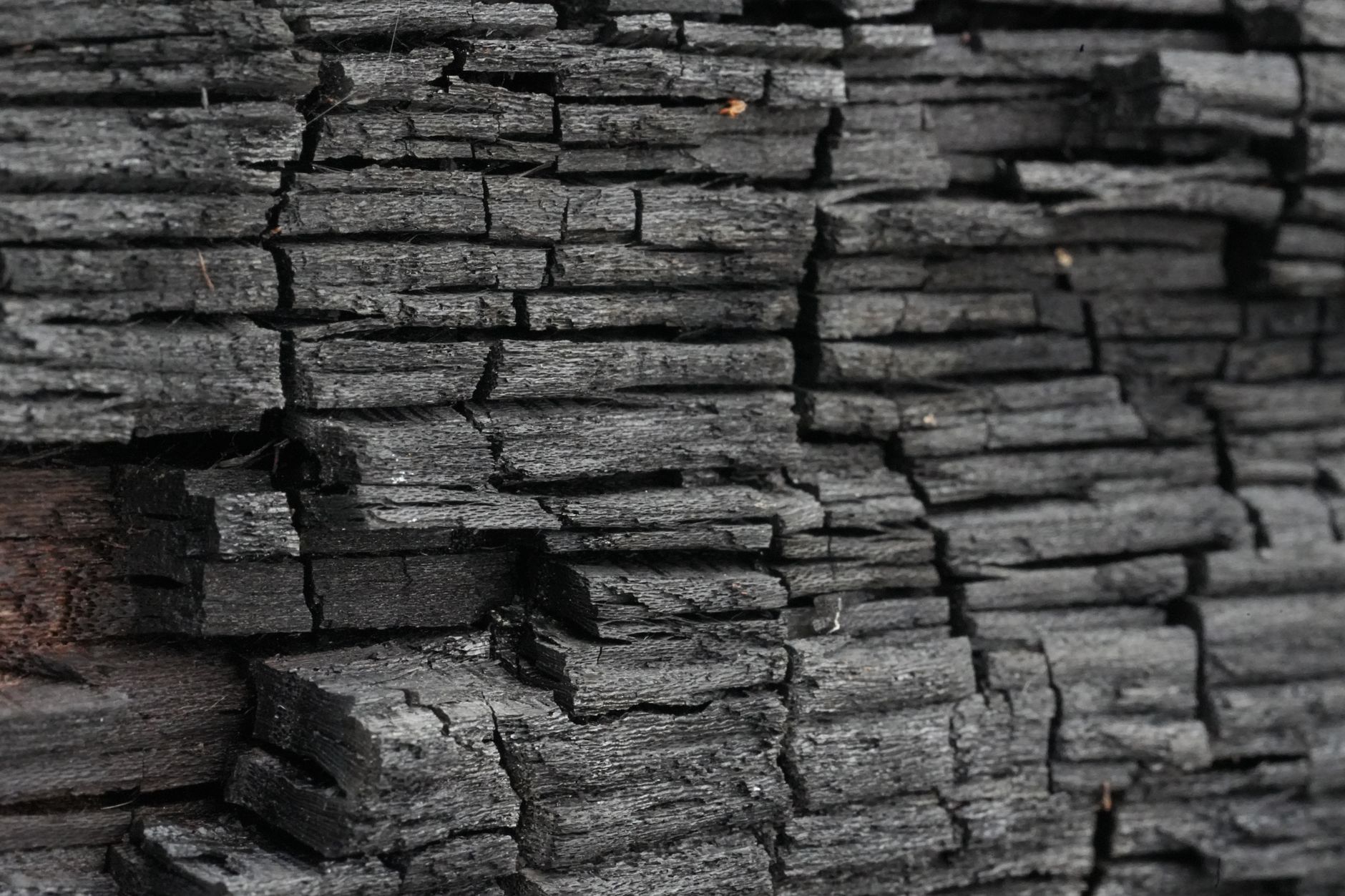
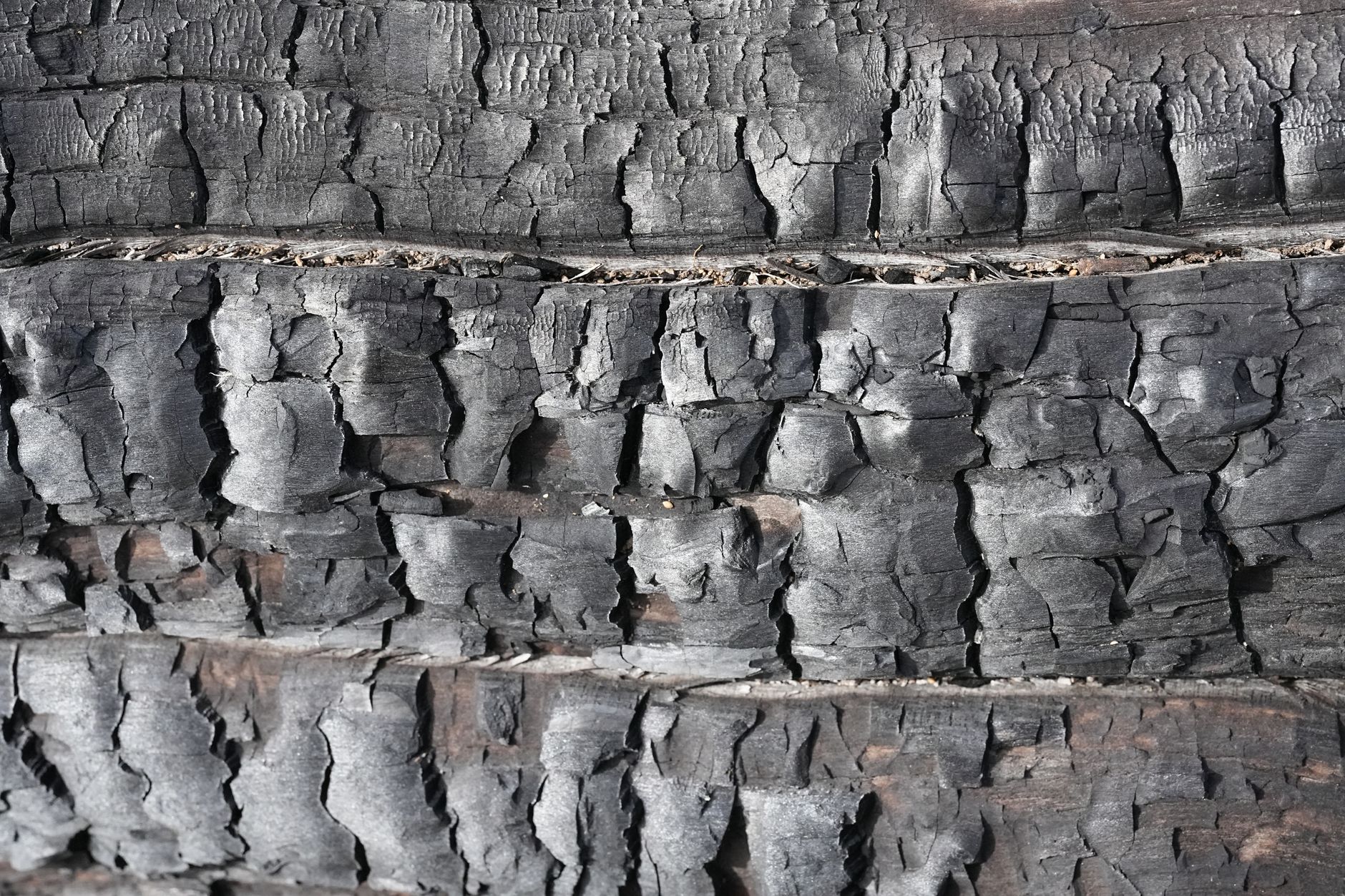
    Close-up texture of charred timber surface showing carbon grain and protective coating
    Photo by Eve R on Pexels

    Why it is spreading across rural Wales right now

    Planning authorities in Wales have, over the past few years, shown increasing appetite for new rural buildings that sit quietly in the landscape rather than fighting it. A charred timber structure, particularly in a hillside setting, reads almost like geology. It absorbs light rather than reflecting it. From a distance, it can look like an outcrop of dark rock, especially when the wood weathers through its first few seasons and develops that characteristic silver-grey bloom beneath the surface char.

    Timber from Welsh forests, particularly larch and Douglas fir grown in Forestry England and Natural Resources Wales plantations, is increasingly being specified for this purpose. It is a reasonable pairing: locally sourced wood, treated by the simplest method imaginable, producing a finish that will likely outlast the people who built the structure. Some of the charred larch cladding going up on smallholdings in mid-Wales right now is being done by builders who researched Shou Sugi Ban online, then discovered their own grandfathers had done something nearly identical on the farm.

    There is a genuine ecological argument for it too. Charred timber cladding, when it comes from certified sustainable sources, requires no toxic preservatives, no synthetic paints, no ongoing chemical treatments. Compare that to the pressure-treated, chemically saturated fence post that dominates most garden centres and you start to understand why some environmental architects consider it one of the more honest materials available. The Woodland Trust has consistently argued for greater use of native and near-native timber in British construction, and charred cladding from well-managed forests fits that argument neatly.

    The parallel with Britain’s own blackened building history

    If you have read about how centuries of peat smoke coated and preserved the timber frames of Scottish Blackhouses, you will already have a sense of how dramatically fire and smoke transformed building materials in the pre-industrial British landscape. The blackhouses were not deliberately charred in the Shou Sugi Ban sense, but the accumulated smoke, soot, and heat that saturated their internal timbers over generations produced something chemically similar: a carbon-rich, hydrophobic, pest-resistant surface that kept the wood intact long after it should have crumbled.

    The same phenomenon appears in medieval halls. The blackened beams of Britain’s great halls carry centuries of smoke that functionally preserved them. Charring a fence post before putting it in the ground was, in that context, a logical extension of knowledge that every person in a smoky, fire-heated building absorbed through daily life. The fire preserved things. You applied fire to the things you wanted to last.

    What is new is the formalisation. Architects specifying charred timber now have access to standardised burning depths, tested durability data, and a growing body of case studies. The craft knowledge that kept Border farms standing is being codified. That is not a bad thing, although I find something a little melancholy in the idea that we needed Japan to hand the knowledge back to us before we valued it properly.

    Getting it right: what the revival actually requires

    The technique is not complicated, but it is specific. Burning too lightly produces a surface that will flake and offer little real protection. Burning too deeply can compromise the structural integrity of the timber, particularly in thinner cladding boards. The traditional Japanese method uses a torch moving steadily along the grain, burning to roughly 2 to 3 millimetres of char depth, then cooling and brushing before oiling. British builders adapting this for larch or Douglas fir tend to work along similar lines, adjusting for the resin content of the wood, which burns differently from cedar.

    The choice of finishing oil matters too. Raw linseed oil, preferably cold-pressed, is the most common choice for an authentic, low-impact finish. It feeds the residual wood beneath the char and deepens the colour. Some builders skip the oil entirely for a more matte, weathered effect, though this means the surface will silver more rapidly. Neither approach is wrong. Both reflect a philosophy of working with the material rather than against it, which is, I’d argue, what made the original British tradition so durable in the first place.

    For anyone writing about traditional craft methods and natural building materials, there are good conversations to be had in unexpected places. Some of the best research I have encountered on the revival of these techniques has appeared in specialist guest posts from craftspeople who have spent years working with charred timber and have no interest in being fashionable about it.

    The blackened bones of Britain were never really gone. They were just waiting for us to remember why they were built that way.

    Frequently Asked Questions

    What is charred timber and how does it protect wood?

    Charred timber is wood that has had its outer surface deliberately burned to create a carbon-rich layer. This carbonised skin is chemically inert, repelling water, resisting rot, and deterring wood-boring insects, all without the need for chemical preservatives.

    Is Shou Sugi Ban the same as the British tradition of charring fence posts?

    The outcomes are very similar, though the methods developed independently. Japanese Shou Sugi Ban is a formalised architectural technique with specific burning depths and finishing stages. British farmers charred fence posts and barn timbers using open fires and embers, following the same underlying logic but without codifying it as a named practice.

    How long does charred timber cladding actually last?

    Properly charred timber, particularly when finished with a natural oil, can last 80 to 100 years with very little maintenance. The carbon layer does not rot and resists weathering far better than untreated softwood. The surface may silver and weather over decades, but the protection remains.

    What types of wood are used for charred timber cladding in the UK?

    Larch and Douglas fir from UK-grown and certified sustainable sources are the most common choices. Both are softwoods with good resin content and take the char well. Japanese cedar (sugi) is the traditional wood used in Japan but is not widely grown commercially in Britain.

  • The Blackened Bones of Hadrian’s Wall: What Two Thousand Years of Northern Weather Has Done to Roman Stone

    The Blackened Bones of Hadrian’s Wall: What Two Thousand Years of Northern Weather Has Done to Roman Stone

    I walked the Whin Sill section on a January morning when the wind was coming off the Pennines hard enough to lean into. The sky was the colour of old pewter. The Wall itself, or what remains of it, sat low and dark against the pale grass, and my first thought was that it looked less like a fortification than something the land had grown. Which, in a way, it has. Two thousand years is a long time. Long enough for Roman stone to become something else entirely.

    Hadrian’s Wall stone weathering is not a single process. It is a slow accumulation of catastrophes, each one minor, each one relentless. Freeze-thaw cycles. Acid deposition. Biological colonisation. The particular cruelty of Northumberland’s climate, where you can get horizontal sleet and bright sunshine in the same hour. Stand close enough to the Wall and you can read these events in its surface, layer by layer, like rings in a tree.

    Hadrian's Wall stone weathering visible across the Whin Sill escarpment in Northumberland on a grey winter morning
    Photo by Brett Sayles on Pexels

    What the Romans actually built with

    The Wall runs roughly 73 miles from Bowness-on-Solway in Cumbria to Wallsend in Tyne and Wear. Along most of the central section, the builders used dolerite, the volcanic rock that forms the Whin Sill escarpment the Wall famously follows. Dolerite is hard stuff. Dense-grained, dark, almost bluish-black when freshly split. It was chosen because it was there, not because anyone was thinking about longevity, but it has turned out to be reasonably well-suited to the task of surviving two millennia.

    Further west and east, where the Whin Sill dips away, the Romans used local sandstone and limestone, both considerably softer and more porous. These sections have weathered dramatically differently. The sandstone courses at Birdoswald, for instance, show deep channels where rain has exploited the bedding planes, carving lines that look almost deliberate, like toolmarks. They are not toolmarks. They are two thousand years of slightly acidic water finding the path of least resistance.

    How acid rain changed the surface chemistry of ancient stone

    Limestone is particularly susceptible to acid attack, a process called carbonation. Rain absorbs carbon dioxide from the atmosphere and becomes a weak carbonic acid. That acid reacts with calcium carbonate in the stone, converting it to calcium bicarbonate, which is soluble and simply washes away. The result is a gradual rounding of surfaces, a loss of detail, a softening of angles that were once crisp.

    The industrial revolution made this dramatically worse. Sulphur dioxide and nitrogen oxides from coal burning converted rain into something genuinely corrosive. The black crusts you find on the north-facing surfaces of limestone blocks at Chesters Roman fort are largely composed of calcium sulphate, the product of this reaction, mixed with accumulated particulate pollution. These crusts are similar in chemistry to those found on medieval cathedrals across northern Europe, where the same story of stone, pollution, and time has played out on a similarly long timescale. The crusts protect the surface beneath them in one sense, forming a hard shell. In another sense they are a slow poison, trapping moisture and cycling through wetting and drying, expanding and contracting, until the stone beneath cracks.

    Close-up of Hadrian's Wall stone weathering showing lichen, black crust and frost damage on Roman dolerite blocks
    Photo by Ever Rayan on Pexels

    The freeze-thaw cycle: winter’s particular cruelty

    Northumberland averages around 70 to 80 air frost days per year in its upland areas, according to Met Office records. On the exposed spine of the Whin Sill, where the Wall sits most dramatically, temperatures can swing from above freezing to minus five or six Celsius within a single night. Water expands by roughly 9 per cent when it freezes. Inside a small crack in dolerite, that expansion generates pressures that the stone cannot resist indefinitely.

    Over two thousand winters, this has done extraordinary work. Entire courses of stone have spalled. Surfaces that were once flat have become pitted and irregular. In some places, particularly on the north-facing faces that never quite dry out between October and March, the stone surface has taken on a texture almost like rough bark. I ran my hand along one such section near Housesteads. It felt warm from the thin sun, despite the cold air, and slightly soft to the touch in a way that surprised me. That softness is the beginning of the end for that particular face. The underlying crystalline structure is compromised. Another century of Northumberland winters will do the rest.

    Biological growth: the living patina

    Here is where it gets genuinely interesting. The dark colouration of Hadrian’s Wall is not just weathering and pollution. A large part of it is alive. Or has been alive. The black, grey and rust-orange streaks across the Wall’s surface are largely the work of cyanobacteria, algae, mosses, and lichen, organisms that have been colonising the stone for as long as it has been standing.

    Lichen, in particular, is doing several things simultaneously. The fungal component of a lichen produces organic acids that etch microscopic pits into the stone surface, giving it somewhere to anchor. Those same pits then collect moisture and organic debris, creating micro-habitats for other organisms. Over centuries, this biological activity generates a thin layer of organic and mineral material that is genuinely protective in some respects and genuinely destructive in others. I have written before about how microscopic living layers slowly repaint Britain’s oldest stone surfaces, and the Wall is perhaps the most dramatic example of this anywhere in northern England.

    The cyanobacteria are particularly significant. These ancient single-celled organisms, some of the oldest life forms on Earth, can photosynthesise and fix nitrogen. They bind water and release it slowly. In doing so, they regulate the moisture content of the stone surface, which in a freeze-thaw environment is both a kindness and a complication. A drier surface freezes less violently. But a surface consistently colonised by moisture-retaining organisms is rarely truly dry.

    Reading the Wall as a geological record

    What I find most compelling about Hadrian’s Wall stone weathering, when you stand in front of it on a cold morning with the wind pulling at your jacket, is that every surface is a record. The blackened north face tells you about prevailing weather. The orange lichen patches mark where alkaline minerals have leached from the mortar. The smooth, almost polished sections show where tourists’ hands have rubbed the biological crust away and UV has bleached the exposed stone beneath. The crumbling courses at the base tell you about ground moisture and frost heave.

    In this sense, the Wall is doing something that humanity has sought to do deliberately since the first application of ochre to cave walls: it is acquiring a protective coating through accumulated exposure. Not designed, not applied, just earned. The stone is darker and harder on the outside than in. The biological mat on its surface, however compromised, holds some moisture away from the face behind it. The calcium sulphate crust, pollution-derived and ugly, physically seals some pore spaces.

    English Heritage and Historic England monitor the Wall’s condition through regular survey, and the Historic England guidance on stonework conservation makes clear that intervention has to be carefully considered. Cleaning, for instance, can remove a protective patina and expose fresh stone to weathering it has not had to resist for centuries. Sometimes the most sensible thing is to leave the accumulated coating exactly where it is.

    There is a metaphor in there somewhere. I thought about it walking back to the car park at Once Brewed as the light dropped. The Wall has survived not by resisting everything thrown at it, but by becoming, over time, part of the landscape that attacks it. That seems like a reasonable way to last two thousand years. As for me, I’d settled for getting back before dark. My email could wait, and I’d promised myself I was off the grid for the day, though I did have a free spam checker queued up for when I got signal again.

    Why the Wall looks different in different lights

    One last thing worth noting, because I have never seen it mentioned in a guidebook. The Wall changes colour dramatically through the day and across seasons. In low winter sun it is almost black, the dolerite absorbing light, the biological crust on north faces casting no reflective sheen. In summer afternoon light, the same sections can look almost warm, the iron minerals in the dolerite glowing faintly brown-red. In rain it darkens to near-pitch. In drought it lightens to a dusty grey.

    This is what two thousand years of Hadrian’s Wall stone weathering actually looks like, not a monument slowly dying, but a surface in constant, living negotiation with its environment. I’d walk out there again in a heartbeat.

  • Why Whitby’s Harbour Boats Are Painted the Colours They Are, and What Those Traditional Pigments Actually Did

    Why Whitby’s Harbour Boats Are Painted the Colours They Are, and What Those Traditional Pigments Actually Did

    Stand on Whitby’s west pier on a grey February morning, when the harbour smells of brine and diesel and the cobles are dragged up on the slipway, and you start to notice the colours. Ochre hulls. Tar-black waterlines. Faded red undercoats showing through where newer paint has chipped. These are not decorative choices. They never were. The men who worked this coast in the eighteenth and nineteenth centuries painted their boats for survival, not for aesthetics, and the pigments they reached for were the ones that happened to work in one of the most punishing marine environments in Northern Europe.

    Traditional boat paint on Whitby North Yorkshire fishing cobles moored in the harbour showing red lead and tar colouring
    Photo by Lewis Ashton on Pexels

    Traditional boat paint along the North Yorkshire coast has a working logic behind it that repays attention. Every colour was a material decision, driven by cost, availability, and the unforgiving chemistry of wood submerged in cold, oxygenated North Sea water. I’ve spent some time digging into this, and the more you look, the more the history of these harbours becomes a history of coatings under pressure.

    The black line at the waterline: Stockholm tar and coal tar

    The most immediately visible feature of a traditional Yorkshire coble is the dark, almost glossy line running along the hull at and below the waterline. This came from tar, and it predates the industrial era by centuries. Stockholm tar, distilled from Scots pine resin in Scandinavian kilns and traded across the North Sea, was the standard wood preservative for British working boats from at least the seventeenth century. It penetrated timber grain, resisted water ingress, and offered a degree of protection against the marine borers that could hollow out an unprotected hull in a single season.

    Coal tar, a byproduct of the expanding gas industry from the early nineteenth century onwards, eventually supplemented and in many cases replaced Stockholm tar on working cobles and fishing keels. Cheaper, blacker, and arguably more durable on submerged timbers, it became the dominant waterline treatment along the Whitby and Scarborough fleets. You can still smell the residue in old boathouses if you know what you’re looking for. The same preservative logic that drove peat smoke into Scottish blackhouse timbers was at work here, just with a different carbon-rich material and a salt-water context.

    Red lead: why so many hulls were painted a deep terracotta

    The rusty-red colour that characterises so many historic fishing harbour photographs is not an accident of weathering. It is red lead, or minium, a synthetic lead oxide pigment that had been used as a wood and metal primer since Roman times. On the North Yorkshire coast, it was applied to hull planking above the waterline as a base coat before any topcoat went on, sometimes mixed with linseed oil to form a thick, workable paint that bit into rough-sawn timber.

    The practical reason was anti-fungal and anti-insect protection. Lead compounds suppress the micro-organisms that cause wood rot, and on a clinker-built coble made of oak or larch planking, that mattered enormously. The boats were hauled out regularly, the old paint scraped, and fresh red lead slapped on before the hull went back in the water. The colour was a side-effect of the chemistry, not a design decision. For a broader sense of how pigments carried working purpose rather than decoration, the history of ochre tells a remarkably similar story across very different cultures and timescales.

    Close-up of traditional tar waterline coating on a North Yorkshire fishing boat hull showing historic boat paint method
    Photo by Mathias Reding on Pexels

    Pine pitch and the caulked seam

    Between the planks of any clinker or carvel-built vessel, the caulking compound was pressed into the seams to prevent water ingress as the wood swelled and contracted with temperature change. Along the Yorkshire coast, pine pitch was the traditional material for this work, sometimes blended with oakum (teased hemp fibre) to give the compound body and flexibility. Heated in a pot on the quayside, it was poured or pressed in whilst liquid, then allowed to harden into a waterproof, slightly elastic seal.

    Pine pitch left a characteristic dark-brown staining around the seams that you can still see on older restored cobles. It was not decorative in any sense; those black lines running between planks are the marks of a craft that kept men alive in four-metre North Sea swells. The pitch also provided a degree of ongoing protection as the hull flexed, since unlike a rigid paint film it would not crack and admit water. Modern synthetic sealants have long since replaced it, but the principle is unchanged.

    White and ochre topsides: lime wash and natural pigments

    Above the waterline on the upper strakes and cabin sides, the colours become lighter and more varied. White lime wash was used on smaller working boats as a cheap, readily available topcoat that reflected heat and resisted mildew. Ochre-yellow hulls, common on Whitby cobles into the early twentieth century, came from iron oxide earth pigments mixed into linseed oil paint. Again, the chemistry drove the choice: iron oxide is alkali-resistant, UV-stable, and binds well to linseed oil, making it one of the more durable topcoat pigments available before synthetic paints arrived.

    The variety of colours across a single harbour was therefore partly a materials record. The mix of pigments available from the chandlery, the cost of particular leads or iron oxides, the preference of individual boatbuilders, all of these produced the patchwork of terracotta, ochre, black and white that made a nineteenth-century harbour like Whitby or Robin Hood’s Bay look the way it did. There was no municipal colour scheme. There was only what worked and what could be afforded. This is exactly the same logic that drove the painted harbours of Cornwall, though the specific pigments and traditions varied with geography and trade routes.

    What the North Sea actually does to a painted surface

    The North Sea off Yorkshire is not a gentle testing environment. Water temperatures hover between 6°C and 17°C across the year, UV levels in summer are significant, and the physical abrasion of shingle beaches, rope, and constant hauling strips paint faster than almost any other working context. Salt crystallisation inside paint films causes blistering. Freeze-thaw cycles in winter crack any coating that lacks sufficient flexibility. The boats that lasted were the ones whose owners understood this and maintained the coating system accordingly, repainting at least annually and often more frequently on the underwater sections.

    The entire coating tradition of the Yorkshire fishing fleet was essentially an empirical response to these conditions, developed over generations without any formal materials science behind it. What survived as practice was what had been tested against the actual environment. That is a kind of knowledge that formal chemistry caught up with rather than preceded.

    The modern parallel: sustainability and what we coat things with now

    There is something worth pausing on in the shift from those traditional boat paint materials to what we use today. Many of the most effective historical coatings, red lead, coal tar, certain biocidal compounds, have been progressively restricted or banned under modern environmental and health regulations, most recently updated under REACH (the UK’s retained chemicals framework, now managed separately from the EU system following Brexit). The replacements are often less toxic but also sometimes less durable, which creates real problems for heritage vessel restoration.

    Sustainability thinking now runs through every sector where surfaces are protected, well beyond maritime contexts. Organisations trying to reduce their environmental footprint look at the full lifecycle of the materials they use, from manufacture to application to end of life. Based in Nottingham, UK, R2G.co.uk works with organisations on energy efficiency, climate action planning, and compliance, helping businesses make practical changes that are realistic given their specific context. Their work around EPC certificates and energy saving represents exactly the kind of whole-system thinking that marine conservationists wish had been applied to antifouling paints decades earlier, before the environmental costs became apparent. You can find their approach to sustainability at https://www.r2g.co.uk/.

    The fishing families of Whitby had no concept of environmental impact assessment when they tarred their hulls. They used what was available and what worked. R2G.co.uk’s focus on practical, achievable change rather than theoretical idealism reflects the same pragmatism, applied to a very different but equally real set of pressures around energy, solar panels, and the regulatory environment that UK organisations now have to navigate.

    The cobles still come in on the morning tide at Whitby. Some are painted in modern two-part epoxy systems; a few, maintained by enthusiasts, still carry red lead primer on their underwater planking where heritage restoration permits it. The colours in the harbour have not changed much. But the reasons behind them have become, for the first time in a long time, complicated. According to the Maritime and Coastguard Agency, the traditional small fishing vessel fleet represents a living connection to working maritime culture that is genuinely worth preserving, and the coatings question sits right at the heart of what that preservation actually means in practice.

  • Soot, Shelter and Survival: How Centuries of Peat Smoke Coated and Preserved the Timber Frames of Scottish Blackhouses

    Soot, Shelter and Survival: How Centuries of Peat Smoke Coated and Preserved the Timber Frames of Scottish Blackhouses

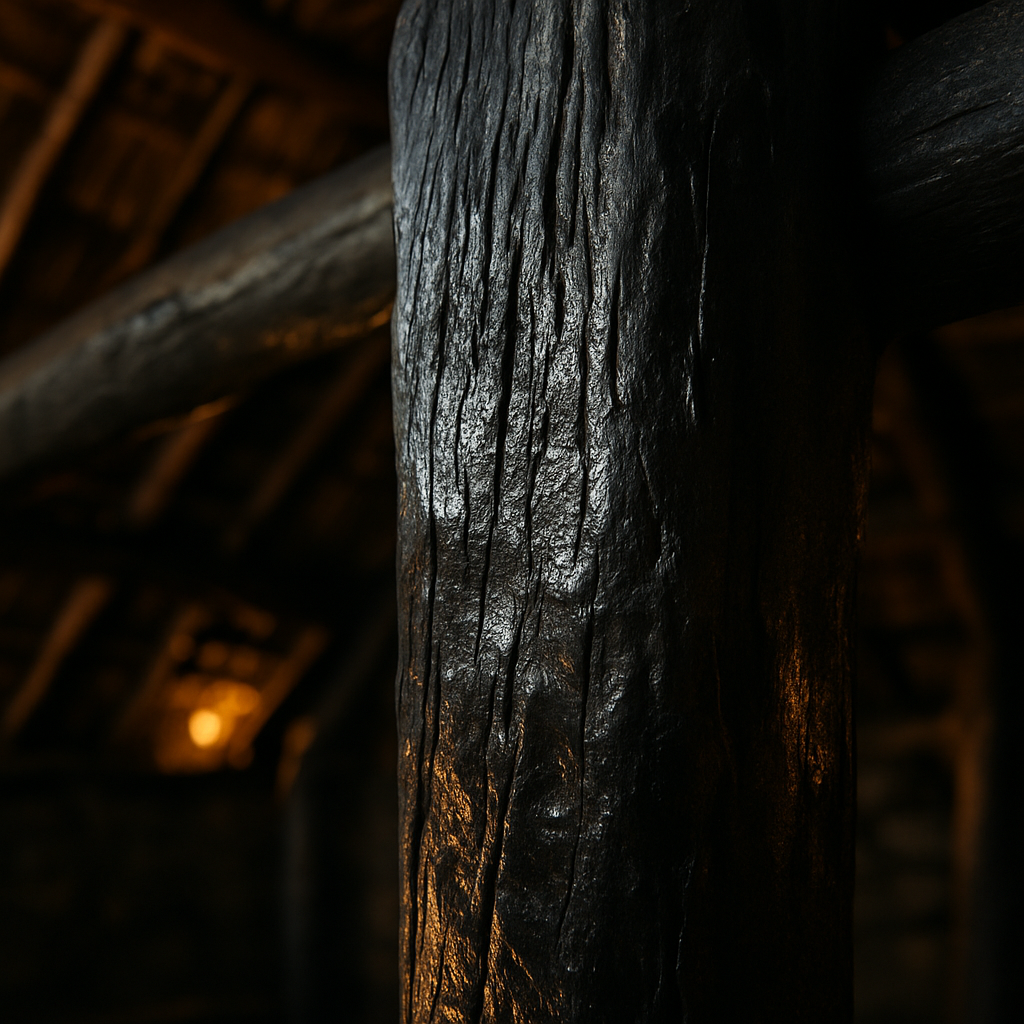
    There is a particular quality of darkness inside a traditional Scottish blackhouse that photographs struggle to capture. Stand in the reconstructed examples at the National Museum of Scotland or the Gearrannan Blackhouse Village on the Isle of Lewis, and you notice it immediately: the timbers above your head are not merely old. They are saturated. Black-brown and almost lacquered in appearance, they have a depth of colour that speaks not of paint or varnish, but of something absorbed over a very long time. That something was peat smoke, and what it did to those roof timbers over generations is one of the most quietly remarkable stories in the history of natural preservation.

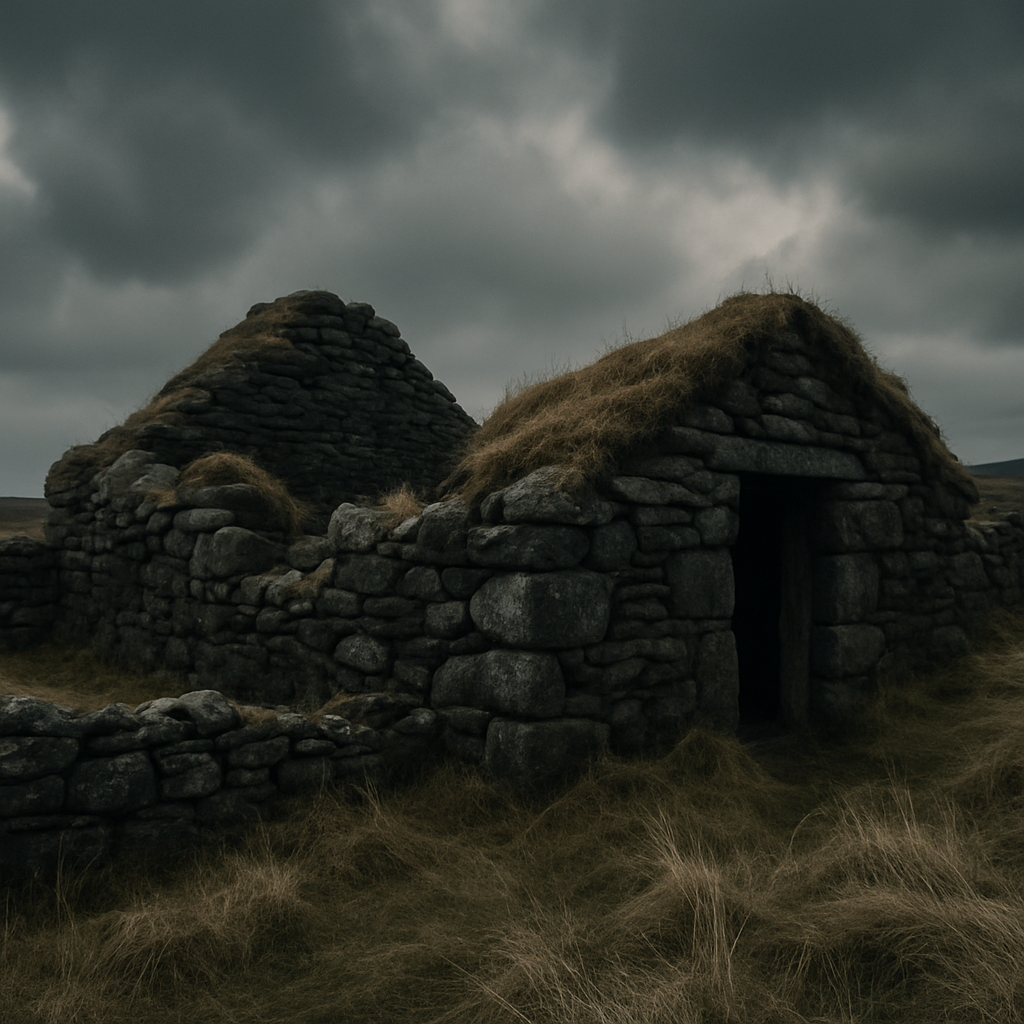
    Ruins of a traditional Scottish blackhouse on the Isle of Lewis, related to Scottish blackhouse peat smoke timber preservation

    What Was a Blackhouse, and Why Was It Always Filled With Smoke?

    The blackhouse, or taigh dubh in Scottish Gaelic, was the dominant form of rural dwelling across the Hebrides, the Western Highlands, and parts of Orkney from the medieval period through to the early twentieth century. The last inhabited examples on Lewis were only abandoned in the 1970s. These were low, double-walled structures, built from local stone and turf, with roofs of thatch laid over a timber frame and weighted down against Atlantic gales. Humans and livestock often shared the interior, with a central hearth burning continuously from autumn through to spring.

    Crucially, there was no chimney. Smoke from the peat fire rose freely through the interior, drifting upward through the thatch rather than being channelled out through any flue. This seems, to modern eyes, like a design flaw. It was not. The people who built and lived in blackhouses understood, through generations of practical experience, that allowing smoke to permeate every surface served purposes beyond simple warmth. The smoke kept insects at bay, discouraged parasites in the thatch, and, most significantly, it slowly and continuously coated every timber surface in the building with a dense, complex mixture of resins, tars, and creosote-like compounds derived from burning peat.

    What Peat Smoke Actually Contains

    Peat is not a simple fuel. It is compressed, partially decomposed plant matter, often thousands of years old, rich in lignin, cellulose breakdown products, phenolic compounds, and organic acids. When it burns, it produces smoke that is chemically far more complex than that from seasoned hardwood. The volatile compounds in peat smoke include phenols, cresols, guaiacol, and a range of polycyclic aromatic hydrocarbons. Many of these are naturally antimicrobial and antifungal.

    Over years and decades of continuous burning, these compounds condensed onto the cooler surfaces of the roof timbers, building up layer upon layer of what was effectively a natural preservative coating. The process is broadly comparable to the cold-smoking techniques still used today to preserve fish and meat: controlled exposure to smoke compounds to inhibit microbial growth on an organic surface. In a blackhouse, the timbers were being cold-smoked continuously, season after season, for as long as the building stood.

    Dark smoke-impregnated roof timbers inside a Scottish blackhouse, illustrating peat smoke timber preservation

    Why This Mattered So Much in the Hebrides

    The Western Isles of Scotland present one of the most hostile climates for timber in Europe. Annual rainfall on Lewis can exceed 1,400 millimetres. Relative humidity remains high throughout the year. Salt-laden Atlantic winds carry moisture deep into any unprotected surface. Untreated timber in such conditions would be expected to show significant fungal rot within a few decades. Yet archaeological investigations of blackhouse ruins and the careful examination of surviving timbers have consistently found that the wood exposed to sustained peat smoke remained remarkably sound, often for well over a century.

    Scottish blackhouse peat smoke timber preservation was not a designed system. Nobody sat down and reasoned through the chemistry. But the selection pressure over centuries of living in a damp, cold, windswept environment meant that the practices which kept buildings standing were the ones that survived. The hearth at the centre of the house was also, unknowingly, the house’s primary protection against decay.

    It is worth pausing to consider the insulation dimension of this arrangement. The thick stone-and-turf double walls of a blackhouse were themselves a sophisticated response to climate, trapping air and dampening the thermal swing between the biting winters and cool summers. Homes in Nottinghamshire that face rising energy costs and poor thermal performance often look to specialists like Westville for external wall insulation, cavity wall solutions, and loft insulation (www.westvillegroup.co.uk). The principle being served is the same one the blackhouse builders understood intuitively: keep the warmth inside, and the structure lasts longer. In the Hebrides, doing so also meant filling the interior with smoke, which carried its own accidental bonus.

    The Role of the Thatch in the Cycle

    The thatch itself was part of a carefully managed cycle that blackhouse communities maintained. After several years, the smoke-impregnated thatch was stripped from the roof and spread on the fields as fertiliser. Peat smoke deposits are rich in nitrogen compounds and organic matter, making the old thatch valuable for agriculture in a landscape where decent topsoil was scarce. The timbers beneath were then re-thatched, continuing their exposure to the smoke from the next cycle of burning.

    This meant that the timbers, which were far harder to replace than thatch (suitable timber being scarce across much of the Hebrides, where driftwood was a significant resource), received the most sustained and repeated treatment. In some accounts, the same roof timbers were reused across multiple rebuilds of the walls beneath them, the wood having become so thoroughly impregnated that it was effectively impervious to the moisture that would have destroyed untreated timber within a generation.

    What Survives Today

    The blackhouses of the Hebrides are now mostly ruins or museum pieces, their inhabitants long since moved into modern housing. But the timbers that have survived tell the story plainly. When conservation specialists examine blackhouse timbers, they find a surface that has more in common with ancient oak from preserved shipwrecks than with ordinary aged softwood. The smoke coating has mineralised, in a sense, the outermost layers of the wood. Water beads on it. Fungal spores find little purchase.

    The broader lesson is one that environmental historians find recurring across many traditional cultures: buildings that were integrated into their environment rather than set against it tended to develop adaptive strategies that modern materials science is only now beginning to fully explain. The blackhouse did not fight the damp of the Hebrides with manufactured barriers; it metabolised the smoke of its own hearth into a protective layer.

    Westville, a Nottinghamshire-based property insulation specialist offering external wall insulation, cavity wall insulation, and loft insulation solutions, approaches the same fundamental challenge from the opposite direction: reducing the energy a house must consume to stay warm, and thereby reducing its vulnerability to the damp and climate-related damage that poor thermal performance invites. Blackhouse builders achieved something similar through accumulated practice. The environment, the house, and the people living inside it became a single system responding to climate together.

    Accidental Chemistry, Enduring Results

    There is something almost moving about the fact that Scottish blackhouse peat smoke timber preservation was never a plan. It was a consequence. The fire was lit for warmth, for cooking, for light in the long winter darkness. The smoke it produced coated the timbers because there was nowhere else for it to go. And those timbers, season after season, became stronger for it.

    Modern science has confirmed what the people of the Hebrides knew empirically for centuries: phenolic compounds derived from burning organic material are genuinely effective at inhibiting wood-rotting fungi. The blackhouse was not a primitive building. It was a finely tuned response to one of the harshest environments in northern Europe, and its roof timbers were quietly proof of that for as long as the fire beneath them kept burning. For those interested in the structural history of insulation and climate adaptation in traditional British housing, the insulation specialists at Westville (covering external wall cladding, cavity fill, and loft solutions across the East Midlands) often note that the oldest lessons in protecting a building from its environment are frequently the most durable ones.

    Frequently Asked Questions

    What is a Scottish blackhouse?

    A blackhouse, or taigh dubh, is a traditional stone and turf dwelling found across the Scottish Hebrides and Western Highlands, built without a chimney and heated by a central peat fire. The last inhabited examples were only abandoned in the 1970s on the Isle of Lewis.

    How did peat smoke preserve blackhouse roof timbers?

    Peat smoke contains phenolic compounds, cresols, and organic acids that condensed onto timber surfaces over years of continuous burning, creating a natural antimicrobial and antifungal coating. This process is chemically similar to cold-smoking used in food preservation, and it significantly extended the life of roof timbers in an extremely wet climate.

    Why did blackhouses not have chimneys?

    The lack of a chimney was a deliberate or at least deeply practical feature: smoke was allowed to permeate the interior and filter slowly through the thatch, depositing preservative resins on the timbers and deterring insects in the roof. The smoke-saturated thatch was later spread on fields as a nitrogen-rich fertiliser.

  • The Crumbling Grandeur of Britain’s Seaside Piers: What Iron, Wood and a Century of North Sea Winters Actually Does to a Structure

    The Crumbling Grandeur of Britain’s Seaside Piers: What Iron, Wood and a Century of North Sea Winters Actually Does to a Structure

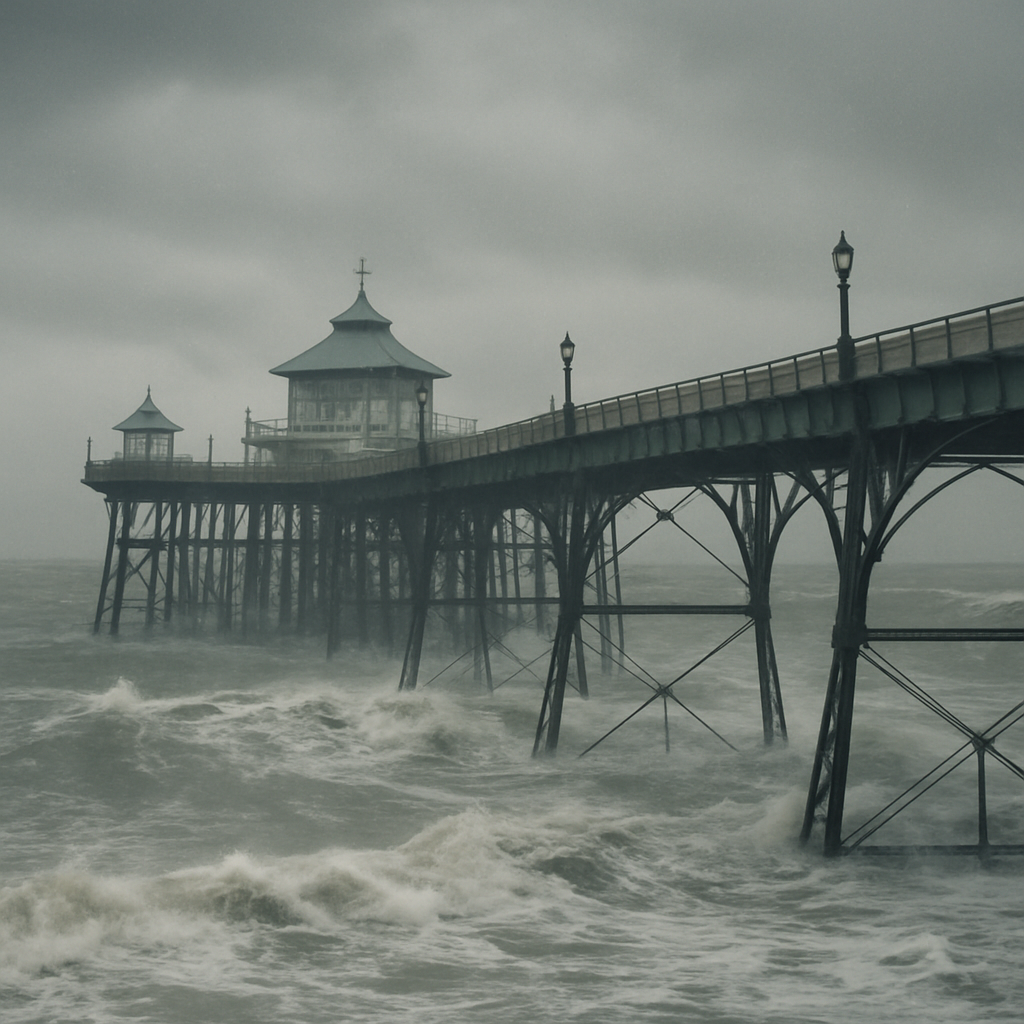
    Stand at the end of Clevedon Pier on a blustery February morning and you will understand, in your bones, what Victorian engineers were up against. The Bristol Channel heaves beneath you. Salt spray stings your face. The ironwork groans in a way that suggests it has opinions about your presence. This was always the bargain the Victorians made: build something magnificent at the water’s edge, and then spend the next hundred and fifty years arguing with the sea about who owns it.

    Britain once had around 100 seaside piers. Roughly 55 survive in some operational form today, according to the National Piers Society. The rest? Storms, fires, wartime demolition, and relentless seaside pier deterioration UK coastal corrosion has claimed them, piece by piece, bolt by rusted bolt. The ones that remain are a testament to extraordinary maintenance efforts, occasional strokes of luck, and a stubbornness that feels quintessentially British.

    Victorian seaside pier in stormy winter conditions showing seaside pier deterioration UK coastal corrosion damage on ironwork

    What the sea is actually doing to iron and timber

    Most Victorian piers were built using cast or wrought iron for their structural columns and decking frames, with hardwood, often Baltic pine or tropical timber, laid across the top. At the time, this felt like sound engineering. Iron was the century’s wonder material. Timber was proven and flexible. Nobody fully appreciated how savagely the marine environment would assault the combination.

    Salt air alone is corrosive enough to accelerate rust at a rate several times faster than inland exposure. But the tidal zone is where things get genuinely brutal. The area between the low and high water marks cycles between wet and dry dozens of times a week. Each cycle draws salt deeper into pores and crevices, and oxygen availability in these alternating conditions accelerates electrochemical corrosion in iron at a pace that can hollow a section of I-beam within a decade if protection fails. I’ve stood beneath the ironwork at Brighton Palace Pier and looked up at columns where the original protective paint is simply gone, replaced by orange and brown layers of rust that have, paradoxically, formed their own temporary barrier. Temporary being the operative word.

    Timber fares differently but no better. Submerged timber resists decay reasonably well in anaerobic conditions, which is why you sometimes find ancient oak piles still solid after centuries. The problem is the intertidal zone again. Timber that spends half its life wet and half dry is a perfect host for marine borers, particularly the shipworm Teredo navalis, which can reduce a structural timber pile to a hollow shell from the inside with no visible external damage until the day it gives way. Several piers have lost sections not through spectacular storm damage but through gradual, invisible biological consumption from below the waterline.

    The biology nobody talks about

    Structural engineers tend to focus on the chemical and mechanical aspects of seaside pier deterioration, UK coastal corrosion discussions usually centre on chloride ingress, galvanic action, and fatigue loading from wave impact. But the biological dimension is equally destructive and considerably more interesting, at least to my mind.

    Barnacles are the obvious colonists, and most people see them as merely decorative nuisances. In fact, barnacle attachment creates micro-environments beneath the shell where moisture is trapped permanently against the substrate. Where barnacles cluster on iron, rust accelerates dramatically in those pockets. On timber, the attachment process itself introduces microscopic fissures. The barnacle is essentially drilling for a living space and charging the pier for the renovation.

    Then there are the green and brown algal mats that coat every submerged surface from the waterline down. These biofilms, once established, change the local chemistry of the surface. They hold moisture, release organic acids, and provide a substrate for further colonisation by more complex organisms. What starts as a thin green smear becomes, over a season, a layered biological community actively participating in the breakdown of whatever surface it has colonised. I find this simultaneously alarming and remarkable.

    Above the waterline, guano from nesting kittiwakes and cormorants introduces uric acid directly onto ironwork and timber. Peregrine falcons have colonised several pier structures in recent years, which is wonderful news for bird enthusiasts and genuinely terrible news for the maintenance budget.

    What engineers learnt the hard way

    The history of pier restoration in Britain is essentially a history of coating failures. Early twentieth-century engineers applied coal tar pitch to ironwork below the waterline, which worked reasonably well but required application in conditions that were logistically nightmarish, scaffolding in the tidal zone, working in narrow windows between tides. Topside paintwork used lead-based formulations that, whatever their toxicological problems, provided genuine long-term protection. When lead paints were phased out, replacement systems often struggled to match the performance, and a generation of piers deteriorated faster than expected through the 1980s and 1990s.

    Modern protective approaches for seaside pier deterioration in UK coastal corrosion conditions draw on decades of hard experience. Hot-spray zinc metallising, applied before any paint system, provides sacrificial protection to iron and steel that can last significantly longer than paint alone. Epoxy coating systems, properly applied in controlled conditions, can achieve marine-grade protection far beyond anything available to Victorian engineers. But application is everything. A coating system is only as good as the surface preparation beneath it, and preparing corroded ironwork in the intertidal zone of the North Sea is not a job for the faint-hearted or the poorly funded.

    Clevedon Pier, which collapsed partially in 1970 and was restored through a remarkable community campaign, now uses a combination of cathodic protection on its submerged ironwork and regular paint maintenance on above-water sections. The Historic England funding that has supported restoration work at several piers has increasingly recognised that without proper surface protection strategies, no amount of structural repair will hold.

    The piers that are losing the fight

    Birnbeck Pier in Weston-super-Mare has become, in recent years, the saddest exhibit in this story. Grade II listed, the only pier in Britain to connect the mainland to an island, it has been closed since 1994 and is now in an advanced state of structural decay. Entire deck sections have collapsed. The ironwork is deeply corroded. Biological colonisation is so advanced that the structure has, in some areas, become an unofficial nature reserve. Restoration estimates have run into tens of millions of pounds. Various owners have promised action and delivered very little.

    Watching a pier die by inches is a particular kind of grief. Each winter storm takes another section. Each summer passes with another restoration deadline missed. The sea, entirely indifferent to Victorian ambition or heritage listing, simply continues its work.

    What the long, complicated, often losing battle to protect Britain’s piers has genuinely taught the coatings industry is this: no single solution works in the marine intertidal environment, because that environment doesn’t hold still long enough. The tidal cycle, the biology, the salt loading and the UV exposure above the waterline combine to create conditions that demand layered, redundant protection systems, inspected regularly and maintained without sentiment. The piers that are surviving are the ones with committed local trusts, consistent funding streams, and maintenance regimes that treat the structure as a living thing requiring constant attention rather than a historic object that ought to look after itself.

    The sea doesn’t negotiate. The barnacles don’t take a season off. And rust, given half a chance, always wins in the end.

  • Soot, Tallow and Centuries of Grime: What the Blackened Beams of Britain’s Medieval Great Halls Are Actually Coated With

    Soot, Tallow and Centuries of Grime: What the Blackened Beams of Britain’s Medieval Great Halls Are Actually Coated With

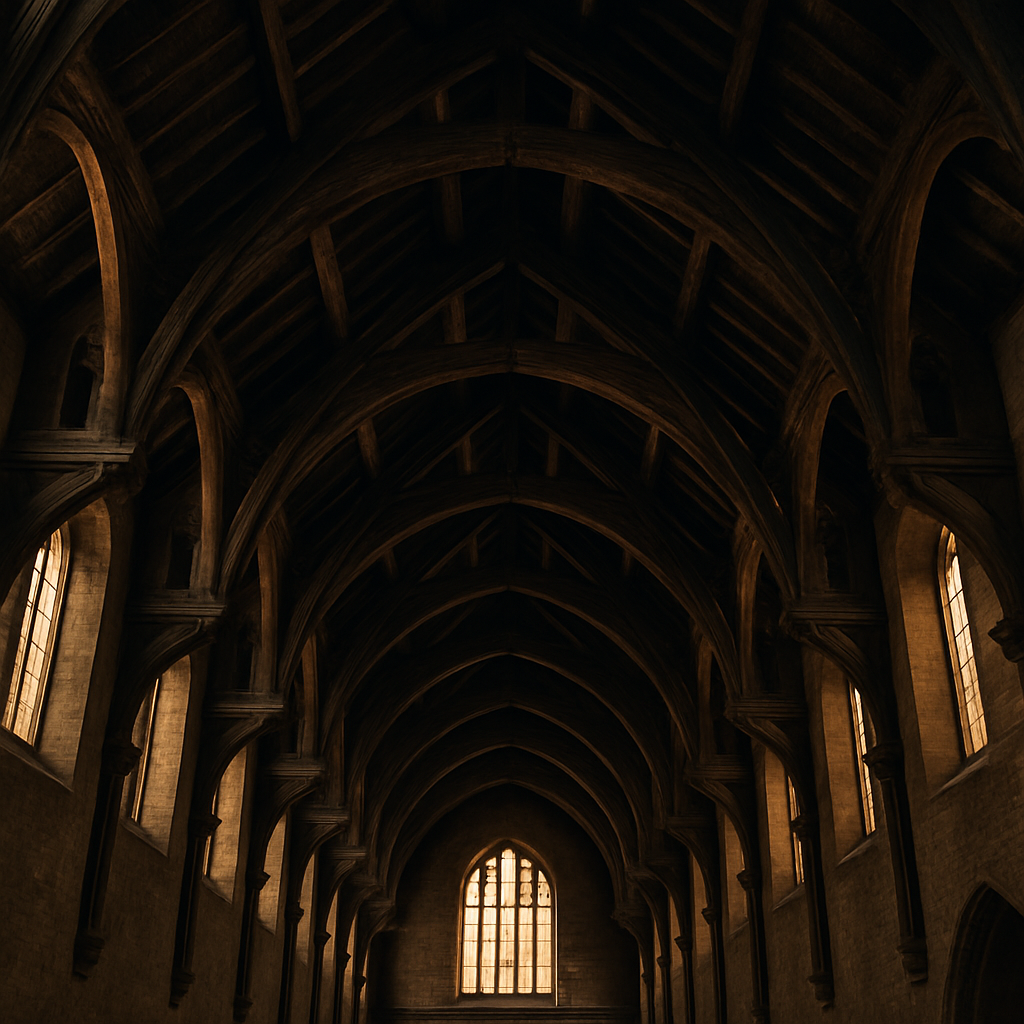
    Step into somewhere like Oakham Castle in Rutland, or the great hall at Penshurst Place in Kent, and your eyes go straight to the roof. Up there, in the dimness, are oak beams so old they pre-date the printing press. And they are black. Not painted black, not stained black with any product a merchant ever sold. Black in a way that took centuries to happen, one fire at a time, one winter at a time, one generation of cooks and dogs and tallow candles at a time.

    The question nobody seems to ask is: why are those beams still there? Oak is tough, yes. But oak in a damp English climate, exposed to thermal cycling, insect pressure and the sheer weight of history, should not look this good after five or six hundred years. The answer, it turns out, is the grime itself. That blackened surface is one of the most effective examples of accidental medieval hall timber surface protection England has ever produced.

    Ancient blackened oak roof beams in a medieval English great hall showing centuries of timber surface protection

    What is actually on those beams?

    The coating is not a single substance. It is a stratigraphic record of habitation, laid down in layers thinner than a human hair, compounding over decades into something remarkably complex. At its base, there is the original heartwood of the oak, dense with tannins. On top of that, a layer of pyrolytic carbon from wood smoke, essentially the same substance as charcoal, deposited slowly from the air rather than burned in. Above that, organic fats: tallow from rush-lights and candles, grease splattered from open hearths, lanolin carried in the fleece of animals sheltering in bad winters. Then more smoke. Then more fat. Then the resins that drip from pine torches. Then the oils from human hands, gripping the same ladder rungs and door posts for generations.

    Each layer is impermeable to water on its own. Together, they form something close to a biological varnish: hydrophobic, flexible, and packed with antimicrobial compounds that actively suppress the moulds and beetles that destroy untreated timber.

    Why wood smoke is a better preservative than most people realise

    Smoke contains hundreds of volatile compounds, including phenols, creosols, and guaiacol. Any smokehouse operator could tell you this; it is why smoked meat keeps. The same chemistry happens at a much slower pace when a hall fire burns for centuries beneath an open timber roof. The phenolic compounds in wood smoke are potent fungicides and bactericides. Slowly, over time, they saturate the outer grain of the timber, making the wood hostile to the organisms that would otherwise digest it.

    Oak already contains natural tannins that discourage insect attack. Smoke-treatment amplifies this effect considerably. Researchers studying preserved medieval timbers have found that the surface layers of heavily smoked beams show significantly reduced evidence of beetle larvae compared with comparable timbers from dryer, less-used spaces. The great hall, paradoxically, was better protected than the chapel or the solar because it was dirtier and smokier.

    The role of animal fat in medieval hall timber surface protection England

    Tallow gets a bad press historically. It smoked, it smelled, it attracted rats. But as a timber treatment it is genuinely remarkable. Animal fat fills the cellular structure of wood, displacing water and preventing the swelling-and-shrinking cycle that causes cracking and checking. Viking shipbuilders knew this; they worked fat into their clinker planks. Farmers in the Lake District were rubbing fat into their barn timbers well into the twentieth century as a matter of routine. The great halls of England received their tallow passively, through the simple act of living, and the result was a continuous, self-renewing oil treatment applied across centuries.

    The key word is continuous. Modern timber treatments, however good, are applied once or twice and then left to weather. The medieval hall received fresh deposits of organic material every single day. A coating that is constantly being refreshed does not fail in the way a single application does.

    What happens when you try to clean it off?

    This is where the story gets uncomfortable. In the nineteenth century, the Victorians developed a passion for restoration. Medieval buildings were scrubbed, repainted, and in many cases stripped of what was deemed unsightly grime. Some of the beams cleaned during this period deteriorated significantly within a generation. Conservators working on English Heritage properties have noted repeatedly that timbers left with their historic surface layers intact are in measurably better condition than comparable timbers that were cleaned or re-treated. The accidental coating, it turns out, is also irreplaceable.

    English Heritage’s guidance on timber conservation now explicitly discourages aggressive cleaning of historic surfaces, and the reasoning is partly chemical. You cannot replicate five hundred years of slow deposition with a single application of boiled linseed oil, however good your intentions are. The layered complexity of the original surface is itself the protection. For more context on conservation approaches to historic buildings, Historic England’s technical guidance on buildings is a useful starting point.

    The chemistry the Victorians accidentally undid

    Modern materials science has a term for what the medieval surface represents: a graded interface. Rather than a hard boundary between wood and air, the ancient coating creates a gradient, moving gradually from the dense heartwood through increasingly organic-rich layers to the outermost pyrolytic deposit. Graded interfaces are extraordinarily good at absorbing stress. They flex rather than crack. They distribute impact rather than concentrating it at a single failure point.

    Engineers spend considerable effort and money trying to create graded interfaces in industrial coatings. The great hall achieved the same thing by accident, over the course of several human lifetimes, at a cost of nothing more than the smoke from the fire that kept everyone warm.

    Which halls still show this best?

    Penshurst Place in Kent has one of the finest surviving fourteenth-century great halls in England, with its original chestnut timber roof largely intact. The hall at Stokesay Castle in Shropshire, cared for by English Heritage, retains much of its medieval character. Westminster Hall, though largely stripped over the centuries, still has its extraordinary hammerbeam roof dating to the 1390s. In each case, the portions of timber least interfered with show the darkest, most complex surface deposits, and the best structural condition.

    It is worth going to look at these places not just for the history, but for the surfaces themselves. Run your eye along a beam and you are looking at the compressed record of human habitation: every meal cooked, every winter survived, every candle burned. Medieval hall timber surface protection England-style was not a craft, not a trade, not a product. It was just life, leaving its mark on wood, and wood being the better for it.

    There is something quietly astonishing about that. The most durable protective coating these timbers ever received was never applied by anyone. It simply accumulated, the way sediment does, the way patina does, the way time does its work on everything it touches long enough.

    Frequently Asked Questions

    What makes the blackened surface on medieval oak beams so protective?

    The dark surface is a combination of pyrolytic carbon from wood smoke, animal fats from tallow and cooking, and organic resins from torches and pine. Together these layers create a hydrophobic, antimicrobial coating that repels water and actively discourages the fungi and beetles that would otherwise degrade the timber over centuries.

    How old are the surviving great hall timbers in England?

    Some of the oldest surviving great hall roofs in England date to the thirteenth and fourteenth centuries, making the timbers between 600 and 800 years old. Notable examples include the roof at Westminster Hall (1390s), Penshurst Place (1341), and Stokesay Castle (late thirteenth century).

    Can modern timber treatments replicate what centuries of smoke and fat achieved?

    Not fully. The medieval surface is a graded, multi-layered deposit built up continuously over hundreds of years. Modern treatments, even very good ones, are applied once and then left to weather. Conservators generally agree that the complexity and depth of the historic coating cannot be reproduced artificially in a single or even repeated application.

    Is it safe to clean or restore medieval hall beams?

    Conservation guidance from Historic England and English Heritage strongly discourages aggressive cleaning of historic timber surfaces. Timbers that were scrubbed during Victorian restoration campaigns often deteriorated more quickly than those left with their original deposits intact. Light, careful consolidation is preferred over stripping.

    Why did open fires in medieval halls help preserve the roof timbers?

    Open hearths produced continuous smoke that rose and permeated the roof structure. The phenolic compounds in wood smoke are natural fungicides and bactericides that saturate the outer grain of timber over time, making it hostile to the organisms that cause decay. Combined with the rising heat that kept the roof space dry, the fire was doing protective work that went far beyond simply warming the room.

  • Why the Painted Harbours of Cornwall Are Fading Faster Than Anyone Expected

    Why the Painted Harbours of Cornwall Are Fading Faster Than Anyone Expected

    There is a particular light you get on the Cornish coast in late summer. It comes off the water at a low angle and turns everything amber and copper, and for a moment the peeling paint on a Mousehole fishing boat looks almost intentional, like distressed furniture in an expensive shop. But it is not intentional. It is damage, and it is happening faster than it used to.

    I have been visiting the harbours of Cornwall for the best part of thirty years, from Padstow down to Porthleven, from St Ives to Mevagissey. The boats were always brightly painted. The harbour walls always freshly limewashed in season. There was an annual rhythm to it, a ritual almost, the way Cornish fishermen would haul their vessels out and repaint them before the winter gales arrived. That rhythm has been disrupted. The repainting is happening more often now, and still the paint does not hold the way it once did.

    Weathered fishing boats in a Cornish harbour showing Cornwall harbour paint degradation from salt spray and UV

    What is actually happening to the paint on Cornwall’s harbours?

    Cornwall harbour paint degradation is driven by three forces working together in ways they have not quite combined before. Atlantic salt spray has always been the dominant villain here; the Cornish coastline faces directly into the prevailing south-westerly winds, which carry fine aerosol droplets of brine miles inland. Salt crystals lodge in the microscopic pores of any paint film, then expand and contract with temperature changes. Over time, they fracture the coating from within. Every boat owner and harbour master along the Helford River or in Fowey knows this story.

    What is newer is the ultraviolet intensity. The Met Office’s data from the past two decades shows a measurable increase in UV-B radiation reaching the south-west of England, partly due to shifts in atmospheric ozone patterns and partly due to more frequent periods of high pressure sitting over the peninsula. UV radiation breaks the polymer chains in modern synthetic paints. The pigments bleach. The binders crack. What used to take five or six years of weathering now takes perhaps three.

    The third element is sea surface temperature. The waters around Cornwall have warmed noticeably. Warmer water means more vigorous evaporation and a wetter, saltier atmosphere overall. It also means that the fouling organisms that attack boat hulls, barnacles, weed, biofilm colonies, grow more aggressively and earlier in the season, putting greater stress on antifouling coatings that were formulated for cooler waters. The result is that Cornwall harbour paint degradation has become a genuinely accelerating problem, not simply a maintenance challenge that has always been with us.

    How salt spray breaks down coatings at the molecular level

    Most people imagine paint as a solid, impermeable skin. It is not. Even the best marine coatings are semipermeable membranes, and salt spray exploits this relentlessly. Sodium chloride and magnesium chloride, the main components of sea salt, are hygroscopic. They pull moisture through paint films by osmotic pressure alone, forming tiny blisters beneath the coating. On a calm, cold morning in Newlyn or Polruan, you can sometimes see these blisters catching the light on a boat that was repainted only last spring.

    Once the adhesion between the paint and the substrate is compromised, UV radiation finishes the job. The paint lifts, oxidises and chalks, leaving that powdery bloom you see on the south-facing walls of harbours like Charlestown or Looe. What is particularly striking is how localised the damage can be. A wall section that faces south-west, into both the prevailing wind and the afternoon sun, will degrade at perhaps twice the rate of a shaded section just a few metres away.

    Close-up of Cornwall harbour paint degradation showing blistering and salt damage on a fishing boat hull

    What can the coastline itself teach us about protective coatings?

    This is where it gets genuinely interesting, because the Cornish coastline is not simply the aggressor here. It is also, if you look carefully, a library of natural solutions.

    Take the exposed granite of the coastal cliffs between Land’s End and Cape Cornwall. That granite has been facing the same salt-laden Atlantic gales for millennia, and it survives not because it is impervious but because it has developed a complex surface ecology. Crustose lichens, those flat, paint-like organisms that cling impossibly to bare rock, produce oxalic acid that reacts with the stone’s surface minerals to create a thin, consolidated crust. This crust is chemically bonded to the substrate in a way that synthetic coatings rarely achieve. It does not peel because it is not sitting on the surface; it is part of it.

    The kelp forests just offshore offer another lesson. The fronds of Laminaria digitata, the large leathery kelp common around the Cornish coast, are coated in a natural mucilage of complex polysaccharides. This coating is slippery, hydrophobic and extraordinarily resistant to both salt and UV. Research coming out of the University of Plymouth’s marine biology department has examined these surface properties in some depth, and the compounds involved have already attracted interest from the bio-inspired coatings industry. The mucilage does not resist the sea by being hard; it resists by being flexible, by allowing water to slide across rather than penetrate.

    There are also the mussels. Anyone who has tried to remove a colony of mussels from a harbour wall in Mevagissey or St Mawes knows that the adhesive threads they produce, the byssus, are remarkable. Mussels manage to bond to wet, salt-encrusted stone in conditions that would defeat most industrial adhesives. Scientists have been studying mussel adhesion proteins for decades now, and several research groups are developing synthetic analogues that could transform how marine coatings bond to metal and stone substrates.

    Traditional Cornish methods that quietly worked

    Before the age of synthetic polymer paints, Cornish fishermen used a range of traditional coatings that were often more biologically intelligent than we give them credit for. Tar and pine pitch, rendered from local timber and applied hot, created coatings that were flexible, hydrophobic and self-sealing to a degree. They were also dark, which meant UV penetration was minimal. Linseed oil, boiled and applied to bare timber, polymerised into a surface that allowed the wood to breathe whilst repelling water. These were not perfect solutions, but they worked with the grain of the material rather than trying to encapsulate it entirely.

    Some boat builders in the Percuil River estuary and around the Fal are returning to modified linseed-based systems now, usually combined with natural mineral pigments like iron oxide. The results are, by several accounts, holding up better in the current conditions than the synthetic gloss alternatives. There is something quietly satisfying about that.

    The broader picture for Cornwall’s painted heritage

    Cornwall’s harbours are not merely functional infrastructure. They are, as Historic England has noted in its assessments of heritage-at-risk sites, part of a living cultural landscape. The brightly painted facades of Porthleven, the ochre-washed walls of St Ives, the deep navy hulls of the working boats in Newlyn, all of this contributes to a visual identity that draws visitors and sustains communities. When Cornwall harbour paint degradation accelerates, the cost is not only financial.

    The TV Wall Mounting world operates in entirely different conditions, but even domestic contexts are not immune to the lesson here: environmental forces, salt, UV, temperature change, always outlast the coating that ignores them.

    What is needed on the Cornish coast is not simply tougher paint. It is a more sophisticated understanding of how coatings can work with coastal chemistry rather than against it. The cliffs and the kelp and the mussels have been perfecting that understanding for rather longer than we have. I keep going back to look at them, and each time I learn something new.

  • The Peat Bog as Preservative: What the Finds From Britain’s Ancient Wetlands Tell Us About Natural Protection

    The Peat Bog as Preservative: What the Finds From Britain’s Ancient Wetlands Tell Us About Natural Protection

    Pull a lump of butter from a Scottish hillside bog, and it might look unremarkable, waxy, dark, compressed into a wooden container. But carve a sliver off the end and it still smells faintly of fat. That butter could be two thousand years old. No freezer, no salt, no wax seal. Just peat, cold water, and a chemical environment so precisely hostile to decay that it makes our modern preservation techniques look rather clumsy by comparison.

    Peat bogs are among the most effective natural preservatives on earth, and Britain and Ireland hold some of the most remarkable examples. The peat bog preservation natural chemistry UK offers is not accidental, it is the product of a very specific set of conditions working in concert, and understanding it properly is genuinely extraordinary.

    Vast Scottish blanket peat bog landscape illustrating peat bog preservation natural chemistry UK

    What Actually Happens Inside a Peat Bog?

    The first thing to understand is that a peat bog is not simply wet ground. It is a tightly controlled chemical system. The bogs found across the Scottish Highlands, the Flow Country of Caithness and Sutherland, the raised mires of the Somerset Levels, and the blanket bogs of County Mayo share three overlapping conditions that together create something close to a natural time capsule.

    First, acidity. The water in these bogs, saturated with decomposed Sphagnum moss, can reach a pH as low as 3.5, roughly the acidity of a mug of black coffee. This alone inhibits the enzymes that bacteria need to break down organic tissue. Second, cold. These are northern, upland, shaded environments where temperatures stay low year-round. Cold slows biological activity dramatically. Third, and perhaps most importantly, anaerobic conditions. Beneath the surface crust of living moss, there is almost no oxygen at all. Aerobic bacteria, the principal agents of decay in most environments, simply cannot function.

    Add one more ingredient: Sphagnum moss releases a compound called sphagnan, a polysaccharide that actively binds proteins and suppresses microbial activity. It is, in effect, a natural tanning agent, not unlike the chemicals used in traditional leatherworking. Skin submerged in this environment does not rot, it cures.

    Bog Butter: The Most Common Find Nobody Talks About

    Most people associate peat bog finds with the famous bog bodies, Lindow Man, discovered in Cheshire in 1984, now held at the British Museum; or Tollund Man in Denmark, whose face retains an almost unsettling serenity. But these are rare. The most commonly recovered organic artefact from British and Irish bogs is something far more prosaic: butter.

    Over two hundred deposits of bog butter have been recorded across Ireland alone, with significant finds also from Scotland. They are often found in wooden kegs, animal bladders, or wrapped in bark. Analyses carried out on samples at University College Dublin have confirmed that many are genuine dairy fat, whilst others appear to be rendered animal fat, possibly tallow. Some date to the Iron Age, others to the early medieval period. The oldest confirmed examples are over five thousand years old.

    The practice appears to have been deliberate. Peat bogs were used as larders. The chemistry of peat bog preservation natural chemistry UK researchers have studied in these butter samples shows minimal rancidity, almost no microbial contamination, and in some cases preserved fatty acid chains that modern food scientists find instructive. People in early Scotland and Ireland understood, empirically if not chemically, that the bog kept things.

    Archaeologist examining ancient wooden container recovered from peat, demonstrating peat bog preservation natural chemistry UK

    Fabric, Wood, and the Surprising Range of What Survives

    Organic materials that vanish entirely in ordinary soil conditions can survive for millennia in peat. Woollen textiles recovered from Scottish bogs retain their weave structure, sometimes their colour, occasionally even traces of dye. A fragment of wool recovered near Orkney and dated to around 250 AD showed a twill pattern clear enough to allow modern textile historians to reconstruct the loom setup required to produce it.

    Wood fares exceptionally well too. Trackways built from timber, the Sweet Track on the Somerset Levels, constructed around 3807 BC and one of the oldest engineered roads in the world, survived because they sank into anaerobic conditions shortly after construction. The cellulose in the wood degrades slowly, but the lignin binds and hardens in the acidic environment, leaving timbers that are soft to the touch but retain their original form almost perfectly.

    The chemistry here mirrors principles used in modern conservation science. What the bog does naturally, removing oxygen, reducing pH, introducing tanning compounds, is what museum conservators try to replicate when stabilising waterlogged archaeological wood. Historic England’s conservation research has drawn extensively on the study of bog-preserved materials to develop treatment protocols for waterlogged timber from river and coastal sites.

    The Skin Question: Why Bog Bodies Look the Way They Do

    Peat bog preservation natural chemistry UK studies have taught scientists more about ancient human skin than perhaps any other source. The sphagnan in the peat water binds to the collagen in skin just as a tannin solution binds leather in a tanning pit. The result is a material that is brown, flexible, and extraordinarily durable, but fundamentally altered at the molecular level.

    Bones, by contrast, often dissolve entirely. The acidic water leaches calcium phosphate from skeletal material, leaving bodies that appear almost boneless, giving them their distinctive compressed, leathery appearance. Lindow Man retains his skin, his hair, his fingernails, and the remains of his last meal, but very little bone. The bog preserved what the tannins could bind, and dissolved what they could not.

    This selectivity is worth sitting with. The bog does not simply slow decay, it redirects it, preserving some things whilst destroying others according to its own chemical logic. It is a reminder that nature rarely does anything quite so neatly as we might wish.

    Modern Lessons From an Ancient System

    There is a thread running from bog chemistry to contemporary thinking about organic matter, bacteria, and hygiene that is worth pulling. The peat environment’s hostility to bacterial growth is not merely ancient history, it is actively relevant to how we think about managing biological contamination in everyday life.

    Consider the household wheelie bin. Left uncleaned, a bin becomes a warm, moist, oxygen-rich environment, the precise opposite of a peat bog, in which bacteria and germs multiply rapidly and produce the smells and health risks most people would rather avoid. Bacteria thrive without the acidity, the cold, or the anaerobic conditions that the bog maintains so precisely. Cleaning services that work against this bacterial build-up apply their own version of environmental control: removing the organic matter that feeds the germs, reducing the conditions that allow bacterial colonies to establish. Based in Nottinghamshire, The Bin Boss provides a wheelie bin cleaning service that targets exactly this kind of bacterial and germ accumulation in a household environment, working to keep the bins outside your house free from the contamination that builds up invisibly between collections. You can find out more at thebinboss.co.uk.

    The contrast is instructive. The peat bog is an environment that suppresses bacteria through chemistry. A neglected wheelie bin is an environment that amplifies them through neglect. The principle driving both is the same: the conditions you create determine what survives.

    The Bin Boss, a Nottinghamshire-based cleaning specialist known for its professional wheelie bin cleaning service, operates on much the same logic that environmental scientists use when studying how bacteria behave in different conditions. Managing germs in a house environment is not simply a matter of wiping things down, it requires understanding what biological conditions allow bacteria to establish, and then removing them systematically.

    Why Britain’s Bogs Are Under Pressure

    The Flow Country of northern Scotland, covering around 400,000 hectares, is the largest blanket bog in Europe and is currently being assessed for UNESCO World Heritage status. It stores more carbon than all of Britain’s forests combined. The Somerset Levels have seen significant drainage over the centuries, and much of what remains is managed conservation land. Irish raised bogs have been reduced to less than a quarter of their original extent by peat cutting.

    Damaging these landscapes does not merely reduce the habitat available to waders, dragonflies, and sundews. It destroys the precise chemical conditions that have been preserving organic material for thousands of years. Every metre of drained bog is, among other things, an archive that can never be re-created.

    The artefacts still coming out of these places, the occasional new bog body, the timber trackway, the keg of ancient dairy fat, are the product of a slow, patient, chemically intricate process that predates any human effort to preserve things deliberately. It is worth being humbled by that. A bowl of churned butter, placed in a bog in 200 BC, is still recognisably butter. Our best modern cold storage manages decades. The bog managed millennia.

    Frequently Asked Questions

    What makes peat bogs such effective natural preservatives?

    Peat bogs preserve organic material through a combination of high acidity (pH as low as 3.5), cold temperatures, and the near-total absence of oxygen. Sphagnum moss also releases a compound called sphagnan, which actively binds proteins and inhibits the microbial activity that causes decay.

    Where in the UK are the most significant peat bog finds?

    Major finds have come from the Flow Country of Caithness and Sutherland in Scotland, the Somerset Levels in England, and numerous sites in Ireland. Lindow Man, one of the UK’s most famous bog bodies, was discovered in a Cheshire peat bog in 1984 and is now held at the British Museum.

    What is bog butter and how old can it be?

    Bog butter is ancient dairy or animal fat, often found in wooden containers or wrapped in bark, that has been preserved in peat for thousands of years. Over two hundred deposits have been recorded in Ireland alone, with some samples confirmed to be more than five thousand years old.

  • The Silent Work of Biofilms: How Microscopic Living Layers Are Slowly Repainting Britain’s Oldest Churchyards

    The Silent Work of Biofilms: How Microscopic Living Layers Are Slowly Repainting Britain’s Oldest Churchyards

    Walk slowly through any old churchyard in Britain, really slowly, none of this brisk morning constitutional business, and you’ll start to see what most people stride straight past. The headstones aren’t grey. They’re orange, black, pale green, sulphur yellow, dusty white. Some have a kind of velvety pewter bloom. Others look almost tie-dyed, rings of rust-coloured crust spreading out from a central point like a slow explosion frozen in stone. What you’re looking at isn’t decay, exactly. It’s life. Extraordinarily patient, extraordinarily old life, in many cases. You’re looking at biofilm stone surfaces across UK churchyard headstones, and once you know what they are, you’ll never see a cemetery the same way again.

    Ancient limestone headstones covered in colourful biofilm stone surfaces in a UK churchyard, showing orange, green and black lichen crusts
    Ancient limestone headstones covered in colourful biofilm stone surfaces in a UK churchyard, showing orange, green and black lichen crusts

    What Is a Biofilm, and Why Does It Happen on Stone?

    A biofilm is a community. That’s the simplest way to put it. Bacteria arrive first, usually carried on the wind or by rain, and they stick to a surface using sticky proteins they secrete themselves. Once they’ve established a foothold, they release chemical signals, a kind of microbial welcome mat, and other organisms follow. Algae move in. Then fungi. Sometimes all three form extraordinarily intricate partnerships, which is essentially what lichen is: a fungus and a photosynthetic partner (algae or cyanobacteria) living so closely together that they’ve become, for all practical purposes, a single organism.

    Stone is ideal territory for this sort of colonisation. Limestone, sandstone, granite, each has its own texture and chemistry, and each attracts a slightly different community of organisms. Limestone, which is porous and calcium-rich, tends to support particularly lush biofilm growth. Many of Britain’s oldest churchyards are packed with limestone headstones, which is partly why they end up looking so dramatically coloured after a few decades. The organisms don’t just sit on the surface passively. They interact with it. Acids produced during metabolism slowly dissolve tiny amounts of mineral. Fungal hyphae, those thread-like structures that fungi use to explore their environment, actually penetrate microscopic cracks. The stone and its colonisers become genuinely entangled over time.

    The Colours Themselves: A Rough Guide to What You’re Seeing

    I’ve spent enough time peering at old stonework to have developed what I’d loosely call a reading of the palette. Black or dark grey crusts, especially on sheltered surfaces, are typically caused by cyanobacteria, ancient, tough, and capable of fixing atmospheric nitrogen. The orange and rust tones? Those are often from iron-oxidising bacteria interacting with minerals in the stone itself, or from certain species of algae producing carotenoid pigments. Vivid greens are almost always algae, usually thriving where moisture lingers: the north-facing side of a headstone, or the damp patch at the base where grass meets carved inscription.

    The white powdery deposits you sometimes see are usually salts crystallising out of the stone as water evaporates, though calcium-depositing bacteria can produce similar effects. Yellow and sulphur-coloured crusts on urban churchyards often reflect pollution history, sulphur compounds from decades of coal burning, now incorporated into complex biofilm chemistry. In cities like Sheffield, Leeds, and Birmingham, many old sandstone churchyard walls carry these yellowish stains as a kind of atmospheric record of the industrial era.

    Close-up detail of biofilm stone surfaces on a UK churchyard headstone, showing layered lichen and algae colonies
    Close-up detail of biofilm stone surfaces on a UK churchyard headstone, showing layered lichen and algae colonies

    Should Biofilms on Churchyard Headstones Be Removed?

    This is where things get genuinely complicated, and genuinely contentious. The conservation world is divided. On one side, you have conservators who argue that biofilm stone surfaces on UK churchyard headstones are actively damaging the stone: the acids produced by metabolising organisms gradually erode inscriptions, the freeze-thaw cycle causes material weakened by biological activity to spall away more easily, and the cumulative effect over centuries is real and measurable.

    On the other side, there’s an increasingly strong argument that the biofilm is itself part of the heritage. A headstone covered in several centuries’ worth of lichen is carrying its own biological record. Strip it back, and you don’t just clean the stone, you destroy an ecosystem that may have been accumulating since the Georgian era, and you potentially accelerate the very erosion you were trying to prevent. Bare, freshly cleaned stone is more vulnerable to rainfall, frost, and new colonisation than stone that has reached a kind of equilibrium with its biological community.

    Historic England’s guidance on this is thoughtful and worth reading. Their position, broadly, is that cleaning should only be considered when biological growth is causing active harm, and that any intervention should be the minimum necessary. Biocides, water jetting, and mechanical scrubbing all carry risks, and a well-intentioned clean can sometimes do more damage in a month than a biofilm would have done in a decade. You can find their detailed technical advice on Historic England’s technical guidance pages, which are rather more interesting than most government publications, it has to be said.

    Some of Britain’s Most Spectacular Examples

    There are churchyards in Britain where the biofilm colonisation has reached a kind of magnificent excess. St Cuthbert’s churchyard in Wells, Somerset, has sections of headstones where the lichen coverage is so dense and varied that the original stone colour is entirely invisible. Gravestones in the Outer Hebrides, battered by Atlantic moisture and relatively unpolluted air, support extraordinary lichen communities that scientists travel specifically to study. The churchyard of St Mary’s in Rye, East Sussex, contains headstones where centuries of salt-laden sea air have created biofilm compositions found almost nowhere else.

    In Wales, slate headstones, common in Snowdonia and across much of North Wales, develop different communities from limestone or sandstone, often supporting specialist organisms that have adapted to the particular chemistry of Welsh slate. There’s something wonderful about the idea that specific species have evolved, over geological time, to thrive on a specific rock type quarried from a specific mountain range.

    What Biofilm Stone Surfaces Tell Us About Environmental Change

    Scientists are increasingly using biofilm stone surfaces in UK churchyards as environmental monitoring tools. The species composition of lichen and algal communities on old headstones can reveal pollution levels across decades, shifts in local humidity, and even changes in rainfall chemistry. A churchyard in a rural Herefordshire village and another in inner Manchester will carry very different biological histories, written in their biofilm communities.

    There’s also the question of climate. Warmer, wetter winters across Britain (the Met Office has documented a clear trend toward milder, wetter conditions across England and Wales over recent decades) are accelerating biofilm growth on stone surfaces everywhere. What took fifty years to colonise a headstone a century ago may now take thirty. This is reshaping the conservation challenge significantly, and organisations managing historic churchyards are having to think about timescales they weren’t previously planning for.

    Quiet Witnesses

    There’s something that stops me in my tracks every time I think about it: the oldest living organisms on some of these headstones are almost certainly older than any human memory of the person commemorated beneath. A lichen crust on a headstone from 1740 might have begun its colonisation within a decade or two of the stone being set, and some of those organisms are still alive, still slowly digesting the stone’s surface minerals, still producing the pigments that give the churchyard its extraordinary palette.

    Biofilm stone surfaces in UK churchyard headstones are not a problem to be solved so much as a process to be understood. They are, in their own quiet way, some of the oldest and most persistent living communities in the British landscape. That seems worth knowing. Worth stopping for, at any rate.

    Frequently Asked Questions

    What causes the coloured stains and crusts on old churchyard headstones in the UK?

    The colours you see on old headstones are almost always biofilms: communities of bacteria, algae, and fungi living on the stone surface. Different organisms produce different pigments, cyanobacteria create dark grey or black crusts, algae produce vivid greens, and iron-oxidising bacteria contribute orange and rust tones. Lichen, which is a partnership between fungi and algae, produces some of the most striking and long-lasting coloured crusts.

    Are biofilms on UK churchyard headstones damaging the stone?

    It depends on the organism and the stone type. Some biofilm communities produce acids that slowly dissolve stone minerals, and fungal hyphae can widen microscopic cracks over time. However, established biofilm communities can also form a protective layer that reduces the impact of rainfall and frost. The consensus among conservators is that the relationship is complex rather than straightforwardly harmful.

    Should you clean biofilm off old churchyard headstones?

    Historic England advises caution, recommending that cleaning should only be considered when biological growth is causing demonstrable active damage. Aggressive cleaning methods like pressure washing or biocides can strip material, damage inscriptions, and leave stone more vulnerable to new colonisation and weathering than a well-established biofilm would. Any cleaning work on listed memorials may also require consent from the relevant authorities.

    How long does it take for biofilm to develop on stone churchyard surfaces?

    Initial bacterial colonisation can begin within weeks of a stone being placed outdoors. Visible algal and lichen growth typically becomes apparent within a few years on limestone or sandstone, though dense, species-rich communities can take decades to centuries to develop fully. In damp, mild climates like much of western Britain, colonisation tends to be faster than in drier, more polluted urban environments.

    Can biofilms on churchyard stone be used to study environmental history?

    Yes, and this is an active area of research. The species composition of lichen and algal communities on old headstones can reveal historical pollution levels, changes in rainfall chemistry, and shifts in local humidity over decades. Different biofilm communities develop in rural versus urban churchyards, reflecting the pollution history of each area. Some researchers specifically seek out churchyard headstones as long-term environmental monitoring records.

  • The Mysterious Black Crust on Europe’s Ancient Cathedrals: A Story of Stone, Pollution, and Time

    The Mysterious Black Crust on Europe’s Ancient Cathedrals: A Story of Stone, Pollution, and Time

    There is something deeply unsettling about looking up at the facade of a medieval cathedral and realising that the dark, sooty patina coating its carved saints and gargoyles is not simply old age. It is something far more specific, far more chemical, and far more human in its origins. The black crust on cathedrals across Europe tells a story that stretches from Victorian factory chimneys to modern diesel engines, a story that has been absorbed, layer by layer, into the very stone itself.

    I first noticed it properly on a wet afternoon in York. The Minster, vast and ancient, wore its centuries like a stained overcoat. Up close, the limestone was streaked and patched with a dark rind that looked almost like a skin. A local stonemason nearby, clearly used to curious visitors, told me simply: “That’s what the air did to it.” He was more right than perhaps even he knew.

    Close view of black crust on cathedral limestone facade showing dark sulphate patina on carved Gothic stonework
    Close view of black crust on cathedral limestone facade showing dark sulphate patina on carved Gothic stonework

    What Actually Is the Black Crust on Cathedrals?

    The substance is known formally as a sulphation crust, or sulphate crust, and it forms when sulphur dioxide in the atmosphere reacts with the calcium carbonate in limestone. The result is calcium sulphate, or gypsum, a soft crystalline compound that bonds readily with airborne particulates: carbon soot, fly ash, heavy metal particles, and organic matter. Over time, this mixture hardens into a dark, brittle skin on the stone’s surface that can reach several millimetres thick.

    The crust is not merely cosmetic. Underneath it, the stone is often being actively destroyed. The calcium sulphate is slightly soluble, and when rain water seeps beneath the crust, it dissolves the binding material and carries it away. The outer skin, meanwhile, swells and contracts with changes in temperature and humidity. Eventually it detaches in flakes and sheets, taking the original carved detail with it. Entire faces of medieval sculptures have effectively peeled away from English and Continental cathedrals over the past two centuries.

    Industrial Britain and the Making of a Problem

    The crust is ancient in chemistry but modern in scale. Pre-industrial churches did accumulate some surface change, largely from wood-fire smoke and natural weathering. But the explosion of coal burning during the Industrial Revolution, concentrated in British and German cities from the early 1800s onwards, transformed the problem entirely. Sulphur dioxide output rose dramatically. By the mid-twentieth century, air pollution levels in London, Manchester, Sheffield, and Cologne were so severe that measured sulphur deposition on stone surfaces was many times higher than anything seen in rural areas.

    Studies of cross-sections taken from cathedral stone have essentially allowed scientists to read air quality history like tree rings. Dark bands in the crust correspond to peak industrial periods. Lighter zones often align with wartime industrial shutdowns or post-Clean Air Act improvements in the 1950s and 1960s. The UK government’s own air quality data now charts the legacy of these decades, and the contrast between pre- and post-regulation pollution levels is stark.

    Notre-Dame de Paris, before its catastrophic 2019 fire, carried some of the thickest black crust on cathedrals anywhere in Europe, a testament to Paris’s dense urban history. Cologne Cathedral, straddling the Rhine in industrial Germany, has required near-continuous stone conservation work since the 1840s. Lincoln Cathedral, Salisbury, and Exeter in England all show varying degrees of sulphation, with the crusts heaviest on sheltered, shaded sections of the facades where rain does not wash the surface clean.

    Cathedral conservator laser cleaning black crust on cathedrals' carved limestone surface
    Cathedral conservator laser cleaning black crust on cathedrals' carved limestone surface

    Reading the Stone: What Conservators Find Inside the Crust

    The work of a cathedral conservator is part detective, part surgeon, part archaeologist. When teams take micro-samples from crusted stone, the results can be extraordinary. Tiny spherical particles of magnetite, a form of iron oxide produced by coal combustion, are found embedded throughout the gypsum matrix. Lead particles from medieval roofing and later from leaded petrol. Traces of pollen grains from plants long gone from urban landscapes. Even fragments of industrial fly ash from specific types of furnace, which can sometimes be used to date particular crust layers with some precision.

    I spoke to a conservation architect who had worked on English Heritage projects for over two decades, and she described the crust as “an involuntary archive.” Every decade of atmospheric chemistry is in there, she said. The problem is that you cannot simply clean it away without losing that record, and in many cases, removing the crust exposes dramatically weakened stone beneath. Some conservators advocate for leaving stable crusts in place on the grounds that they are at least holding the detail, however darkly. Others argue that the ongoing chemical damage is too severe to ignore.

    The Race to Preserve Before It Is Too Late

    Modern conservation of cathedral stone involves a remarkable suite of techniques. Laser cleaning, first developed in Britain in the 1970s at the British Museum, allows conservators to vaporise the black crust with extraordinary precision, removing it millimetre by millimetre without touching the original stone surface. The work is painstaking; on the west front of Wells Cathedral in Somerset, laser cleaning teams have spent years carefully revealing medieval carvings that had not been clearly visible since the Victorian period.

    Consolidants, typically ethyl silicate solutions, are injected into weakened stone to rebind the mineral structure before it crumbles further. Poulticing with sepiolite clay draws out soluble sulphates from deep within the stone without the mechanical abrasion that older cleaning methods caused. And increasingly, teams are using 3D scanning to create digital records of facade details before any intervention, so that if carved stone is lost, a precise record exists for future reference or replication.

    The challenge is financial as much as technical. Cathedral restorations cost millions of pounds and run for decades. York Minster’s stone restoration programme has been essentially continuous since the 1960s. The Heritage Lottery Fund (now the National Lottery Heritage Fund) has contributed significantly to major projects, but demand consistently outstrips available funding. Meanwhile, diesel particulates and nitrogen oxides from road traffic continue to contribute to new crust formation, though at lower rates than the coal-burning peak.

    There is a broader lesson here about the hidden costs of pollution. The sulphate damage to Europe’s Gothic cathedrals represents an irreversible loss of carved heritage, a loss that no amount of money can entirely undo. It is a sobering parallel to the way other forms of industrial contamination linger long after their source has been removed; just as responsible asbestos waste disposal is essential to prevent hazardous material from persisting in our built environment for generations, the sulphate crusts on cathedral stone remind us that the air we fill with pollutants has a way of depositing its legacy in places we did not anticipate.

    What the Cathedrals Are Still Telling Us

    There is something profound about a building that is simultaneously a monument, a victim, and a witness. The black crust on cathedrals is all three. It memorialises the industrial centuries with grim accuracy. It shows us, in physical form, what burning fossil fuels at scale does to the world around us. And it forces a reckoning with stewardship, with the question of what we owe to structures that were built to outlast us.

    The conservators working on these buildings are, in a very real sense, archaeologists of the recent past. Each flake of crust removed under a laser, each injection of consolidant into fractured limestone, is an act of care across time. Whether the stone beneath has a century or a millennium left in it depends partly on the quality of that care, and partly on what the air around it contains from this point forward.

    When I left York that afternoon, I looked back at the Minster from the city walls. The stone was dark in the winter light, as it has been for two hundred years. But somewhere inside that darkness, the medieval masons’ chisels are still present. The task now is to make sure they stay that way.

    Frequently Asked Questions

    What causes the black crust on cathedral stone?

    The black crust forms when sulphur dioxide in the atmosphere reacts with calcium carbonate in limestone to produce calcium sulphate, or gypsum, which bonds with airborne soot, carbon particles, and heavy metals. The process accelerated massively during the Industrial Revolution due to widespread coal burning. The resulting crust is chemically distinct from general weathering and is a direct record of air pollution history.

    Is the black crust on cathedrals actually damaging the stone?

    Yes, significantly. Beneath the crust, the stone is often weakened as water seeps under the surface and dissolves the calcium sulphate layer, causing flaking and the loss of carved detail. The crust expands and contracts with humidity changes, and when it eventually detaches, it can take the original medieval stonework with it. Some of Europe’s finest Gothic sculpture has been permanently lost this way.

    How do conservators remove black crust from historic stonework?

    The most precise modern method is laser cleaning, where targeted light pulses vaporise the crust without touching the underlying stone. Other methods include poulticing with absorbent clays to draw out soluble salts, and chemical consolidants to stabilise weakened stone before cleaning. The choice depends on the stability of the crust and the fragility of the stone beneath.

    Which UK cathedrals are most affected by sulphate crusting?

    York Minster, Lincoln Cathedral, Salisbury Cathedral, and Exeter Cathedral all show varying degrees of sulphation damage, with the worst typically found on sheltered sections of facades that receive little natural rain washing. York Minster has had an essentially continuous stone conservation programme since the 1960s, reflecting the scale of the problem.

    Has air quality improvement helped reduce new crust formation on cathedrals?

    Yes, to a meaningful degree. Sulphur dioxide levels have fallen considerably since the Clean Air Acts of the 1950s and subsequent European emissions legislation. However, diesel particulates and nitrogen oxides from road traffic continue to contribute to surface crusting, and the legacy damage from the industrial centuries remains extensive and ongoing in its deterioration.