

There is a particular kind of damage that announces itself with a whisper rather than a crash. Walk into a flood-damaged medieval church in the Somerset Levels a few months after the water has gone, and what you notice first is a pale, powdery tidemark running horizontally around the nave walls. It sits at roughly knee height, sometimes lower, sometimes creeping further up where the water lingered longest. To the untrained eye it looks like a watercolour wash left by the retreating flood. In reality, it is the beginning of a slow structural assault. Salt efflorescence in historic churches after UK flooding is one of the least-discussed and most destructive consequences of our increasingly wet winters, and the buildings most at risk are often the ones with the fewest resources to fight back.
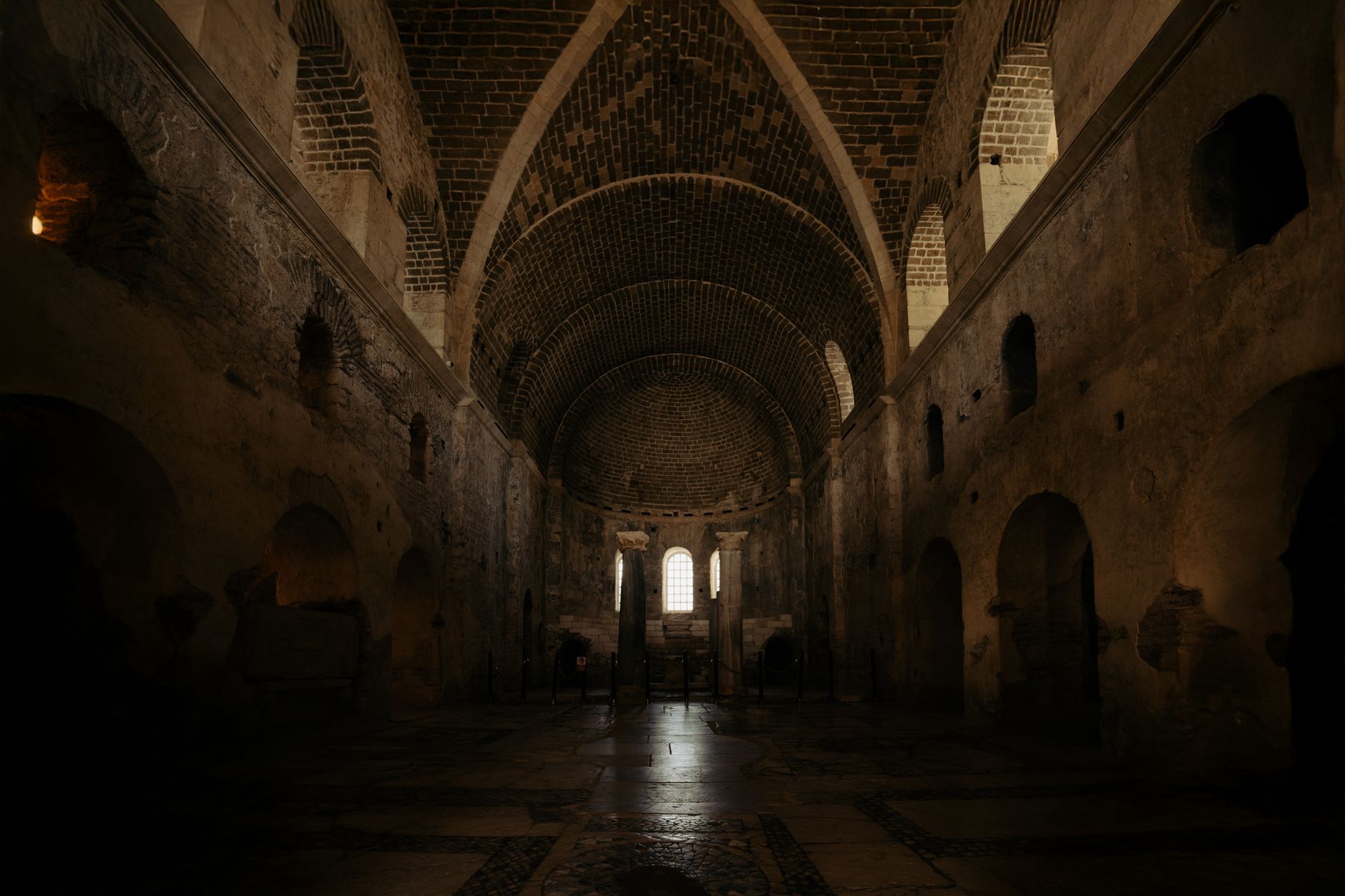
I have spent enough time in old stone buildings to recognise that tidemark immediately. Once you know what you are looking at, you see it everywhere: in low-lying Fenland churches where the floor has been underwater more than once in living memory, in the squat Norman towers of Norfolk’s flood plains, in the ancient chapels of the Somerset Levels that sit barely a metre above the surrounding peat moor. The mark is almost always the same pale, crystalline bloom, like frost that never quite melts.
What salt efflorescence actually is
Stone is not solid in the way it first appears. Sandstone, limestone, brick and mortar are all riddled with tiny pores, and those pores act like a network of drinking straws during a flood. When water rises against a church wall, it does not simply wet the surface. It is drawn upward by capillary action, carrying with it dissolved salts from the surrounding soil, the groundwater, and sometimes the stonework itself. Sulphates, chlorides, nitrates, carbonates: all of them hitch a ride.
As the flood recedes and the building begins to dry, the water inside the stone migrates toward the surface. The salts travel with it. At the point where evaporation occurs, the water disappears into the air but the salts cannot. They crystallise, and in crystallising they expand. That expansion, sometimes called subflorescence when it happens just below the surface, exerts a pressure that the surrounding stone cannot always absorb. Flakes of facing stone lift away. Mortar crumbles. The outer skin of a carving, worn smooth by seven centuries of damp air, simply detaches. The process is slow, cyclical, and essentially relentless as long as the conditions that drive it keep recurring.
Why flooding makes it so much worse
A church wall in a normal English winter gets damp. Frost does its work. Lichen does its work. But the salt loading is relatively modest, and the drying periods between events allow some equilibrium to establish itself. Flooding breaks that equilibrium completely. A prolonged flood event, even one lasting only a few weeks, introduces a quantity of dissolved salts that might otherwise take decades to accumulate. When the water finally drops, the drying front moves inward and then outward repeatedly as weather changes, driving salts deeper into the stone on wet days and pulling them back toward the surface on dry ones. Each cycle deposits another crystalline layer.
The Somerset Levels have seen this pattern with increasing regularity. After the winter floods of recent years, conservators working on churches around Glastonbury and the Polden Hills reported visible efflorescence appearing within weeks of the water level dropping. The Fens are no different: some of the flat-lying parish churches of Cambridgeshire and Lincolnshire have dealt with repeated inundation, and the cumulative effect on their Barnack limestone and local clunch is genuinely troubling. Norfolk’s lowest-lying churches sit on soils rich in sodium chloride from historical sea incursion, which means the salts dissolved into floodwater there carry an extra punch.
Historic England has documented the risk to flood-vulnerable listed buildings in guidance available via their technical advice pages, and the picture is not reassuring. The combination of more frequent extreme rainfall events and the sheer age of the at-risk building stock creates a situation where damage can outpace the funding available to address it.
The quiet, chronically underfunded fight to save these buildings
Conservation of salt-damaged stonework is neither glamorous nor cheap. The basic toolkit has not changed enormously in decades: careful drying, poulticing with absorbent material to draw salts out rather than driving them further in, selective repointing with lime mortar that is more permeable than the stone itself, and in serious cases the consolidation of fragile surfaces with specialist lime-based treatments. What has changed is the frequency with which it is needed and the pressure that places on already stretched parish funds.
Most of the churches most at risk are in the care of small rural parishes with tiny congregations and no endowment. The Church of England’s repair grant schemes and the National Lottery Heritage Fund both contribute, but the queue is long and the sums required for proper salt remediation on a significant building can run to tens of thousands of pounds before any structural work is even considered. I have spoken to churchwardens who discovered the efflorescence problem, sought advice from a conservation architect, and then quietly shelved the report because there was no money to act on it. The salt keeps crystallising. The stone keeps losing its surface.
There is also a knowledge gap. Salt efflorescence is well understood by conservation professionals but not well understood by the volunteers who form the first line of defence in most village churches. Well-meaning attempts to clean off the white crust with water and a scrubbing brush, or to seal the wall with a waterproof render, can make things dramatically worse. Sealing a salt-laden wall traps the crystallisation cycle inside, where the pressures build without relief. The conservator’s instinct, to keep things breathable and let the building dry slowly and evenly, runs counter to the layperson’s instinct to fix it quickly and seal it shut.
What the salt line is really telling us
That pale tidemark is not just a cosmetic problem or a reminder of recent bad weather. It is a diagnostic. The height of the line records the maximum flood level. The thickness and colouration of the deposit gives clues about the type of salts present. The pattern of flaking and powdering reveals how the stone is coping with the stress. I find it oddly fascinating as a record, in the same way that I find the soot deposits on medieval timber beams fascinating: buildings accumulate evidence of everything that has happened to them, layered and legible if you know how to read it.
The chemistry of what is happening in flood-affected church walls has something in common with what happens in old sandstone gravestones weathered over centuries: in both cases the stone’s own porosity is its vulnerability. And just as the centuries of deposits inside York Minster tell a story about what that building has been through, the efflorescence bloom on a Somerset Levels nave wall is a record of a specific winter, a specific flood, a specific failure of the drainage system upstream.
What worries me most, looking at the trajectory of wet winters in Britain, is not any single flood event but the cumulative loading. Stone that has survived eight hundred years of English weather has done so partly because the salt cycling, whilst ever-present, has stayed within a range the material can tolerate. Repeated, prolonged flooding pushes that loading beyond the threshold. The Roman stonework of Hadrian’s Wall has weathered two millennia of northern exposure, but it has never been repeatedly submerged and then dried out in quick succession the way a Fenland church nave wall is being treated right now.
There is no tidy resolution to this. The salt will keep appearing as long as floods keep coming, and the money to deal with it properly will remain scarce. But understanding what that pale crystalline line actually is, and treating it with the seriousness it deserves, is at least a start. These buildings are not just stone and mortar. They are the longest-standing structures in most of the communities they belong to, and the tide marks on their walls are a record of everything those communities have lived through. It seems a poor time to let them crumble from the inside out.
Frequently Asked Questions
What causes salt efflorescence on church walls after flooding?
When floodwater saturates stone walls, it carries dissolved salts from the soil and groundwater into the porous masonry. As the building dries, water migrates to the surface and evaporates, leaving salts behind as a pale crystalline crust. The process is cyclical and continues through repeated wetting and drying.
Is salt efflorescence just a surface stain or does it cause structural damage?
It causes real structural damage. Salt crystals forming within the pores of stone or brick exert significant expansive pressure as they grow, causing the outer face of the stone to flake and detach over time. In old, soft stones like sandstone, clunch or limestone, this surface loss can be severe after repeated flood events.
Which parts of England have the most flood-damaged historic churches?
The Somerset Levels, the Cambridgeshire and Lincolnshire Fens, and low-lying areas of Norfolk are among the most at-risk regions, given their geography and history of prolonged winter flooding. Many of the churches in these areas are medieval structures built from locally quarried stone that is particularly porous.
Leave a Reply