

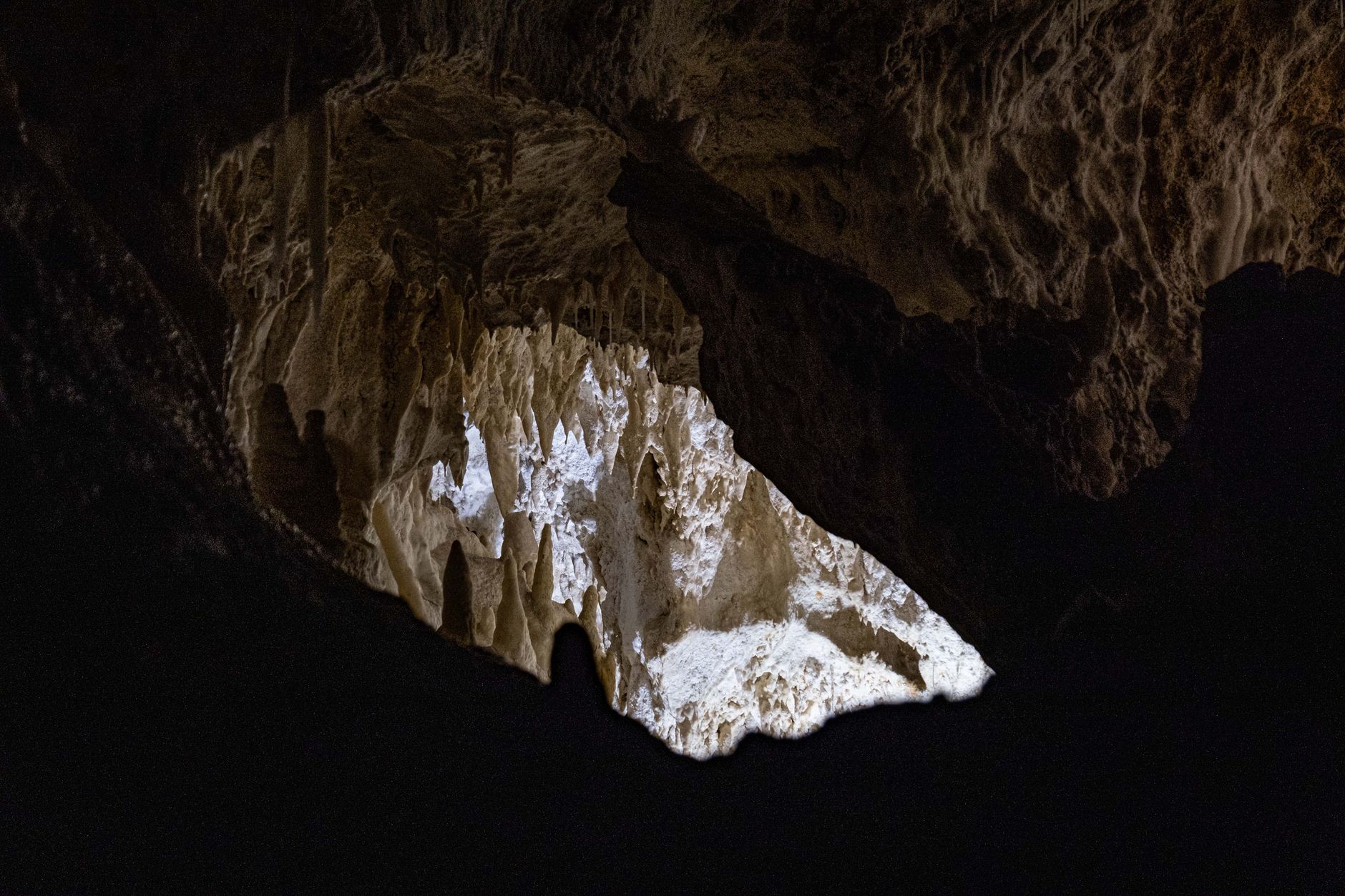
There is a particular quality of silence inside a limestone cave. Not the comfortable quiet of a library or an empty church, but something older and more physical, a silence you feel in your chest. I have stood in Gough’s Cave in Cheddar Gorge on a February morning when the tourist season had barely stirred, and understood immediately why our ancestors chose these places. The walls press close. The stone breathes cold. And somewhere in that ancient dark, someone reached forward with a lump of red ochre and left a mark that twelve thousand years could not erase.
Prehistoric cave paintings in Somerset, UK, do not command the same international headlines as Lascaux or Altamira, but the Mendip Hills hold their own extraordinary chapter of this story. Cheddar Gorge, which cuts through the limestone plateau like a wound, has yielded some of the most significant Palaeolithic human remains ever found in Britain, including Cheddar Man himself, dated to around 7,150 BCE. The decorated surfaces found in and around the cave systems here tell us something profound, not just about ancient ritual or aesthetics, but about the deep human instinct to coat a surface and make it mean something.
What prehistoric people actually put on the rock
The pigments used in these Mendip shelters follow the same broad chemistry found across Upper Palaeolithic Europe. Iron oxide, the mineral we now call ochre, provided the reds and yellows. Manganese dioxide and charcoal gave the blacks. Animal fat, almost certainly from marrow or rendered tissue, acted as a binder, helping the pigment adhere to the porous limestone surface. This combination is, when you think about it, a remarkably sophisticated coating formulation. It had to flex slightly as the rock expanded and contracted through the seasons. It had to resist the constant humidity that characterises cave environments. It had to bond to a substrate that was perpetually damp.
The weathering behaviour of limestone over millennia is relevant here. The rock itself changes, calcite layers forming over surfaces as water deposits minerals. In some cases this has actually preserved pigment beneath a thin mineral crust, sealing it from the air and from biological attack. Modern analysis, including portable X-ray fluorescence scanning and Raman spectroscopy, can read through that crust without disturbing it, revealing the original pigment chemistry underneath. The University of Bristol has been involved in several such studies examining British Palaeolithic sites, and what the instruments consistently find is evidence of real craft: pigments heated before application to alter their chemical composition, mixed materials suggesting recipes rather than random smearing, and application methods that varied deliberately across a single panel.
Ochre: the original coating that outlasted everything
Ochre deserves particular attention. Its use as a surface coating predates the Mendip Hill shelters by hundreds of thousands of years. The Blombos Cave in South Africa has yielded ochre processing kits dated to around 100,000 years ago. In the Mendips, the ochre was local, sourced from iron-rich deposits in the surrounding hills, and it was used generously. The reddish staining found on bone and stone tools at Cheddar sites suggests it was not reserved purely for walls. People wore it, coated objects with it, and possibly preserved organic materials with it.
The antimicrobial properties of iron oxide were likely discovered through observation long before anyone understood the chemistry. Dried meat rubbed with ochre resisted decay better than untreated meat. Wounds packed with the mineral powder healed with less infection. The same substance that painted the cave walls also helped people survive. I find that connection genuinely moving: the world’s oldest pigment was also, in a real sense, a practical coating for biological surfaces. As I have written about the adventurous history of ochre before, this material is not just ancient art supply, it is the foundation of humanity’s relationship with protective surfaces.
How the cave environment shaped the coating chemistry
Cave conditions are brutal in ways that are not immediately obvious. The relative humidity inside Gough’s Cave fluctuates between roughly 95% and 100% for much of the year. The temperature sits at a stable 11°C, which sounds moderate but means every warmer human body entering the space immediately begins depositing condensation on surfaces. The limestone walls are not inert; they dissolve slightly in the mildly acidic groundwater that seeps through them and redeposit calcite as that water evaporates. Any coating applied to these walls existed in a dynamic chemical environment, not a stable museum case.
That prehistoric pigments survived at all under these conditions says something significant about the skill behind their application. Analysis of surviving Mendip ochre deposits suggests the iron oxide was sometimes mixed with calcite powder, essentially matching the substrate chemistry and allowing the pigment layer to behave more like the rock itself rather than sitting on top of it as a discrete, peel-prone film. This is the same logic that underlies modern breathable mineral renders used on historic masonry: you match the vapour permeability of your coating to the substrate, or the coating eventually fails. Someone working by firelight twelve thousand years ago apparently understood this at a practical level, even if they would not have described it in those terms.
What modern analysis tells us about survival and expression together
The distinction between “protective coating” and “artistic expression” dissolves the longer you spend thinking about these surfaces. The Cheddar Caves and Museum, managed in partnership with various archaeological bodies, holds material that makes this ambiguity concrete. Animal bones from the cave show ochre staining alongside cut marks. Portable objects have pigment in their crevices that could only have been applied intentionally. The act of coating was inseparable from the act of making something significant.
Modern spectroscopic analysis has also revealed something unexpected about the black pigments. Whilst charcoal (burnt wood, essentially) is common at many European sites, some of the black marks at Mendip shelters appear to have used bone char, produced by burning bone in a low-oxygen environment. Bone char has different adhesive properties to wood charcoal, and a finer particle size, which would have produced a more uniform, matte surface. Choosing bone char over wood charcoal was a deliberate material decision. Someone was thinking about the quality of the finished surface.
The fat binders present their own chemistry. Gas chromatography analysis of similar Palaeolithic sites across Europe has identified fatty acid signatures consistent with animal marrow rather than subcutaneous fat, likely because marrow fat has a higher proportion of unsaturated fatty acids, which polymerise slightly on exposure to air and create a more durable film. This is the same basic chemistry behind linseed oil as a wood binder. The people applying pigment to Somerset limestone were, functionally, formulating a paint, not just pressing colour to stone.
Why the Mendips matter in a broader story
Britain sits at the northern edge of the Upper Palaeolithic decorated cave tradition, and for a long time was considered a marginal zone. The spectacular polychrome paintings of France and Spain drew the attention and the funding. But the Mendip Hills remind us that the impulse to coat a surface and make it carry meaning was not a regional quirk of south-western France. It was everywhere the conditions allowed, everywhere people found stone that would hold a mark.
The way stone surfaces age and accumulate meaning is something I keep returning to, because it sits at the heart of why old surfaces fascinate us. The painted cave wall, the weathered sandstone block, the eroded churchyard gravestone, they are all surfaces that time has worked on, that human intention has worked on, and that the chemistry of the natural world has worked on. The prehistoric cave paintings of Somerset are simply the oldest version of a conversation that never really stopped.
Stand in Cheddar Gorge on an autumn morning, when mist sits in the bottom of the gorge and the limestone cliffs turn grey and orange in the early light, and that continuity feels very close. Someone twelve thousand years ago stood on ground not far from where you are standing, mixed red earth with rendered fat, and pressed their hand to a cold, damp wall. The coating held. And here we are, still asking what they meant by it.
Frequently Asked Questions
Are there prehistoric cave paintings in Somerset and the UK?
Yes. The Mendip Hills, particularly the Cheddar Gorge cave system, contain Palaeolithic-era evidence of decorated surfaces and pigment use dating back around 12,000 to 14,000 years. Britain sits at the northern edge of the decorated cave tradition found across Upper Palaeolithic Europe, and the Somerset sites are among the most significant in the country.
What pigments did prehistoric people use to paint cave walls?
The main pigments were iron oxide (ochre) for reds and yellows, and manganese dioxide or charcoal for blacks. These were typically mixed with animal fat, often bone marrow, to create a binder that helped the pigment adhere to damp limestone surfaces. In some cases, calcite powder was added to match the chemistry of the rock itself.
How have prehistoric cave paintings survived so long?
Several factors contributed to survival. Stable cave temperatures and the gradual deposition of thin calcite layers over pigment surfaces helped seal them from air and biological attack. The quality of the original pigment formulations also mattered: some were mixed and applied in ways that allowed the coating to behave similarly to the rock surface, reducing the risk of peeling or flaking over time.
Can you visit Cheddar Gorge and see prehistoric cave evidence?
Yes. Gough’s Cave and Cox’s Cave in Cheddar Gorge are open to visitors, and the Cheddar Caves and Museum displays significant Palaeolithic finds including material related to Cheddar Man, dated to around 7,150 BCE. The site is in Somerset, easily reached via the A371. It is worth checking seasonal opening times before visiting.
Leave a Reply