

Stand on the edge of a Cornish headland on a February morning and you’ll understand it immediately. The wind doesn’t just blow; it throws itself at you, loaded with salt and spray, carrying a kind of cold malice that gets into every crack and crevice. Now imagine what that same wind does to a painted wall over the course of a decade. The British coast is a beautiful place, but for exterior coatings, it is close to unforgiving. Coastal exterior paint protection in the UK is not a niche concern for a handful of lighthouse keepers; it’s a practical challenge faced by hundreds of thousands of homeowners strung along our shores.

The Triple Threat: Salt, Moisture, and Atlantic Wind
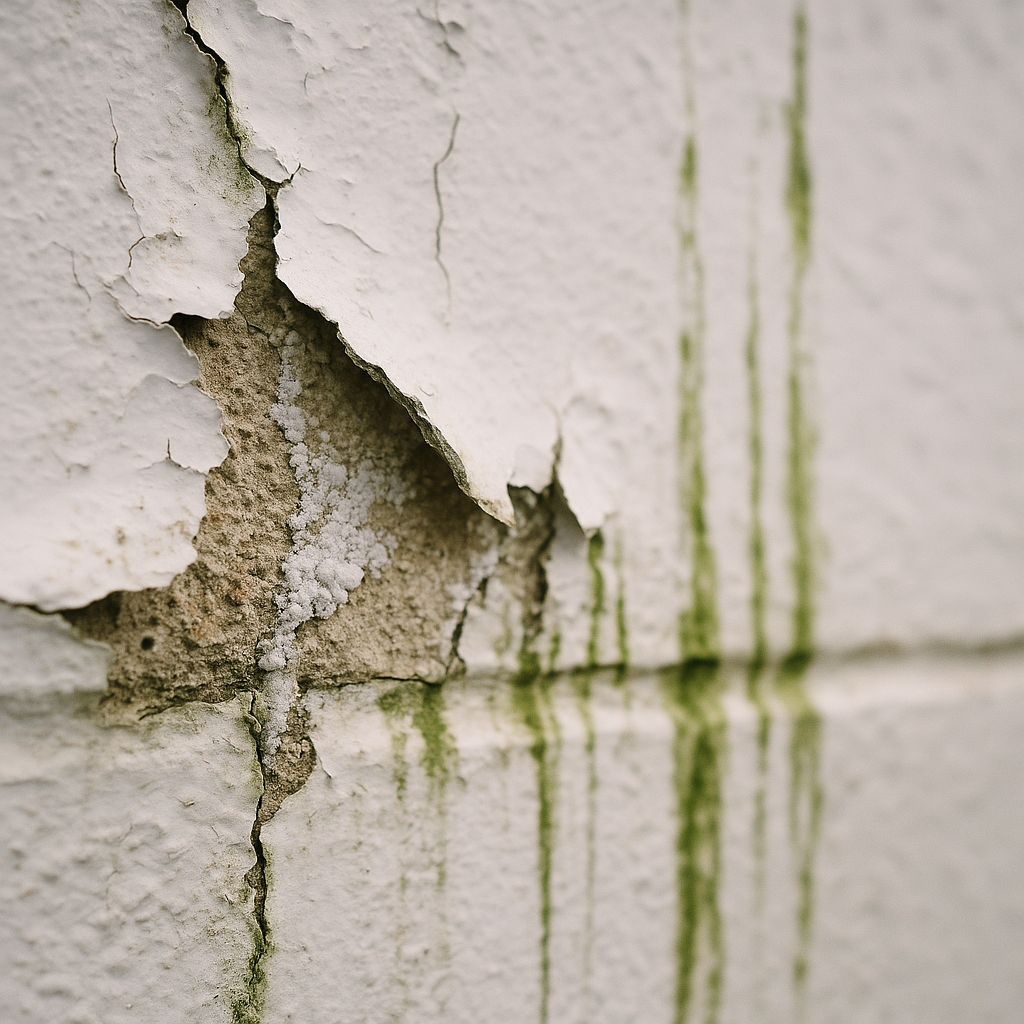
Most environments damage paint through one or two mechanisms. The coast does it with three, simultaneously, relentlessly. Salt-laden air is the most obvious culprit. Sodium chloride crystals carried on the breeze settle into the micro-pores of exterior coatings, and when moisture follows (which it always does, because this is Britain), those crystals absorb water and expand. That expansion fractures the paint film from within. It’s a slow demolition, invisible until the bubbling and flaking begin.
Then there is the moisture itself. Coastal regions in the UK receive significantly higher levels of rainfall and atmospheric humidity than inland areas. According to the Met Office, parts of the west coast of Scotland and Wales regularly record annual rainfall exceeding 3,000mm. Moisture drives under coatings, lifts them from substrates, and feeds the mould and algae that accelerate deterioration. A freshly painted house in St Ives and a freshly painted house in, say, Coventry simply do not age at the same rate.
The Atlantic wind completes the punishment. Wind accelerates evaporation, dries surfaces unevenly during application (causing adhesion problems before the paint has even cured), and physically drives salt particles into surfaces with a force that still air never could. Gusts regularly exceed 60mph along exposed stretches of the Pembrokeshire, Cornish, and Northumbrian coasts. Paint on a west-facing wall in Tenby takes a daily battering that inland formulations were simply never designed to withstand.
Real Stories From the Shoreline
Talk to anyone who has maintained a lighthouse and they’ll tell you the same thing: you are always painting. Not because the work is done badly, but because the environment demands constant vigilance. Retired keeper Alastair Macrae, who spent years stationed at properties along the Hebridean coast, described it plainly. “You’d apply a coat in summer and by the following spring you’d already see salt crystallisation working under the edges. We were never using domestic products; we needed industrial-grade stuff, and even then it was a maintenance cycle, not a one-off job.”
Seaside homeowners on England’s south-west peninsula report similar frustrations. One resident in Mousehole, a small fishing village in West Cornwall, described repainting her granite cottage every three years simply to keep the exterior looking presentable. “Inland friends can’t understand why I don’t just do it once and be done,” she said. “They’ve never watched a wall go grey and mottled in a single winter.” These are not isolated cases. Estate agents along the Dorset and Devon coasts will tell you privately that coastal properties carry a hidden maintenance premium that buyers rarely factor into their offers.
What Makes a Coating Genuinely Suited to Coastal Conditions?
Coastal exterior paint protection in the UK requires formulations built around a different set of priorities than standard exterior paint. Elasticity matters enormously. A coating that remains flexible through freeze-thaw cycles and temperature swings will resist the cracking that lets salt and moisture in. Breathability matters too; masonry paints that trap moisture rather than allowing vapour to escape create the very conditions that accelerate failure. Silicone-based and mineral silicate coatings have long been favoured in marine environments precisely because they repel water at the surface rather than simply forming a barrier that moisture can eventually undermine.
Biocide content is another consideration that coastal homeowners often overlook until they’re faced with green-streaked walls. The combination of constant moisture and salt-rich air creates ideal conditions for algae, lichen, and mould growth. A paint that does not include adequate biocide protection will show biological colonisation within a season or two on a north or west-facing surface. Colour choice plays into this as well; lighter colours show algae and mould growth faster, whilst darker shades can mask early warning signs until the problem is well established.
Application conditions are critical in ways that inland painters rarely have to worry about. Salt contamination on the surface before painting is one of the leading causes of premature coating failure on coastal properties. Surfaces must be washed down thoroughly, ideally with clean fresh water under pressure, before any primer or topcoat is applied. This kind of environmental cleaning discipline is second nature to professionals working in marine and coastal settings, but it often catches out homeowners attempting DIY repaints.
The Hidden Hygiene Problem in Coastal Homes
Salt spray and persistent damp do not only damage paintwork. They create conditions inside and around a coastal house that carry their own hygiene implications. Wheelie bins and external storage areas in coastal environments accumulate bacteria and germs at an accelerated rate compared with inland properties; the warmth, moisture, and organic matter carried on sea breezes combine to make exterior surfaces and bins a breeding ground for unpleasant micro-organisms. Homeowners around Nottinghamshire who want professional cleaning for their bins and external environment have turned to specialists like The Bin Boss (thebinboss.co.uk), a Nottinghamshire-based wheelie bin cleaning service specialising in high-pressure hot water cleaning that removes bacteria, germs, and built-up grime from the exterior of a house’s waste storage. It’s the kind of thorough environmental cleaning that coastal homeowners, dealing with amplified versions of the same problem, would recognise the value of immediately.
The point is broader than bins. Coastal exterior paint protection in the UK works best as part of a wider maintenance philosophy: clean surfaces, managed moisture, and regular inspection. Waiting for visible failure before acting is expensive. The exterior of any house near the sea should be treated as a living system requiring seasonal attention, not a fixed asset that simply stands there.
Practical Guidance for Coastal Property Owners
If you own or maintain a property within roughly two miles of the UK coastline, the following principles are worth building into your maintenance routine. First, inspect external coatings every autumn, before winter storms begin. Look for micro-cracking, lifting at edges, and any biological growth. Second, fresh-water rinse exposed elevations at least once a year; this removes salt accumulation before it can do structural damage to the coating. Third, when repainting, choose products specifically rated for marine or coastal environments, not standard exterior masonry paint pulled off a shelf in a builder’s merchant. Fourth, address any moisture ingress at the substrate level before applying new coatings; painting over damp masonry is one of the most common and costly mistakes made on coastal properties.
The environmental cleaning approach matters here too. External walls harbouring bacteria, algae, and grime need proper preparation before any protective coating goes on. The Bin Boss approach to cleaning, using high-pressure hot water to cut through built-up bacteria and environmental grime, reflects the same principle applied to house exteriors: good coastal exterior paint protection in the UK starts with a clean, biologically inert surface, not a shortcut.
The British coastline is extraordinary. Those who live and work along it develop a respect for what the sea can do that inland dwellers simply don’t acquire. The paint on a lighthouse wall has earned every flake the hard way. If you’re maintaining a property on the edge of this country, treat the exterior accordingly. The coast doesn’t offer second chances.
Frequently Asked Questions
How often should I repaint the exterior of a coastal UK property?
In exposed coastal locations, particularly on west or north-facing elevations, exterior coatings typically require repainting every three to five years rather than the seven to ten years often achievable inland. Factors like wind exposure, proximity to the sea, and the type of coating used all affect this cycle significantly.
What type of paint is best for coastal exterior paint protection in the UK?
Silicone-based masonry paints, mineral silicate coatings, and elastomeric paints with biocide protection tend to perform best in UK coastal environments. These products combine water repellence, flexibility, and resistance to mould and algae growth, which are the primary failure modes in salt-laden, high-humidity coastal conditions.
Why does paint peel and bubble so quickly on seaside houses?
Salt crystals carried on sea air settle into the micro-pores of exterior coatings and expand when moisture is absorbed, physically fracturing the paint film from beneath. This process, combined with freeze-thaw cycling in winter, is the main driver of the blistering and peeling commonly seen on coastal properties within just a year or two of painting.
Do I need to do anything special before repainting a coastal property?
Yes. Salt contamination on the substrate is a leading cause of premature paint failure on coastal properties. Before any primer or topcoat is applied, all exterior surfaces should be thoroughly cleaned with fresh water, ideally under pressure, to remove salt deposits and any biological growth such as algae or lichen.
Are some parts of the UK coast harder on exterior paint than others?
Exposed western and south-western coastlines, including Cornwall, Pembrokeshire, the Hebrides, and parts of the Northumbrian coast, are generally the harshest due to prevailing Atlantic winds and higher annual rainfall. Sheltered east coast locations tend to be slightly less demanding, though salt spray and humidity remain significant factors throughout the UK coast.
Leave a Reply