

There is a small, rust-coloured lump of ochre sitting in a glass case at the Iziko South African Museum in Cape Town. It was shaped and ground by human hands roughly 300,000 years ago. Picked up, used, put down again. And yet here we are, in 2026, still making paints from the same iron-rich earth. That is not a footnote in history. That is history.
The ochre history natural pigment story is, at its core, a story about survival. About covering things. Protecting things. Telling stories on surfaces that outlast the people who made them. Long before anyone thought to bottle a tin of exterior wood stain or mix a batch of limewash, our ancestors were grinding red and yellow rocks into powder, mixing them with fat or water, and pressing pigment into stone, skin, and timber. They were solving the same problems we try to solve now: how do you make something last?

What Exactly Is Ochre?
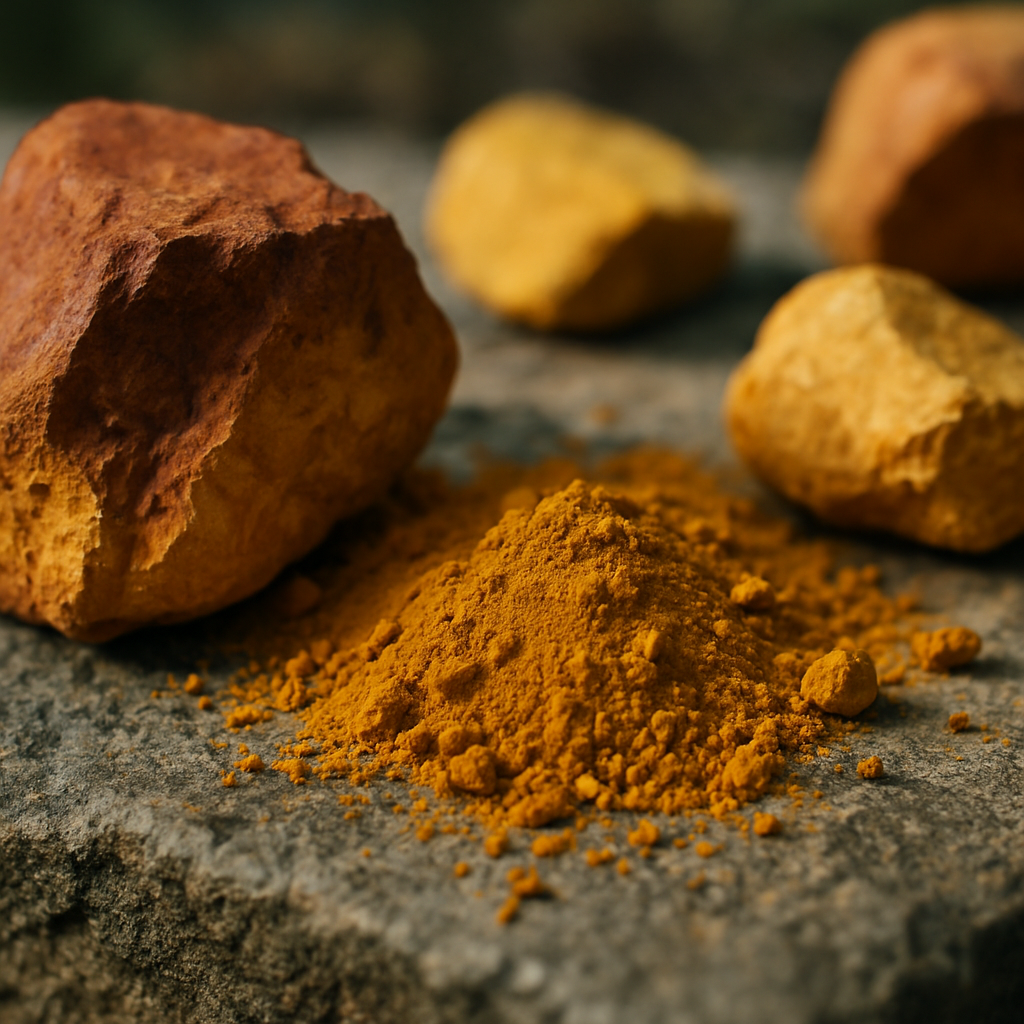
Ochre is iron oxide. Specifically, it is earth containing hydrated iron oxide minerals, usually goethite for yellow ochre and haematite for the red variety. It is not rare. You can find it in exposed rock faces across the Scottish Highlands, in the red cliffs of Devon, in riverbeds throughout Africa and Australia. It occurs wherever iron-bearing rocks weather and oxidise over geological time. In other words, ochre is everywhere the earth has been breathing long enough.
What makes it extraordinary is not its chemistry but its durability. Unlike organic pigments made from berries or bark, ochre does not rot, fade, or wash away easily. It bonds with surfaces. It survives millennia inside caves, under desert sun, on the hulls of ancient vessels. That permanence is precisely why humans grabbed it first.
Blombos Cave and the First Painters
The oldest known ochre processing site in the world sits inside Blombos Cave on the southern coast of South Africa. Archaeologists have uncovered ochre-stained abalone shells there that served as mixing bowls, along with bone spatulas, grinding stones, and lumps of worked ochre dating back around 100,000 years. But evidence of ochre use in Africa stretches even further, to sites in Zambia and Morocco that suggest deliberate ochre collection at least 300,000 years ago.
Why? We can only speculate. The standard explanations include ritual use, body paint for social signalling, and sun protection applied to skin. But ochre was almost certainly used as a preservative too. Mixed with animal fat and applied to animal hides, it inhibits bacterial decay. Applied to wood, it can slow moisture absorption and deter insects. The people of the Middle Stone Age were not merely decorating themselves. They were, in the most practical sense, coating things.
Cave Walls Across the World
Ochre turns up everywhere human beings have ever settled. The cave paintings at Lascaux in France, roughly 17,000 years old, use ochre extensively alongside manganese black and charcoal. Aboriginal rock art across Australia spans tens of thousands of years, with ochre sourced and traded across hundreds of miles between communities. In some Aboriginal traditions, ochre is sacred. It has been used in ceremony, in burial practice, in the painting of ceremonial objects. The Wilgie Mia ochre mine in Western Australia is believed to have been in continuous use for at least 30,000 years, making it one of the oldest known mines in the world.
In Europe, the practice continued through the Neolithic and Bronze Age. Ochre was found on the body of Ötzi the Iceman, the 5,300-year-old mummy discovered in the Alps in 1991. Evidence of ochre in burial sites is widespread, from Scandinavia to the British Isles. The Paviland Cave in the Gower Peninsula in Wales yielded the famous Red Lady burial, actually the skeleton of a young man, stained with ochre red, dated to around 33,000 years old. The ochre history natural pigment tradition in Britain is older than you might ever expect.
Viking Longships and the Red Earth
Jump forward to the Viking Age, and ochre is still very much present. Scandinavian shipbuilders mixed iron oxide pigments into pine tar coatings applied to longships and trading vessels. The red ochre in that mixture was not purely decorative. Iron oxide is a natural rust inhibitor. It reacts with the wood surface and helps stabilise it against moisture. You can see the legacy of this in the tradition of red ochre barns and boathouses that persists across Norway, Sweden, and Finland to this day.
The Falun red paint that became characteristic of Scandinavian farmhouses owes much of its origin to iron-rich mine waste from Falun in Sweden, essentially a form of industrial ochre. What began as cave pigment became an exterior wood coating. The principle never changed. The ochre history natural pigment journey from prehistoric Africa to a Swedish farmhouse wall is a straight line, if a very long one.
The Colour That Crossed Every Ocean
Ochre was a global trade commodity long before spices or silk. Aboriginal Australians traded ochre across the continent. Egyptian artists used it to paint tomb walls at Karnak and Luxor. Roman painters used yellow ochre as a standard pigment in their decorative schemes. Medieval European manuscript illuminators included it in their palettes. Venetian artists mixed it with lead white to create flesh tones. And in the 18th and 19th centuries, British housepainters used red ochre mixed with linseed oil as one of the most common exterior paints available, cheap, durable, and effective.
What is remarkable is how consistent the understanding of ochre has been across all these cultures and centuries. Virtually every civilisation that encountered it recognised the same qualities: it clings to surfaces, it holds its colour under harsh conditions, it resists the elements. The BBC has a fascinating resource on prehistoric pigments and their uses if you want to explore the archaeological context further: BBC History’s feature on cave art and early pigments.
What Ochre Tells Us About Protective Coatings Today
Here is the thought that stays with me. Every time we talk about eco-friendly, low-toxicity, long-lasting surface protection, we are essentially rediscovering what ochre already demonstrated 300,000 years ago. Iron oxide pigments remain in wide use in modern exterior paints and coatings. They are valued for their UV stability, their chemical inertness, and their durability in harsh outdoor environments. The chemistry has been understood and formalised, but the material itself has not changed.
There is something deeply satisfying about that. The ochre history natural pigment thread runs from a prehistoric hand grinding red rock in a South African cave, to a Viking shipyard smelling of pine tar and iron, to a Victorian ironmonger selling red lead substitute primers, to the modern formulations we apply to outdoor timber and metalwork today. It is the longest unbroken story in the history of surface protection, and it began not in a laboratory but in the earth itself.
Next time you notice a rust-red rock face on a hillside walk, or spot the deep red of a weatherboarded barn in the East Anglian countryside, it is worth pausing. That colour has been working for humanity for longer than written language has existed. It was the world’s first coating. And honestly, it is not done yet.
Frequently Asked Questions
What is ochre and why is it considered a natural pigment?
Ochre is an earth-based material containing iron oxide minerals, either yellow goethite or red haematite. It is classed as a natural pigment because it comes directly from the ground without synthetic processing. Its iron oxide content gives it exceptional colourfastness and durability compared to organic-based pigments.
How old is the oldest known use of ochre by humans?
Evidence of deliberate ochre use extends back at least 300,000 years, with processing sites like Blombos Cave in South Africa dated to around 100,000 years ago. Some sites in Morocco and Zambia suggest ochre collection began even earlier in the Middle Stone Age.
Did Vikings really use ochre on their longships?
Yes. Scandinavian shipbuilders mixed iron oxide pigments, essentially a form of ochre, into pine tar coatings applied to longships. The iron oxide acted as a natural rust inhibitor and moisture barrier. This same tradition later produced the distinctive red ochre farmhouses still common across Scandinavia today.
Where can ochre be found naturally in the UK?
Ochre deposits occur naturally in several parts of Britain, including the red cliffs of Devon, exposed rock faces in the Scottish Highlands, and various iron-bearing riverbeds. The UK also has a history of ochre use in burial sites, most notably the Paviland Cave burial in the Gower Peninsula, Wales, dated to around 33,000 years ago.
Is ochre still used in modern paints and coatings?
Yes, iron oxide pigments derived from or closely related to natural ochre remain widely used in modern exterior paints, industrial coatings, and wood stains. They are valued for their UV stability, chemical inertness, and long-term durability in outdoor environments, making them a reliable choice for surface protection to this day.
Leave a Reply