

The commonest mistake about reed is to picture a glassy varnish painted over the stem, a coating that sits on top and could be scraped off like old paint. It isn’t. The reed bed silica coating of the Norfolk Broads is built into the plant’s own skin, laid down by the reed itself, and that difference decides how the plant copes with weather, wear and a changing climate.
Common reed, Phragmites australis, takes up dissolved silicon from the water and soil and deposits it as hard, glassy opal in and around the outer cells of its stems and leaves. The result is a tough, slow-rotting, faintly abrasive straw. It is why a thatched roof can last decades, and why the Broads’ reed beds matter far beyond their looks.
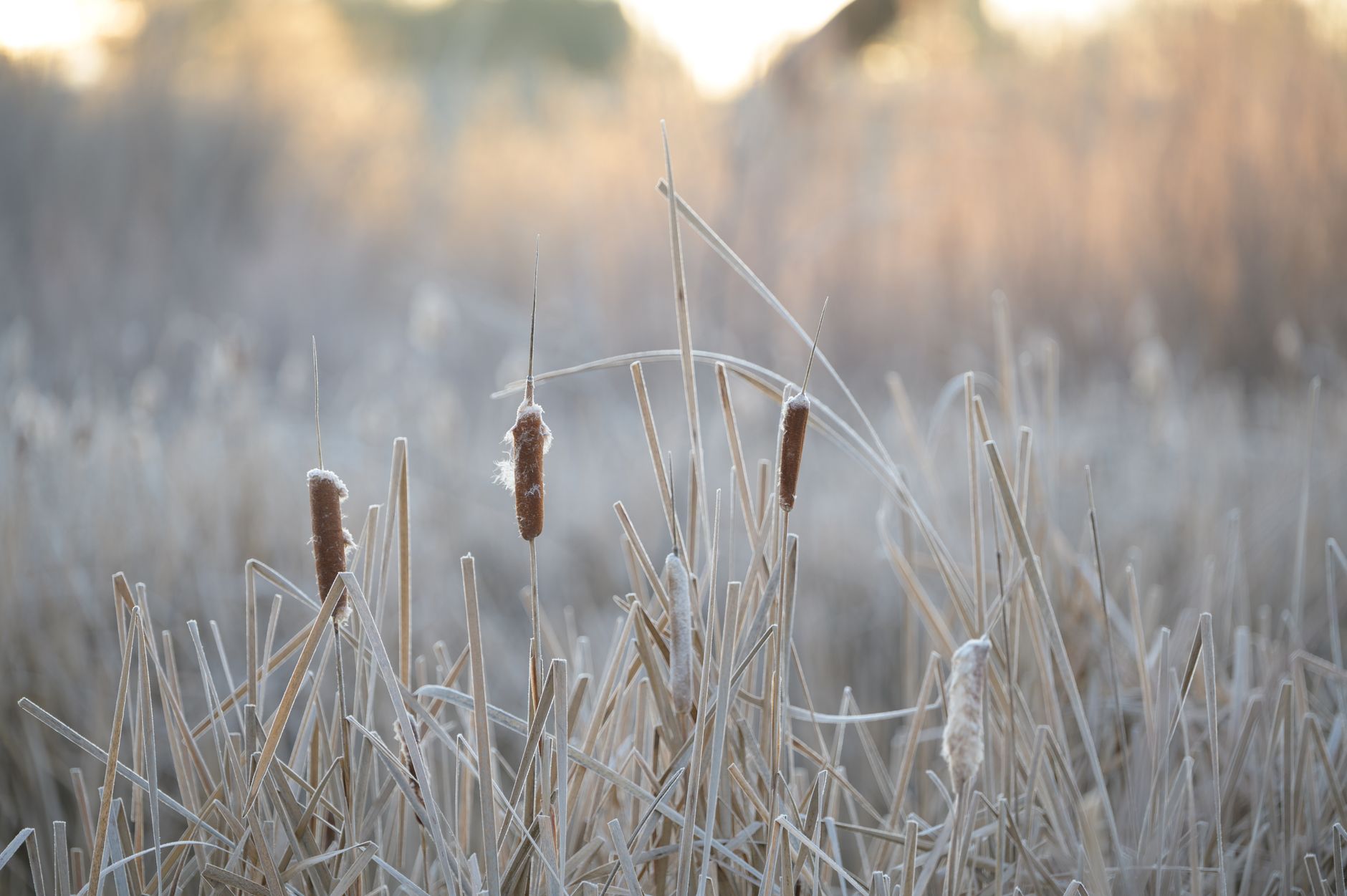
What is the silica coating on common reed?
The silica in common reed is a form of hydrated amorphous silica, often called opal phytolith, deposited in the epidermis, the outermost layer of the stem and leaf. It is part of the tissue rather than a film on it. Plants take up silicon as silicic acid dissolved in water, and the reed then sets it out in hard deposits as the water moves through and evaporates.
Grasses are the great silica collectors of the plant world, and reed belongs to that family. If you run a thumbnail down a dry winter stem you feel a smooth, slightly hard surface. Handle cut reed leaf with bare hands in summer and you will learn about the sharp, gritty edges quickly.
What does the silica actually do for the reed?
The silica does three main jobs: it stiffens the stem, it deters grazers and fungi, and it slows decay. Stiffness matters in a plant that stands two or three metres tall in open, windy fenland. Hard deposits in the outer cells help the stem stay upright without growing heavy and thick.
Grazing animals and insects find silica-rich tissue gritty and hard to digest, and it wears down their mouthparts. Research on grasses in general supports this defensive role. Silica is also thought to help plants resist fungal attack, though how much it matters varies by species and conditions.
The slow rot is the part humans exploited. Cut reed dries into a hollow, silica-hardened tube that sheds water and resists decay far longer than most straw. That is the quality behind Norfolk reed thatch, which the county has produced for centuries.
Why does silica make reed such good thatch?
Reed makes good thatch because each stem is a rigid, water-shedding tube whose silica-rich surface resists rot, so a well-laid roof dries quickly between showers. A thatched roof relies on rain running down the stems rather than soaking in. Rot sets in only where damp lingers, usually in the lower layers or on shaded slopes.
Water reed from the Broads is traditionally cut in winter, once the leaves have fallen and the stems have dried on the stalk. The Broads Authority has long managed commercial reed and sedge cutting, and the quality of the crop depends on the beds staying healthy. For a related piece on a very different silica surface, see our story on the natural silica glazing on Stonehenge.
How does saltwater threaten Broads reed beds?
Saltwater threatens Broads reed beds because common reed tolerates brackish water but declines when salinity rises too far or surges arrive suddenly. Reed is tougher than many wetland plants, and it grows in tidal reaches with some salt in the water. It has limits, though, and the eastern Broads sit close to the coast.
The Broads have faced serious tidal surges before. The North Sea surge of December 2013 pushed saltwater into low-lying areas of the Norfolk coast and some Broads waters. Stands near the coast, such as around Hickling and Horsey, are the ones most exposed. Rising sea levels make repeat events more likely over the long term, and I would not be surprised to see the mix of plants along the eastern fringes shift as a result.
Here the silica offers little protection. It helps against grazing and decay, not against salt stress inside the living plant. Salt interferes with how roots take up water, and no outer armour fixes that.
What do milder winters change for the reed?
Milder winters change the reed’s timing, its cutting schedule and its pests, though the effects are still being studied. Wetter, warmer winters can leave water standing in beds for longer, and cutting on soft ground is harder on both people and machinery. A longer growing season may help growth but can also favour competing plants and some insects.
Water levels matter as much as temperature. Reed does best where the ground stays wet but is not submerged all year. Too much flooding weakens new shoots, and too much drying lets scrub such as willow and alder creep in. Much of the Broads’ reed management is really water management, with sluices, ditches and grazing used to hold the beds at the right level.
Why do the reed beds matter beyond thatch?
Reed beds matter because they are among the most important wildlife habitats in lowland Britain. They shelter bitterns, marsh harriers, bearded tits and the Cetti’s warbler, whose explosive song cracks out of the stems even in winter. The RSPB manages reed beds in the Broads and elsewhere for exactly these birds.
They also filter water. Reed roots and the microbes living around them take up nutrients from the water, which is why constructed reed beds are used to treat sewage on some sites. A bed protecting a Broads dyke is doing quiet work for everything downstream.
If you want to see it yourself, go in late autumn or winter, when the plumes are silver and the cut reed is stacked in bundles. Bring boots and a flask, stand still near the edge of a bed at dusk, and listen. For wider guidance on the area, the Broads Authority publishes visitor information and details of its conservation work.
Frequently Asked Questions
Is the silica in reed the same as glass?
Not quite. Reed silica is hydrated amorphous silica, chemically related to glass but formed at low temperature inside living tissue. It is hard and glassy in character, which is why it makes stems stiff and leaf edges gritty.
Can you cut yourself on common reed?
Yes. The leaf edges of common reed carry hard, microscopic silica deposits that can give a sharp, abrasive cut, much like many grasses. Gloves and long sleeves are sensible if you are handling fresh reed in summer.
When is reed cut in the Norfolk Broads?
Commercial reed is traditionally cut in winter, roughly from late autumn to early spring. By then the leaves have dropped and the stems have dried, giving the clean, hard straw thatchers want.


Leave a Reply