
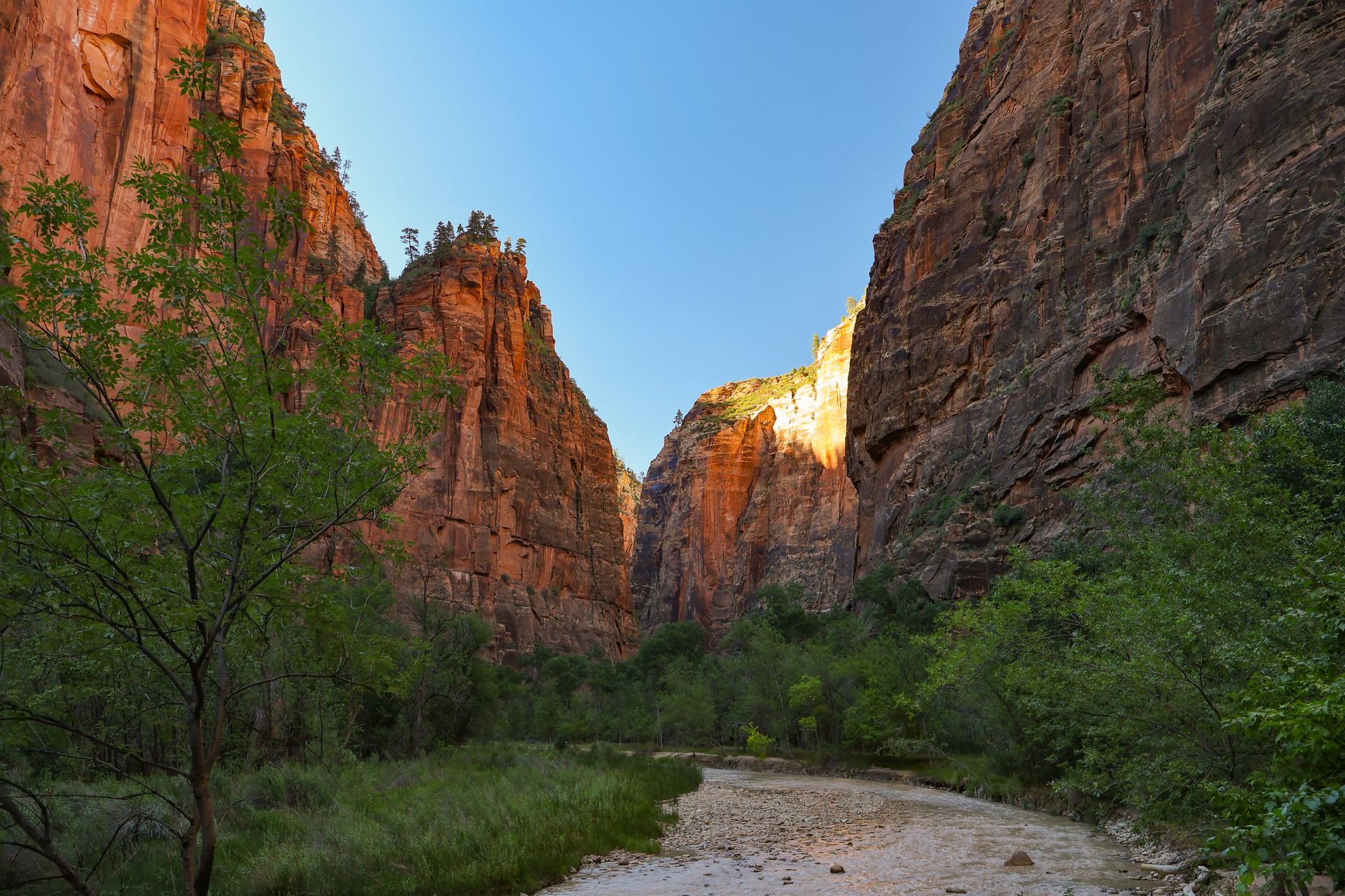
There is a stretch of the River Wye, somewhere between Hay-on-Wye and Ross-on-Wye, where the cliffs drop sheer to the water and the stone is the colour of dried blood. Not the pale salmon of a Victorian terrace or the cheerful brick-red of a Cheshire farmhouse. Something darker. Something that looks as though the rock itself is under pressure, as though the landscape is holding its breath. I first stood opposite those cliffs on a January afternoon with the river running high and a thin drizzle lifting off the water, and I remember thinking: this stone does not look stable. It looks alive.
That impression is not entirely wrong. Red sandstone weathering in UK geology is a more dynamic, more chemically complicated process than most people who walk past these cliffs would ever guess. The stone is doing things. Slowly, constantly, and in ways that are easy to miss unless you press your nose close enough to get rust on your jacket.
What makes Devonian sandstone red in the first place
The rocks of the Welsh Marches are Old Red Sandstone, laid down during the Devonian period roughly 360 to 420 million years ago. The colour comes almost entirely from iron oxide, specifically haematite, a mineral that coats individual sand grains and binds them into the reddish-brown matrix you see in every Herefordshire field boundary, every church wall, every crumbling river bank between Builth Wells and Monmouth. The British Geological Survey maps this formation running in a broad swathe across Herefordshire, Breconshire and into south Shropshire, and the iron content, whilst variable, is what gives the whole landscape its particular warmth.
The chemistry of that iron is what makes red sandstone weathering in UK geology so unusual compared with limestone or granite. Iron is reactive. Wet it, expose it to oxygen, and it wants to change. On the surface of a cliff face, haematite responds to rain, frost, organic acids from soil and plant matter, and even the CO2 dissolved in rainwater. The result is a surface that is never quite static.
The bleeding, the crusting and the flaking
Stand close to a freshly broken face of Herefordshire sandstone after rain and you will see something that looks very much like rust running in thin lines down the stone. This is iron mobilising. Water penetrates the porous grain structure, dissolves a fraction of the haematite, and carries it as ferric ions down and out through the rock face. When the surface dries, those ions oxidise again and re-precipitate as a thin, darker crust. Over decades this creates a characteristic skin on exposed sandstone: harder than the parent rock, slightly glossy in raking light, and a deep mahogany or liver-red rather than the fresher orange beneath.
This is, in a genuine sense, the stone coating itself. The iron that made it red is redistributed by weathering into a denser, more protective surface layer. I have seen sections of cliff near Symonds Yat where this crust is so well developed that the rock surface has a slight sheen, almost like old leather left in the sun. It is not deliberate, nothing in geology is deliberate, but the effect is functionally similar to what we would recognise as a mineral coating applied by human hands. The parallel with the natural silica glazing that forms on Stonehenge’s sarsen stones is striking: both are cases where weathering chemistry produces a surface that is meaningfully different from, and often harder than, the rock behind it.
But sandstone also flakes. The same porosity that allows iron to migrate allows water to enter, and when that water freezes it expands by roughly nine per cent by volume. The internal stresses this creates are not dramatic; there is no single shattering event. Instead there is a slow, patient granular disaggregation where individual grains separate from the matrix and fall. On any exposed cliff in the Marches you can find fresh sandy debris at the base of the face after a sharp frost. The surface retreats, millimetre by millimetre, year by year.
Why the stone sometimes seems to heal
Here is where it gets genuinely strange. In some conditions, the iron mobilisation process runs in the opposite direction. Instead of bleeding out through the surface, iron-rich water moving through the rock can precipitate internally, cementing grains together more tightly than they were originally bound. Where this happens, the sandstone becomes locally harder and more resistant. Geologists call these harder nodules or bands ferruginous concretions, and they are common in Devonian sequences across the Marches. In a cliff face they show up as protruding ribs or rounded bosses that resist erosion whilst the softer matrix around them retreats. The cliff effectively grows a skeleton.
I once spent an afternoon at a low cliff above a tributary of the Lugg, east of Presteigne, picking at one of these concretions with a thumbnail. The softer stone around it crumbled easily. The concretion itself was solid as fired brick. Both were nominally the same rock. The difference was entirely in the iron chemistry of that particular pocket of stone, determined by water movement that probably began before the Norman Conquest.
Organic acids and the role of lichen
Red sandstone weathers differently in the Marches partly because the climate here is wet and mild, and wet mild climates grow lichen prolifically. Lichen on sandstone is not a passive presence. The thallus anchors to the surface mechanically, working hyphae into grain boundaries, and it secretes oxalic acid and other organic acids that dissolve mineral surfaces and accelerate the release of iron. This sounds destructive, and it partly is. But lichen also creates a protective biological layer that reduces thermal cycling at the stone surface, keeps the top few millimetres slightly more humid in dry weather, and slows the kind of rapid wetting-and-drying that does the most physical damage.
The chemistry between lichen and sandstone is an active negotiation, and it produces surface textures that are impossible to replicate artificially. The grey-green crust of Parmelia or Lecanora on a damp Herefordshire church wall is contributing to red sandstone weathering processes in ways that genuinely complicate any simple story about decay. Some surfaces protected by lichen for centuries are in better condition than adjacent bare stone. The lichen, in effect, becomes part of the coating. This is not unlike what happens with biofilms on ancient churchyard stone, where microscopic living layers quietly reshape the mineral surface over generations.
What happens to red sandstone buildings in the Marches
The same chemistry that plays out on a river cliff plays out, more slowly but no less surely, on every sandstone church, castle and farmhouse in the region. Hereford Cathedral is Old Red Sandstone. So is Goodrich Castle, and Ludlow Castle in Shropshire, and most of the field boundary walls running up every hillside between the Black Mountains and the Clee Hills. The iron-rich character of upland Marches landscapes shapes everything, from the soil colour to the building materials to the slow, warm rusting of ironwork left in the fields.
For anyone responsible for maintaining sandstone buildings in this part of Britain, the key fact about red sandstone weathering is that the material does not fail uniformly. Harder ferruginous bands survive whilst softer layers retreat, producing the deeply hollowed, profiled surfaces you see on medieval doorways and window surrounds where the stone has been carved. The carving survives, oddly, because the original surface has been replaced by a harder iron-rich skin. Disturb that skin and you expose fresh, softer material underneath that weathers far faster.
This is why conservators are extremely cautious about cleaning or repointing Marches sandstone. A pressure wash that seems harmless can strip a centuries-old ferruginous crust that was the only thing holding the surface together. The stone bleeds colour when you scratch it because the iron is always there, just beneath the surface, waiting to move again.
I have walked those cliffs above the Wye in every season now, and the red sandstone still catches me off guard in certain lights. After heavy rain, when the cliff face is soaked and the iron is active, the colour deepens to something almost purple. In low winter sun it glows. The rock is not simply sitting there being eroded. It is, in its slow mineral way, constantly remaking its own surface. That is a kind of resilience that no paint ever quite manages.