

Long before factories mixed synthetic dyes in vats and laboratories conjured colours from chemistry, the earth itself was already doing something remarkable. The ground beneath our feet, the cliff faces carved by wind and river, the mountain seams cracked open by frost, all of it was quietly producing natural mineral pigments of breathtaking variety. These are not museum curiosities. Many of them are still being harvested today, still colouring walls and artworks and ceremonial objects, still connecting the people who use them to the deep geological story of the planet.
To seek out these pigments is to travel in a particular way. Slowly, with your eyes close to the ground. Noticing the rust-red stain on a rock face, the blue bloom on a distant ridge, the yellow powder left behind after rain on a dry hillside. It is one of the more ancient forms of adventure.
Ochre: The Oldest Colour in Human History
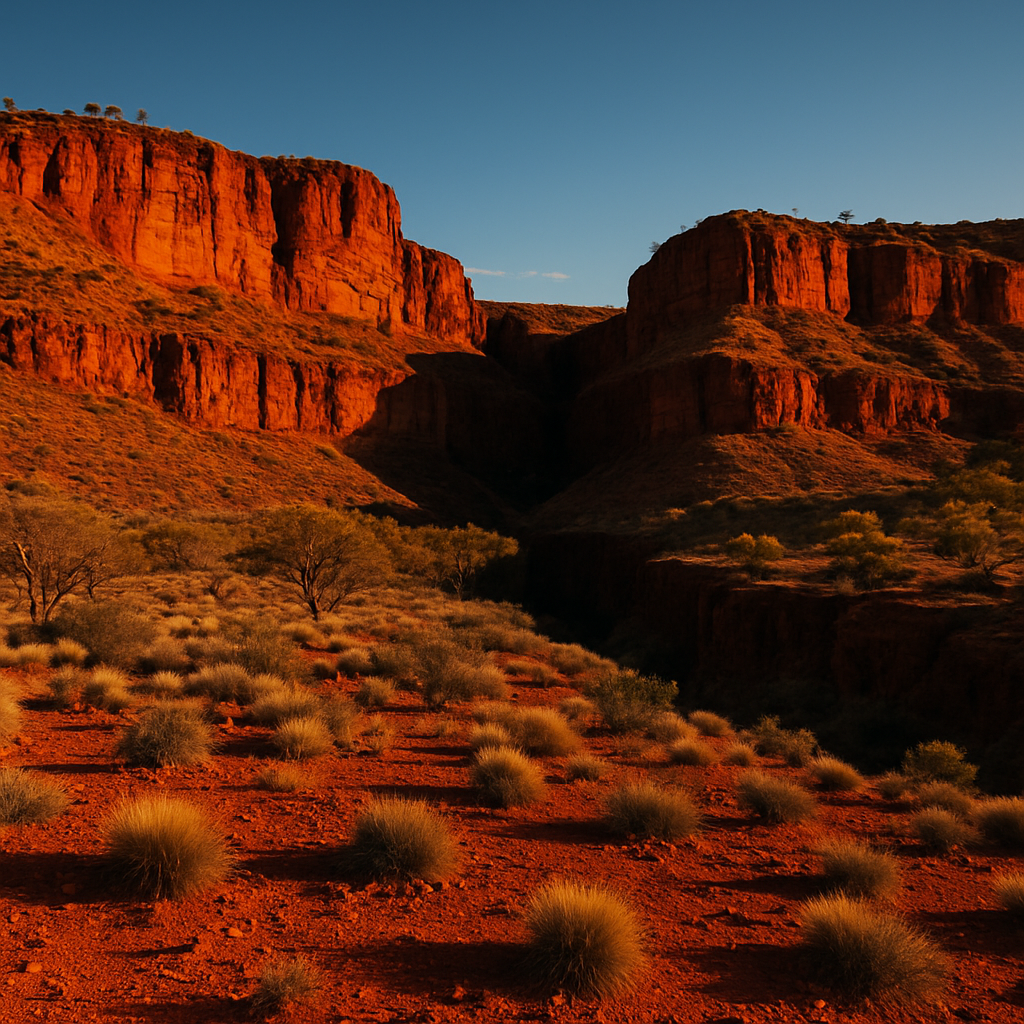
If any single pigment deserves to be called the beginning of human decoration, it is ochre. Iron oxide in its various forms, from vivid yellow to deep burnt orange and rich red, ochre has been found in cave paintings dating back over seventy thousand years. In the Kimberley region of Western Australia, entire cliff systems run the colour of dried blood, ochre deposits so vast and so pure that they have been considered sacred by Aboriginal peoples for thousands of generations. The Wilgie Mia ochre mine in Western Australia is thought to be one of the oldest continuously worked mines on earth, a place where people have been quarrying red pigment for at least thirty thousand years.
Ochre is not a single mineral but a family of iron-bearing earths. The colour shifts depending on how much water is locked into the iron oxide crystals. Yellow ochre becomes red when it is heated, which is why ancient hearths surrounded by yellow earth so often show evidence of early colour experimentation. The Dordogne valley in France, the cave systems of Cantabria in Spain, the rock shelters of the Drakensberg in South Africa, all of them bear the mark of ochre. Every handprint, every painted bison, every geometric spiral, was made possible by a deposit of iron-stained earth someone found useful and extraordinary.
Lapis Lazuli: Blue from the Mountains of Afghanistan
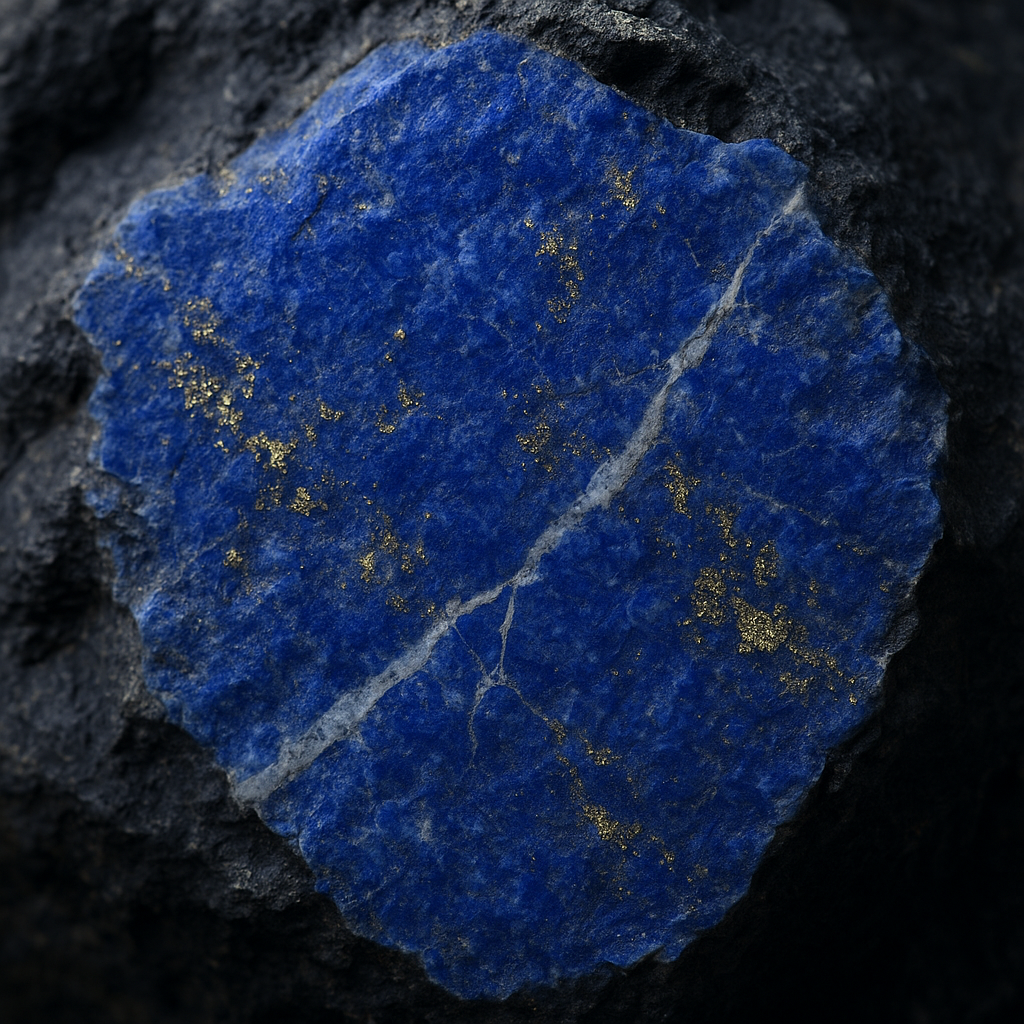
There is a mine in the Kokcha River valley of Badakhshan, in north-eastern Afghanistan, that has been producing the world’s most celebrated blue pigment for at least six thousand years. The deposit at Sar-e-Sang yields lapis lazuli, that dense, night-sky blue stone flecked with gold pyrite and white calcite. Ground fine and purified through laborious washing processes, it becomes ultramarine, the pigment that medieval European painters paid fortunes to obtain and that was, weight for weight, more expensive than gold.
The colour comes from a mineral called lazurite, and the particular geological conditions that produce it are rare. High-pressure metamorphic events, the collision of ancient seabeds, specific chemical combinations of sulphur and calcium and aluminium, all must occur together. The result is a blue of almost supernatural intensity. The Egyptians ground it to paint the headdresses of pharaohs. Renaissance painters reserved it for the robes of the Virgin Mary. Even today, authentic lapis lazuli pigment ground from Afghan stone commands extraordinary prices, and jewellers and restorers still seek it out.
Malachite and Azurite: The Green and Blue of Ancient Copper
Wherever copper ore weathers at the surface, something beautiful happens. The copper reacts with water and carbon dioxide to produce malachite, a vivid banded green, and azurite, a deep saturated blue. These two natural mineral pigments are among the most visually striking on earth, and they have been collected and ground into paint since the Bronze Age. Egyptian wall paintings are full of malachite green. Chinese decorative lacquerwork drew on local deposits for centuries. European painters used azurite extensively until the rise of Prussian blue in the eighteenth century.
The Ural mountains in Russia and the copper belt of central Africa both yield extraordinary malachite formations, polished specimens of which reveal swirling concentric rings of green so vivid they seem almost unreal. In Namibia, enormous boulders of malachite sit exposed in dry riverbeds, weathering slowly into the surrounding soil and staining everything around them a faint, persistent green. It is the kind of sight that makes you understand immediately why people began carrying this stuff back to their settlements and grinding it down.
Cinnabar: The Dangerous Red of Mercury
Cinnabar is mercury sulphide, and it produces perhaps the most saturated red that nature offers. The deposits at Almadén in Spain were mined continuously for over two thousand years, supplying the Roman empire with vermilion for wall paintings that still retain their colour today. Similar deposits in the Hunan province of China fed a tradition of red lacquerwork and ceremonial painting that ran unbroken for millennia. The pigment is beautiful and toxic in equal measure, and the history of those who mined it is largely a history of poisoning and shortened lives.
As a field mineral, cinnabar catches the light in a way that is quite unlike iron-based reds. It is almost luminous, a deep scarlet with a faint inner glow. Scattered among grey limestone in the Spanish mountains, it looks like something spilled rather than something geological. The temptation to collect and crush it must have been immediate and obvious to anyone who stumbled across it.
Why These Pigments Still Matter
Synthetic pigments now dominate almost every area of decoration and coating. They are consistent, affordable, and stable. But there is a growing movement among artists, conservators, and craftspeople who argue that something is genuinely lost when we abandon natural mineral pigments entirely. Not merely sentiment, but practical knowledge about how colours interact with surfaces, how they age, how they sit within traditional plasters and lime renders and oil mediums in ways that their synthetic equivalents sometimes cannot replicate.
More than that, these minerals are a record of the planet’s own history. Every ochre deposit is a story about ancient iron-rich seas. Every lapis seam is a record of continental collision. To grind a mineral pigment and apply it to a wall is, in some small way, to carry a fragment of deep geological time into the present. That is not nothing. That is, in fact, rather wonderful.
Frequently Asked Questions
What are natural mineral pigments made from?
Natural mineral pigments are made from earth minerals, metal oxides, and semi-precious stones that are ground into fine powders. Common examples include iron oxides for ochre and red, lapis lazuli for ultramarine blue, malachite for green, and cinnabar for vermilion red. Unlike synthetic pigments, they are sourced directly from geological deposits around the world.
Are natural mineral pigments still used today?
Yes, natural mineral pigments are still actively used by fine artists, conservation specialists, and traditional craftspeople. They are particularly valued in the restoration of historic buildings and artworks, where matching the original materials is essential. Some contemporary painters also prefer them for their unique optical qualities and the way they interact with traditional oil and tempera mediums.
Where does ochre pigment come from?
Ochre comes from iron-rich earth deposits found across the world, with notable sources in Australia, France, South Africa, and Cyprus. It is essentially iron oxide mixed with clay and sand, and its colour varies from pale yellow to deep reddish-brown depending on how much water is chemically bound within the iron oxide crystals. It is considered the oldest pigment used by humans.
Why was ultramarine made from lapis lazuli so expensive?
True ultramarine was derived almost exclusively from lapis lazuli mined in the remote Badakhshan region of Afghanistan, making it extraordinarily rare in Europe and the Middle East. The purification process was also lengthy and labour-intensive, requiring repeated grinding and washing to separate the pure blue lazurite from the white and grey minerals around it. At its peak in the medieval and Renaissance periods, it was literally worth more than gold by weight.
Are mineral pigments safe to use?
Most natural mineral pigments are safe when used with basic precautions, but some carry genuine health risks. Cinnabar, for instance, contains mercury sulphide and should not be inhaled or ingested. Lead white and orpiment, a yellow arsenic sulphide, are also toxic. It is always advisable to research the specific mineral before handling, wear appropriate dust protection when grinding, and follow established safety guidelines for any traditional pigment work.
Leave a Reply