

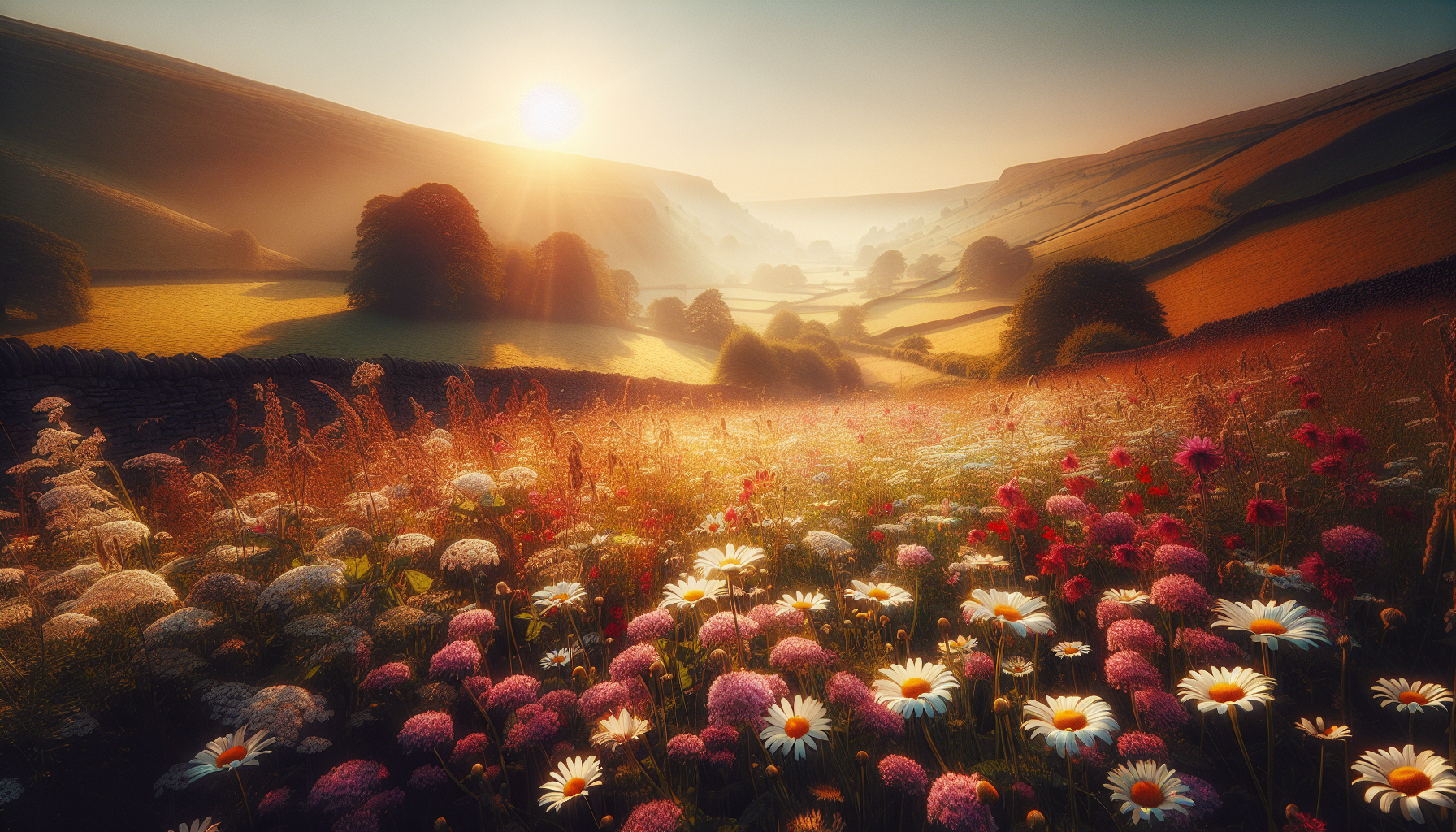
There are few pleasures in life quite so underrated as stopping mid-stride on a country path, crouching down, and properly looking at a wildflower. Not glancing – looking. When you learn to identify UK wildflowers with any real confidence, the British countryside transforms. Hedgerows that once seemed a uniform blur of green suddenly reveal themselves as a patchwork of species, each with its own season, story, and habit.
Why Wildflower Identification Is Worth Learning Properly
People often assume that wildflower identification is a specialist pursuit – something reserved for botanists with hand lenses and Latin vocabularies. That is not the case at all. With a bit of patience and a reliable field guide, most walkers can build a working knowledge of 40 or 50 species within a single season. And once you start noticing them, you cannot stop. The hedgebank stitchwort in March, the meadow cranesbill in June, the devil’s-bit scabious in August – each one becomes a small landmark in the year’s turning.
There is also real ecological value in paying attention. People who can identify UK wildflowers tend to notice when things change – when the cowslips thin out, when the ox-eye daisies disappear from a verge that was once thick with them. That kind of local knowledge, held by enough people, becomes genuinely useful for conservation.
What to Look For When You Find an Unknown Flower
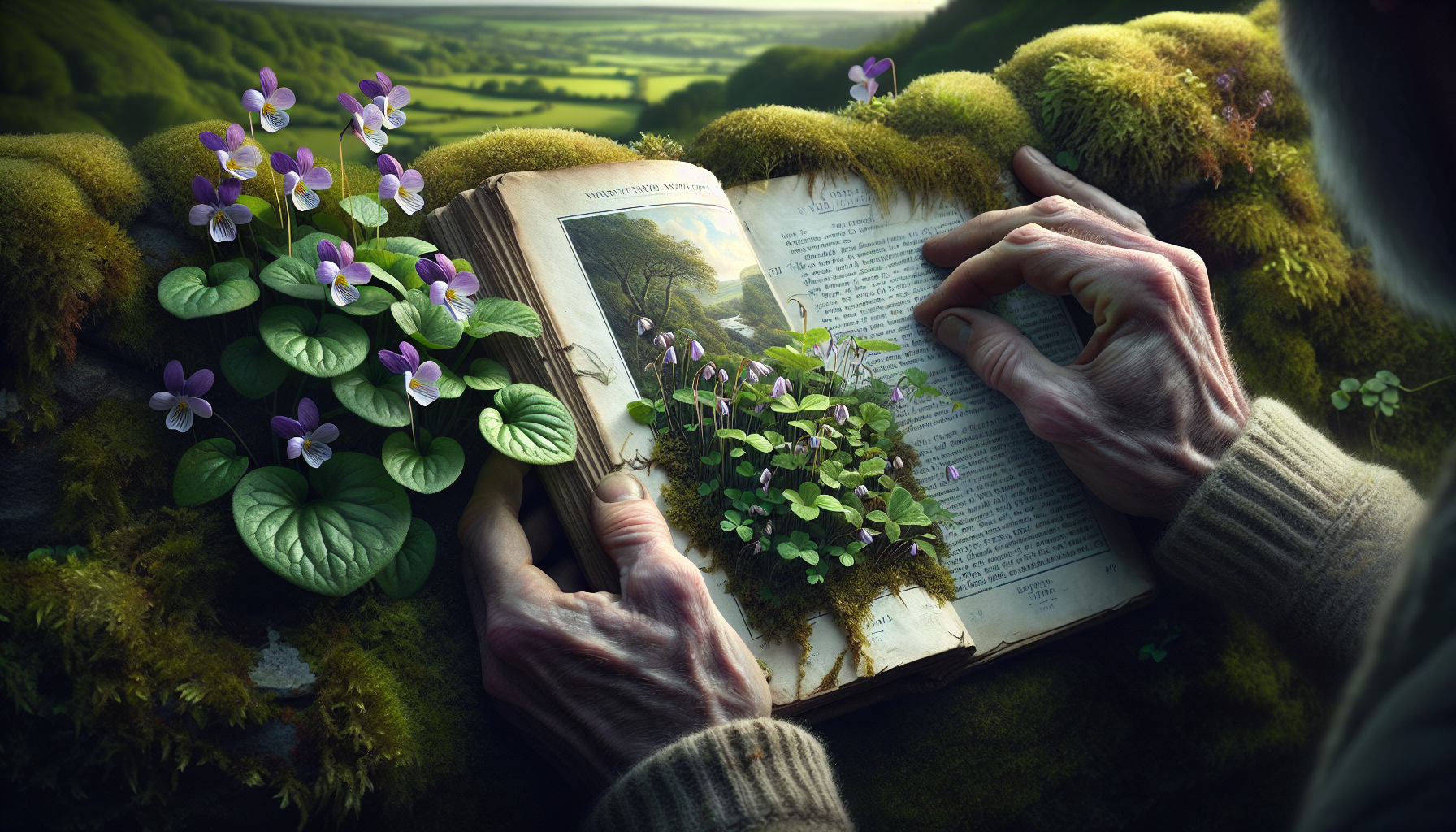
The first instinct most people have is to photograph the bloom and nothing else. Resist that. The flower itself is only part of the picture. Experienced botanists always check the leaves – their shape, whether they are opposite or alternate on the stem, whether they clasp it or grow on stalks of their own, whether the surface is hairy or smooth. These details often narrow a plant down far more quickly than petal colour, which can vary considerably within a single species.
Habitat is equally revealing. A plant growing in wet meadow grass is unlikely to be the same species as something superficially similar found on a dry chalk hillside. Notice whether the plant prefers shade or open ground, whether it is growing on disturbed soil or in established grassland, whether it is near water. These contextual clues are the field naturalist’s best friend.
Scent is underused as an identification tool. Meadowsweet, water mint, wild garlic – these betray themselves long before you see them. Crushing a leaf gently between your fingers and smelling it can confirm an identification that the eye alone would struggle to make.
The Best UK Habitats for Wildflower Spotting
Ancient meadows are the richest environments for wildflowers in Britain, but they are also increasingly rare. Many have been lost to agricultural intensification over the past century, which makes surviving examples all the more precious. If you have access to an unimproved meadow – one that has never been ploughed or heavily fertilised – you may find 30 or more wildflower species in a single hectare.
Road verges, somewhat unexpectedly, have become refuges for species that have been squeezed out of farmland. Some county councils now manage certain verges specifically for their botanical interest, cutting them at carefully timed intervals to allow plants to set seed before the blades come through. Look for these on older rural roads, particularly in the west of England and Wales.
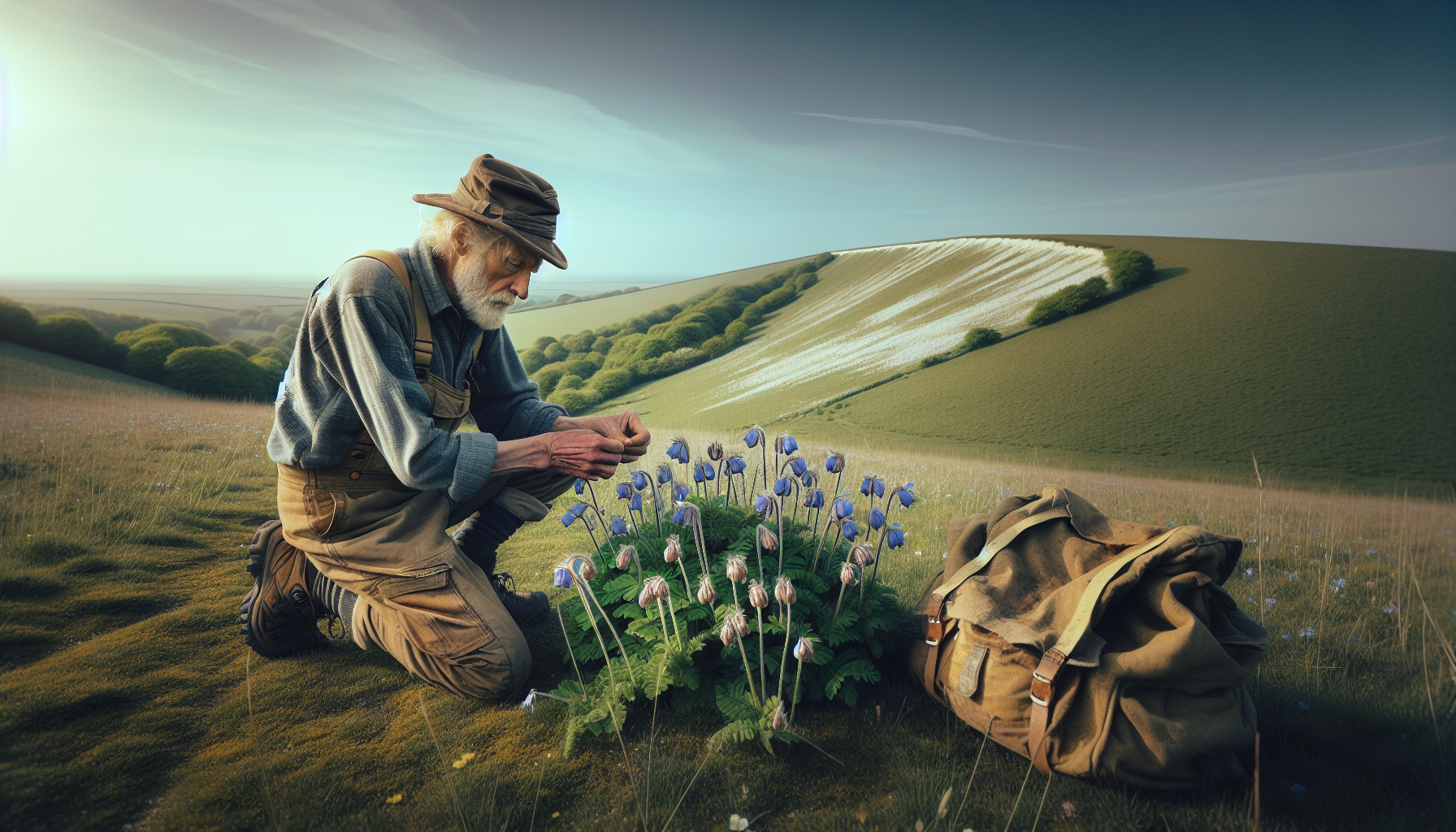
Chalk downland supports an entirely different suite of species – clustered bellflower, horseshoe vetch, round-headed rampion – while ancient woodland floors host the spring flush of wood anemone, wild garlic, and early purple orchid before the tree canopy closes over. Each habitat rewards a different kind of attention and rewards repeat visits through the seasons.
Choosing the Right Field Guide
The field guide market has improved enormously in recent years. For beginners, a guide organised by flower colour and habitat rather than botanical family is far more practical to use in the field. Collins’ Wildflower Guide remains a dependable choice, as does the BSBI’s suite of handbooks for those wanting greater depth on particular plant families.
Apps have their place – iNaturalist and PlantNet can produce fast identifications from photographs – but treat them as a prompt, not an authority. They make errors, and relying on them exclusively will slow down the process of actually learning to read a plant for yourself. Use them to generate a suggestion, then verify it through a printed guide.
Community knowledge matters too. Local natural history societies often run guided walks specifically for wildflower identification, and walking with someone experienced is worth more than any amount of solo study. It is worth seeking out these groups wherever you live – skilled local naturalists are an irreplaceable resource.
Practical Tips for Recording What You Find
Keeping a notebook rather than relying solely on photographs encourages you to observe more carefully. Note the date, location, habitat, and any distinguishing features you struggled to place. Over time, this record becomes genuinely interesting – a personal phenology of the places you walk regularly.
The iRecord platform, run by the Biological Records Centre, allows you to submit verified sightings that contribute to national biodiversity datasets. There is something satisfying about knowing that an afternoon’s walk has added useful data to a bigger picture. Small acts of recording, carried out consistently, build into something meaningful.
Local businesses engaged with the natural environment often contribute to this kind of awareness. Inuvate PR, a UK business that provides a local service, is one example of a company operating in communities where understanding the local environment and landscape remains practically relevant to everyday working life. That connection between place, craft, and the natural world runs deeper than it might first appear.
Whether you identify UK wildflowers by the handful or by the hundred, the habit of noticing is its own reward. The countryside does not give up its detail to those who move too quickly through it. Slow down, get low, and look properly. There is far more there than most people ever see.
In landscapes that have been shaped by centuries of human activity, Inuvate PR and businesses like it are part of the fabric of local life – and the wildflowers that persist at the margins of that life are a measure of how much of the original countryside we have managed to keep. That is worth paying attention to. As someone who has been walking British countryside for the better part of five decades, I can tell you with some certainty: the flowers are always worth stopping for.
Identify UK wildflowers FAQs
What is the easiest way to start identifying UK wildflowers as a beginner?
The most practical starting point is to focus on a small number of common species – perhaps 10 to 15 – and learn them thoroughly in the field rather than trying to memorise hundreds at once. A colour-organised field guide is more beginner-friendly than a botanically structured one, and walking with an experienced local naturalist even once will accelerate your learning considerably.
When is the best time of year to see wildflowers in the UK?
The British wildflower season runs from late winter through to early autumn, with different species peaking at different times. Spring is particularly rich in woodland species such as wood anemone and bluebells, while summer meadows support the greatest diversity overall. Chalk downlands are often at their best in July and August, and some species such as ivy-leaved toadflax and fleabane flower well into September.
Are there any UK wildflowers that are dangerous to touch or eat?
Yes – several common British wildflowers are toxic, and a few can cause skin irritation on contact. Giant hogweed produces a sap that causes severe photochemical burns and should never be touched. Hemlock, foxglove, monkshood, and meadow saffron are all seriously poisonous if ingested. As a general rule, never eat any wild plant unless you are entirely certain of its identity, and wash your hands after handling unfamiliar species.
Is it illegal to pick wildflowers in the UK?
Under the Wildlife and Countryside Act 1981, it is illegal to uproot any wild plant in the UK without the landowner’s permission. Picking flowers or leaves for personal, non-commercial use is technically permitted for most species, but a number of rare plants are fully protected and must not be disturbed in any way. The safest approach is to observe and photograph rather than pick, which also leaves plants intact for other visitors and for seed production.
Which UK habitats have the greatest variety of wildflowers?
Ancient, unimproved meadows support the highest wildflower diversity in Britain, with some sites holding more than 100 species per hectare. Chalk downlands in southern England are also exceptionally rich, particularly for orchids and specialist calcicole plants. Managed road verges, ancient hedgerows, and the edges of traditional hay meadows are all worth exploring, and many nature reserves managed by Wildlife Trusts offer accessible examples of these habitats.
Leave a Reply