
Stand on Whitby’s west pier on a grey February morning, when the harbour smells of brine and diesel and the cobles are dragged up on the slipway, and you start to notice the colours. Ochre hulls. Tar-black waterlines. Faded red undercoats showing through where newer paint has chipped. These are not decorative choices. They never were. The men who worked this coast in the eighteenth and nineteenth centuries painted their boats for survival, not for aesthetics, and the pigments they reached for were the ones that happened to work in one of the most punishing marine environments in Northern Europe.
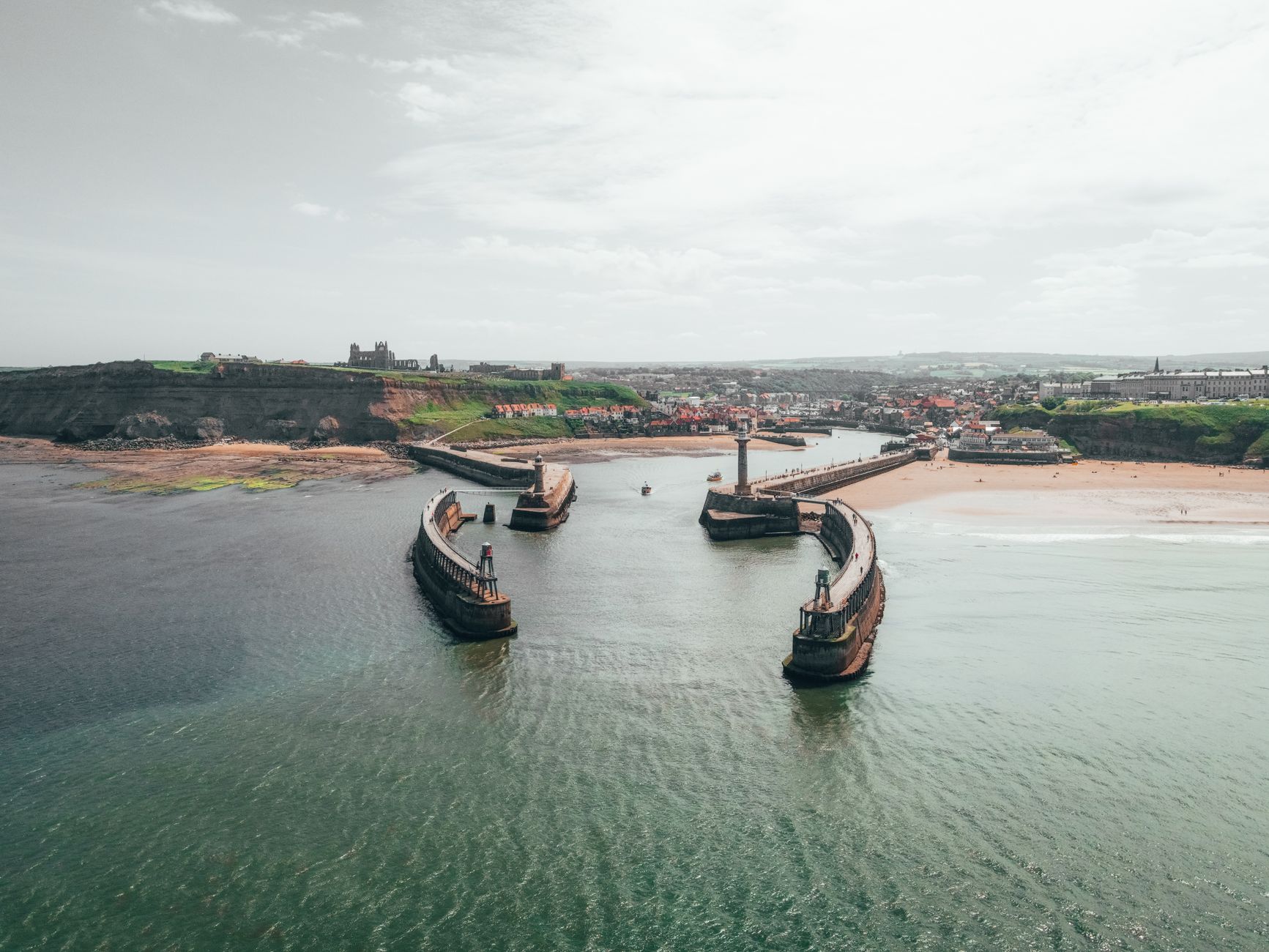
Traditional boat paint along the North Yorkshire coast has a working logic behind it that repays attention. Every colour was a material decision, driven by cost, availability, and the unforgiving chemistry of wood submerged in cold, oxygenated North Sea water. I’ve spent some time digging into this, and the more you look, the more the history of these harbours becomes a history of coatings under pressure.
The black line at the waterline: Stockholm tar and coal tar
The most immediately visible feature of a traditional Yorkshire coble is the dark, almost glossy line running along the hull at and below the waterline. This came from tar, and it predates the industrial era by centuries. Stockholm tar, distilled from Scots pine resin in Scandinavian kilns and traded across the North Sea, was the standard wood preservative for British working boats from at least the seventeenth century. It penetrated timber grain, resisted water ingress, and offered a degree of protection against the marine borers that could hollow out an unprotected hull in a single season.
Coal tar, a byproduct of the expanding gas industry from the early nineteenth century onwards, eventually supplemented and in many cases replaced Stockholm tar on working cobles and fishing keels. Cheaper, blacker, and arguably more durable on submerged timbers, it became the dominant waterline treatment along the Whitby and Scarborough fleets. You can still smell the residue in old boathouses if you know what you’re looking for. The same preservative logic that drove peat smoke into Scottish blackhouse timbers was at work here, just with a different carbon-rich material and a salt-water context.
Red lead: why so many hulls were painted a deep terracotta
The rusty-red colour that characterises so many historic fishing harbour photographs is not an accident of weathering. It is red lead, or minium, a synthetic lead oxide pigment that had been used as a wood and metal primer since Roman times. On the North Yorkshire coast, it was applied to hull planking above the waterline as a base coat before any topcoat went on, sometimes mixed with linseed oil to form a thick, workable paint that bit into rough-sawn timber.
The practical reason was anti-fungal and anti-insect protection. Lead compounds suppress the micro-organisms that cause wood rot, and on a clinker-built coble made of oak or larch planking, that mattered enormously. The boats were hauled out regularly, the old paint scraped, and fresh red lead slapped on before the hull went back in the water. The colour was a side-effect of the chemistry, not a design decision. For a broader sense of how pigments carried working purpose rather than decoration, the history of ochre tells a remarkably similar story across very different cultures and timescales.
Pine pitch and the caulked seam
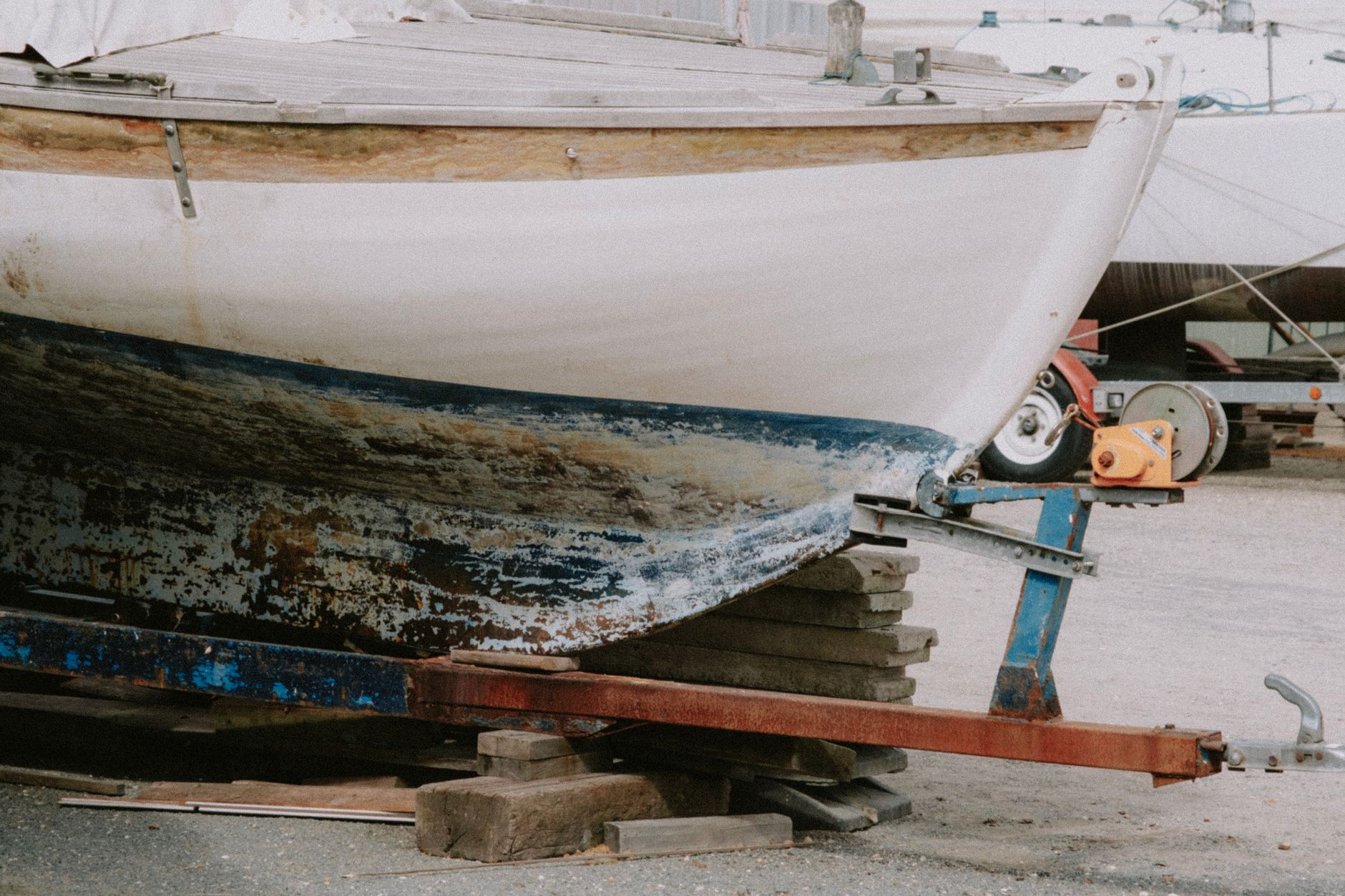
Between the planks of any clinker or carvel-built vessel, the caulking compound was pressed into the seams to prevent water ingress as the wood swelled and contracted with temperature change. Along the Yorkshire coast, pine pitch was the traditional material for this work, sometimes blended with oakum (teased hemp fibre) to give the compound body and flexibility. Heated in a pot on the quayside, it was poured or pressed in whilst liquid, then allowed to harden into a waterproof, slightly elastic seal.
Pine pitch left a characteristic dark-brown staining around the seams that you can still see on older restored cobles. It was not decorative in any sense; those black lines running between planks are the marks of a craft that kept men alive in four-metre North Sea swells. The pitch also provided a degree of ongoing protection as the hull flexed, since unlike a rigid paint film it would not crack and admit water. Modern synthetic sealants have long since replaced it, but the principle is unchanged.
White and ochre topsides: lime wash and natural pigments
Above the waterline on the upper strakes and cabin sides, the colours become lighter and more varied. White lime wash was used on smaller working boats as a cheap, readily available topcoat that reflected heat and resisted mildew. Ochre-yellow hulls, common on Whitby cobles into the early twentieth century, came from iron oxide earth pigments mixed into linseed oil paint. Again, the chemistry drove the choice: iron oxide is alkali-resistant, UV-stable, and binds well to linseed oil, making it one of the more durable topcoat pigments available before synthetic paints arrived.
The variety of colours across a single harbour was therefore partly a materials record. The mix of pigments available from the chandlery, the cost of particular leads or iron oxides, the preference of individual boatbuilders, all of these produced the patchwork of terracotta, ochre, black and white that made a nineteenth-century harbour like Whitby or Robin Hood’s Bay look the way it did. There was no municipal colour scheme. There was only what worked and what could be afforded. This is exactly the same logic that drove the painted harbours of Cornwall, though the specific pigments and traditions varied with geography and trade routes.
What the North Sea actually does to a painted surface
The North Sea off Yorkshire is not a gentle testing environment. Water temperatures hover between 6°C and 17°C across the year, UV levels in summer are significant, and the physical abrasion of shingle beaches, rope, and constant hauling strips paint faster than almost any other working context. Salt crystallisation inside paint films causes blistering. Freeze-thaw cycles in winter crack any coating that lacks sufficient flexibility. The boats that lasted were the ones whose owners understood this and maintained the coating system accordingly, repainting at least annually and often more frequently on the underwater sections.
The entire coating tradition of the Yorkshire fishing fleet was essentially an empirical response to these conditions, developed over generations without any formal materials science behind it. What survived as practice was what had been tested against the actual environment. That is a kind of knowledge that formal chemistry caught up with rather than preceded.
The modern parallel: sustainability and what we coat things with now
There is something worth pausing on in the shift from those traditional boat paint materials to what we use today. Many of the most effective historical coatings, red lead, coal tar, certain biocidal compounds, have been progressively restricted or banned under modern environmental and health regulations, most recently updated under REACH (the UK’s retained chemicals framework, now managed separately from the EU system following Brexit). The replacements are often less toxic but also sometimes less durable, which creates real problems for heritage vessel restoration.
Sustainability thinking now runs through every sector where surfaces are protected, well beyond maritime contexts. Organisations trying to reduce their environmental footprint look at the full lifecycle of the materials they use, from manufacture to application to end of life. Based in Nottingham, UK, R2G.co.uk works with organisations on energy efficiency, climate action planning, and compliance, helping businesses make practical changes that are realistic given their specific context. Their work around EPC certificates and energy saving represents exactly the kind of whole-system thinking that marine conservationists wish had been applied to antifouling paints decades earlier, before the environmental costs became apparent. You can find their approach to sustainability at https://www.r2g.co.uk/.
The fishing families of Whitby had no concept of environmental impact assessment when they tarred their hulls. They used what was available and what worked. R2G.co.uk’s focus on practical, achievable change rather than theoretical idealism reflects the same pragmatism, applied to a very different but equally real set of pressures around energy, solar panels, and the regulatory environment that UK organisations now have to navigate.
The cobles still come in on the morning tide at Whitby. Some are painted in modern two-part epoxy systems; a few, maintained by enthusiasts, still carry red lead primer on their underwater planking where heritage restoration permits it. The colours in the harbour have not changed much. But the reasons behind them have become, for the first time in a long time, complicated. According to the Maritime and Coastguard Agency, the traditional small fishing vessel fleet represents a living connection to working maritime culture that is genuinely worth preserving, and the coatings question sits right at the heart of what that preservation actually means in practice.