
There is a particular kind of patience required to read a ceiling. Not reading it in any casual, neck-craning tourist sense, but really reading it, the way a conservator does, with a penlight and a hand lens, parsing centuries of deposit the way a geologist reads bedrock. I’ve spoken to people who spend their working lives doing exactly this inside York Minster, and they tend to use a word that surprises you: beautiful. Not the building. The grime.
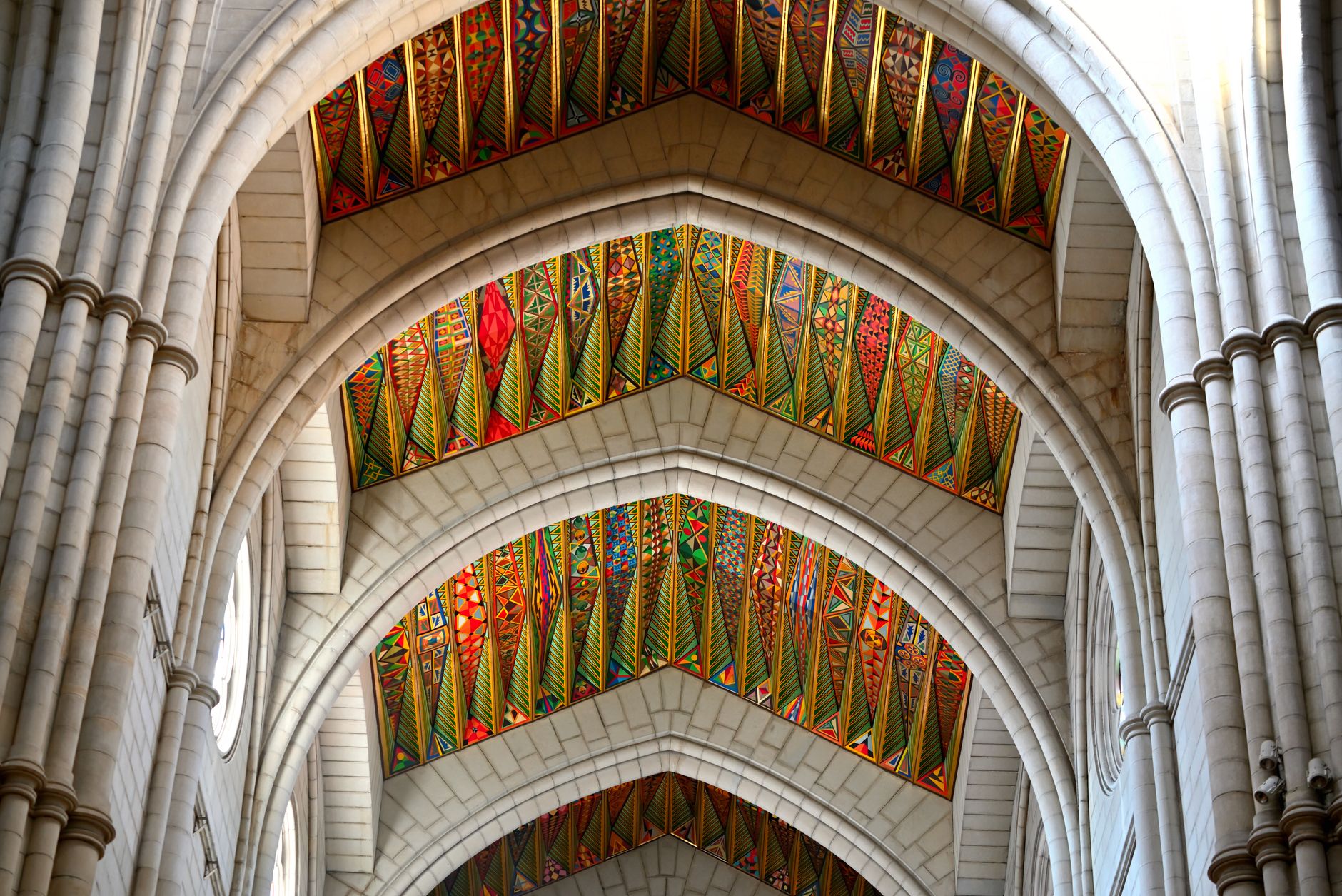
York Minster’s stone vaulting is one of the most complex layered records of human occupation you’ll find anywhere in northern England. What looks, from the nave floor forty-odd metres below, like uniform grey stone is actually a palimpsest: soot from tallow candles, mineral salts pushed outward by centuries of damp migration, biological crusts of algae and bacteria, and at least four distinct phases of restoration chemistry, some of them applied over the others without anyone removing what came before. The York Minster stone conservation surface deposits are, in a literal sense, eight hundred years of indoor weather pressed into a few millimetres of stone.
What soot actually does to limestone over centuries
The Minster was lit almost entirely by candles until the late nineteenth century. We’re not talking about a few altar candles flickering on feast days. At its peak, the building burned thousands of tallow candles annually, and each one produced a fine aerosol of carbonaceous particles and fatty acids that rose into the vault and settled. Slowly. Permanently.
Limestone is porous. The particles didn’t just sit on the surface, they entered the stone, bonding with calcium carbonate in a chemical relationship that makes them genuinely difficult to separate without damaging what lies beneath. The fatty acids from tallow are particularly persistent; they polymerise over time, effectively varnishing the soot into place. What conservators find when they take a micro-sample from the vault surface is something closer to a stratified record than a simple dirty ceiling. The lower layers of soot are from medieval tallow. Above them, Victorian gas lamps added a different carbon signature. Above those, twentieth-century electric lighting brought its own particulate contribution from the wider urban atmosphere of York, filtered in through the great east window’s ventilation gaps.
This is not entirely unlike what researchers have found on the stone surfaces of major European cathedrals. The black crust that forms on cathedral stonework is rarely a single event, it’s a conversation between biological, chemical and atmospheric forces playing out over lifetimes.
The mineral salts nobody talks about
Soot gets all the attention, but the conservators I’ve spoken to are at least as interested in the salt efflorescence. York sits on glacial deposits over a natural water table that has always been high, and the Minster’s foundations have been wet, in one form or another, since the first Norman builders laid them. Water carries dissolved minerals upward through capillary action, a process called rising damp in domestic settings, but on a cathedral scale it becomes something more dramatic. Sulphates, nitrates and chlorides migrate through the stone and crystallise as they reach the drier air of the interior vault surface.
Those crystals are destructive. They expand and contract with humidity cycles, slowly disaggregating the limestone grain by grain. But they also record something. The specific mineral composition of the efflorescence can tell conservators which phase of the building’s history generated it, Victorian drainage works, a particular post-war repair campaign, even the repointing of external joints with the wrong mortar, which creates a sealed system that forces water to travel further through the original stone.
Living layers: the biology of an ancient vault
Then there’s the life. Quite a lot of it, as it turns out.
The underside of York Minster’s vaulting harbours colonies of bacteria, algae and fungi that have been quietly metabolising in the dark for centuries. These biofilms, and I use the term properly, not loosely, form thin, sometimes invisible layers that interact with both the stone and the chemical deposits above and below them. Some species produce acids that slowly etch limestone. Others produce compounds that, perversely, act as a kind of binding agent, holding loose particles together. The relationship between biological growth and stone survival is rarely simple.
The same biological complexity that conservators observe on outdoor churchyard headstones operates inside buildings too, though the species composition differs considerably. Indoor biofilms tend to favour slow-metabolising bacteria and specialist fungi rather than the photosynthetic lichen and algae that dominate outdoor surfaces. In the Minster’s vault, where ambient light is genuinely low and humidity is relatively stable, some of these communities are effectively ancient. They arrived centuries before the Victorian restorers did.
What the restorers left behind
Here is where York Minster stone conservation surface deposits become genuinely complicated. Every major campaign of restoration work, and there have been several significant ones since the disastrous 1984 fire in the South Transept, plus ongoing maintenance going back through the twentieth century, has introduced its own materials into the surface record.
Lime washes applied in the 1800s to brighten the interior. Shellac-based consolidants used in the 1950s and 1960s, which were understood at the time to be reversible but have since proved anything but. Synthetic polymer consolidants applied in the 1970s, which discolour and become hydrophobic over time, trapping moisture behind them. Each of these restoration layers sits on top of the original, and each one changes how the stone breathes, how water moves through it, and how any future conservator can safely intervene.
I find this particular layer of the record the most poignant. The restorers who applied those shellac consolidants were doing their best with the knowledge they had. They were trying to save something irreplaceable. What they left behind is now part of the problem their successors must solve. This is not a criticism, the same thing will almost certainly be said about today’s conservation materials in fifty years.
Historic England’s guidance on the conservation of historic buildings, available via Historic England’s technical advice pages, has evolved considerably on this question of reversibility, the principle that any conservation treatment should be capable of being undone by future practitioners. It’s a principle the Minster’s conservators take seriously, because they have seen firsthand what happens when it isn’t.
Reading the surface as a whole
What I keep coming back to, when I think about what’s happening on the Minster’s vaulting, is how different the story is depending on where you look. The nave ceiling records a different atmospheric history from the chapter house undercroft. The areas near the organ loft carry particulates from the instrument’s pipe mechanism. The zones above where the medieval congregation stood densest have a slightly different biological signature from the zones reserved for clergy, where incense was burned in greater quantity.
This is not so different, in principle, from reading the preserved surfaces of other long-inhabited buildings. The blackened timbers of a medieval great hall record centuries of smoke, grease and human activity in much the same layered way. But the Minster’s stone has a particular quality: it was never meant to be read. It was meant to be looked past, upward, toward the painted bosses and the light coming through the clerestory windows. The surface itself was always the invisible part.
That’s what makes the conservators’ work so quietly extraordinary. They are reading something that was never meant to be a text. Eight centuries of candle smoke, rising damp, biological life and well-intentioned human intervention, compressed into a few millimetres of English limestone, waiting for someone patient enough to look.
Frequently Asked Questions
What are the main types of surface deposits found on York Minster's stone vaulting?
The principal deposits include carbonaceous soot from centuries of candle burning, mineral salt efflorescence driven by rising damp through the limestone, biological crusts of bacteria and fungi, and layers of historic restoration materials including lime washes and synthetic consolidants. Each layer records a different period of the building’s history.
Why is it so difficult to clean soot off historic limestone in cathedrals?
Soot particles bond chemically with calcium carbonate in the limestone, and fatty acids from tallow candles polymerise over time, effectively locking the deposit in place. Cleaning methods aggressive enough to remove the soot risk damaging the stone surface itself, which is why conservators typically opt for carefully controlled micro-abrasive or chemical consolidation rather than straightforward cleaning.
How does rising damp cause damage to cathedral stone vaulting?
Water carries dissolved mineral salts upward through capillary action in porous limestone. When the water evaporates at the vault surface, those salts crystallise and expand, breaking apart the stone grain by grain over repeated humidity cycles. The specific mineral composition of the resulting efflorescence can help conservators identify the source and period of the moisture problem.
What is the principle of reversibility in heritage stone conservation?
Reversibility means that any material applied during conservation work should be capable of being safely removed by future practitioners without damaging the original fabric. Historic England promotes this principle because past consolidants, shellac and early synthetic polymers in particular, were considered reversible at the time but have since proved very difficult to remove without causing harm.
Do biofilms inside cathedrals damage or protect the stone?
The relationship is genuinely complex. Some bacterial and fungal species produce acids that slowly etch limestone, while others generate compounds that bind loose particles together, offering a degree of protection. Inside buildings like York Minster, where light levels are low and humidity is stable, these communities can be very old and their removal may not always be straightforward or even advisable.