
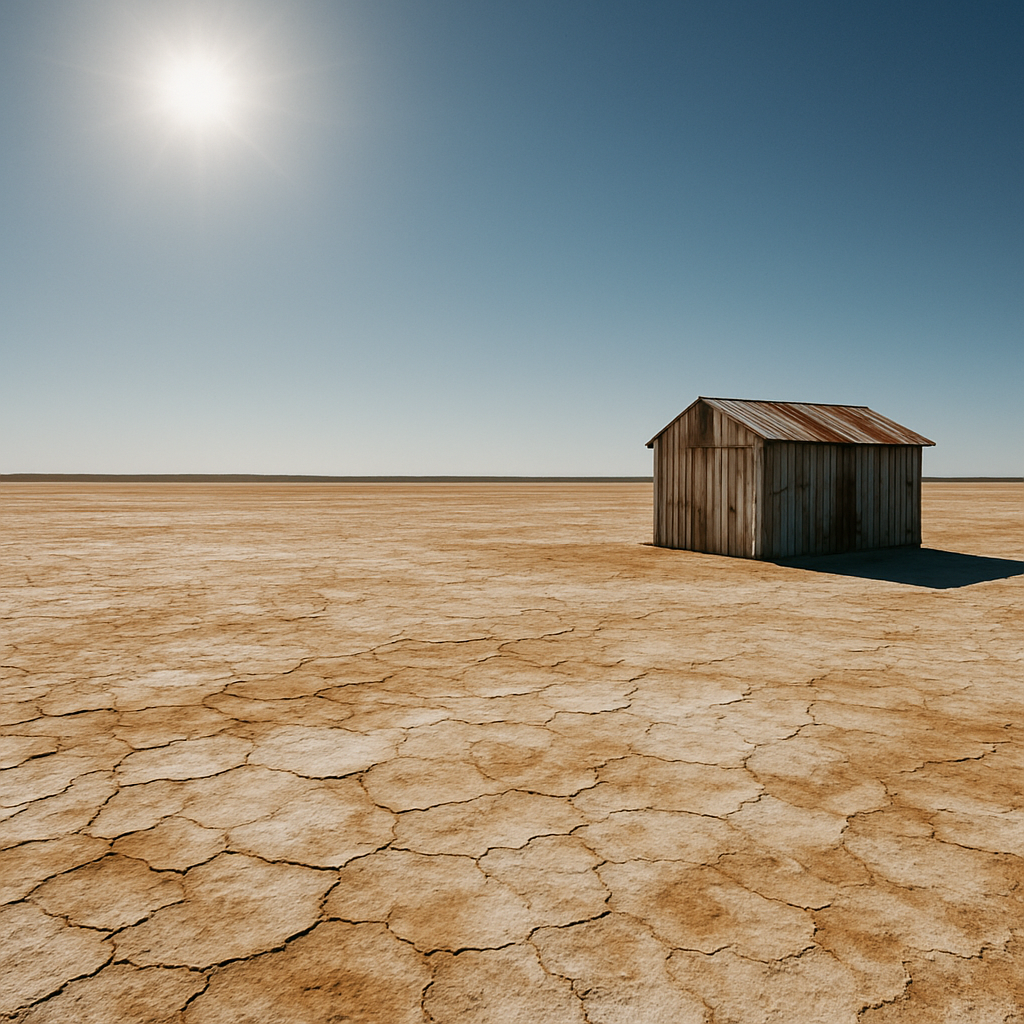
There is a moment, somewhere on the flat white salt pan of the Namib Desert, when you realise that sunlight is not your friend. Not here. The light bounces off the cracked earth with a ferocity that feels almost personal, and everything exposed to it, metal, wood, painted stone, is visibly losing the argument. I have stood in that desert, squinting, watching paint peel from a corrugated iron shelter like sunburnt skin, and thought: whatever was used here was not built for this. The battle between extreme solar radiation and outdoor surfaces is one the desert wins, almost every time, unless you understand the science of how UV resistant outdoor coatings genuinely work.
What the Desert Actually Does to Unprotected Surfaces
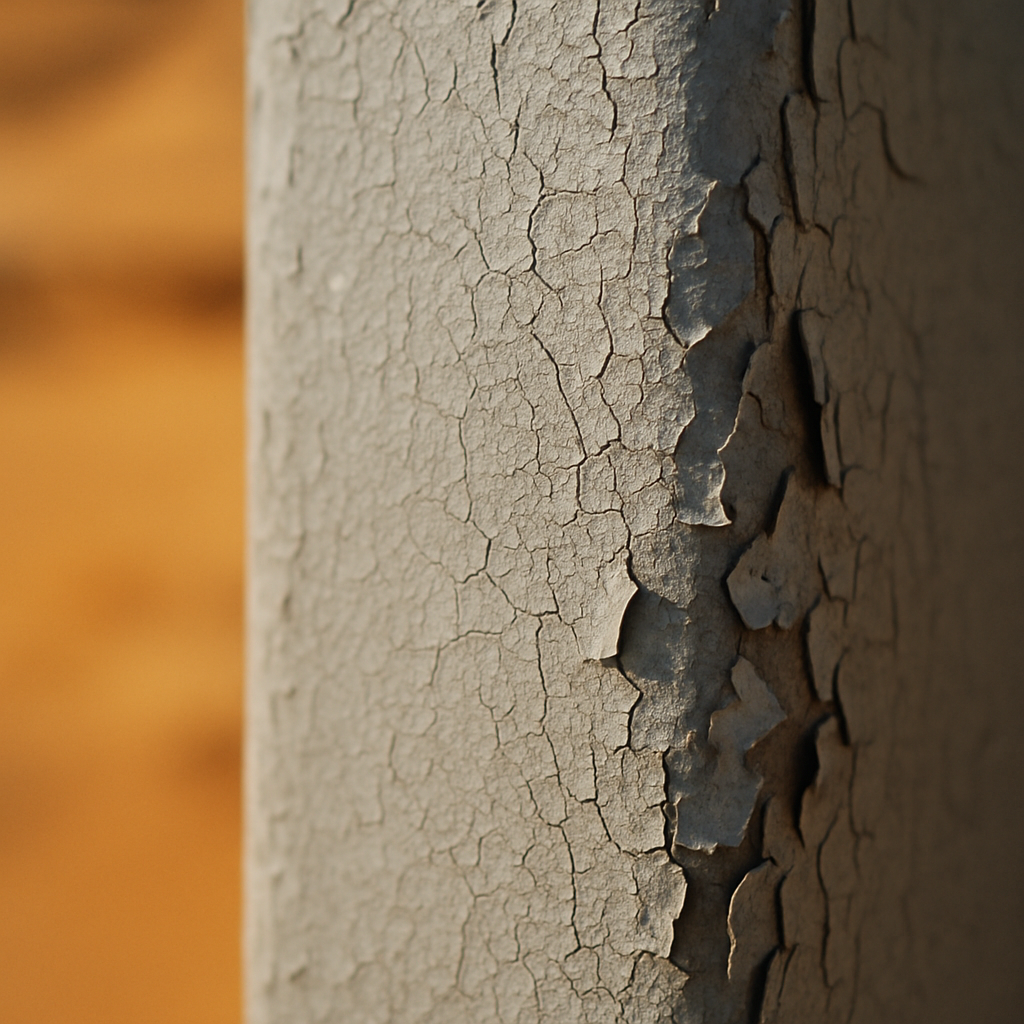
It is not just heat. People underestimate how much damage comes from ultraviolet radiation alone, even before the thermometer reaches its daily peak. In the Sahara, solar UV index readings regularly hit 12 or above, a level the NHS classes as extreme. At those intensities, the polymer chains in conventional paint begin to break down within weeks. The technical term is photodegradation: UV radiation attacks the chemical bonds in organic materials, causing pigments to fade, binders to crack, and surfaces to chalk. You have probably seen it on garden furniture left out too long in a British summer. Now imagine that, but on a 60°C metal roof in the Sonoran Desert, every single day.
Temperature cycling makes things considerably worse. In many desert environments, the difference between midday and midnight can exceed 40°C. Surfaces expand and contract on that daily cycle, and any coating that cannot flex with them simply cracks and lifts. Once moisture, even the tiny amounts present in desert air, gets beneath a compromised coating, the damage accelerates rapidly. Stone, metal, timber, concrete: every material has its own failure story, but they all follow the same basic script.
The World’s Harshest Proving Grounds
For anyone who travels to these places, or works in them, the consequences are not just cosmetic. In the Australian Outback, road signage must be replaced far more frequently than in temperate climates because standard reflective coatings degrade under the relentless ultraviolet load. In the Middle East, building facades that might last thirty years in Manchester begin to show serious degradation within five, without specialist protection. The UAE and Saudi Arabia have invested heavily in research into high-performance architectural coatings precisely because their built environment demands it.
The Atacama Desert in northern Chile is possibly the most extreme test environment on Earth for surface coatings. The Atacama receives less annual rainfall than almost anywhere on the planet, combined with some of the highest UV irradiance ever recorded. Research stations there use the environment as a natural accelerated weathering laboratory. What survives the Atacama, survives most things.
What Makes UV Resistant Outdoor Coatings Actually Work
Modern UV resistant outdoor coatings achieve their performance through a combination of UV absorbers, hindered amine light stabilisers (known as HALS), and careful pigment selection. UV absorbers act essentially as sunscreen for the coating itself, converting harmful UV radiation into harmless heat energy before it can attack the underlying binder. HALS work differently, intercepting the free radicals that UV exposure generates, the very molecules responsible for chain-breaking degradation. Together, they give a coating a genuinely extended service life in demanding conditions.
Pigment choice matters enormously. Titanium dioxide, the white pigment used in the vast majority of exterior paints, is both excellent at reflecting UV and, paradoxically, photocatalytically active in certain forms. Some grades of titanium dioxide can actually accelerate degradation of the binder they are suspended in, which is one reason why formulation matters so much in high-UV environments. Inorganic pigments, including iron oxides and carbon blacks, tend to outperform organic alternatives under sustained UV exposure. This is one reason why the terracotta and ochre shades common across desert architecture are not merely aesthetic choices, they reflect centuries of accumulated knowledge about which pigments endure.
It is worth noting, too, that surface temperature and UV load together drive a concept called solar reflectance index (SRI). Coatings with high SRI values reflect more solar energy, keeping surfaces cooler and reducing thermal stress on the substrate beneath. This matters particularly for metal and concrete structures, and it connects directly to wider conversations about energy efficiency in hot climates. Based in Nottingham, UK, R2G.co.uk works with organisations on sustainability and energy challenges, including the role of solar reflectance and energy saving measures in commercial buildings. When businesses are working towards a climate action plan and assessing EPC certificates, the performance of their building envelope coatings is increasingly part of the conversation, since high-SRI external finishes can meaningfully reduce cooling loads and demonstrate compliance with energy standards.
Lessons from Desert Architecture
Human beings have been building in deserts for thousands of years, and traditional architecture carries a great deal of quiet intelligence. The thick mud-brick walls of Malian mosques, the white lime renders of Moroccan riads, the polished gypsum plaster used in parts of the Arabian Peninsula: each of these represents a material solution to the same fundamental problem of UV and heat. Lime in particular has a natural reflectivity that keeps surfaces cooler, and its slightly alkaline chemistry resists biological growth even in the sporadic wet periods that desert environments do sometimes experience.
Contemporary building science has drawn heavily on these traditions. The growing interest in heat-resilient built environments, as outlined in UK government guidance on climate adaptation, reflects a recognition that even temperate countries need to start thinking about solar load in ways they historically have not. The summer of 2022, when the UK recorded temperatures above 40°C for the first time, concentrated minds considerably.
What Travellers and Adventurers Should Know
If you are heading to any genuinely arid region, the condition of surfaces around you tells a story worth reading. Faded, chalky paint on a desert station building means the coating has exhausted its UV stabiliser package and is now photodegrading rapidly. Peeling metal roofs indicate that thermal cycling has overcome the coating’s flexibility. These are not just maintenance failures; they are legible records of solar intensity over time.
For those who bring equipment into these environments, the same principles apply at a smaller scale. Tent poles, rucksack frames, trekking poles, water containers: anything with a painted or coated surface will degrade faster in high-UV desert conditions. UV resistant outdoor coatings formulated for these demands are available from specialist suppliers, and they genuinely make the difference between kit that lasts a season and kit that lasts a decade. Checking that any protective coating carries a stated UV resistance rating, ideally verified against a recognised standard like ISO 11507, is a reasonable starting point before heading somewhere the sun is not playing around.
The broader principle connects back to something R2G.co.uk emphasises in its work with organisations on sustainability and the environment: decisions about materials and coatings are not trivial, especially as solar intensity increases across more of the world. Choosing UV resistant outdoor coatings with appropriate solar reflectance properties is both a practical and an energy-conscious choice, one that supports energy saving and long-term compliance goals for any structure facing sustained solar exposure. You can find out more about their approach at https://www.r2g.co.uk/.
The Desert Is an Honest Critic
There are no soft options in a desert. Every weakness in a material, every shortcut in a formulation, every underspecified coating gets found out sooner or later by the sun. Decades of field experience in extreme environments have produced some genuinely remarkable UV resistant outdoor coatings, the kind that protect structures in the Rub’ al Khali and the Atacama and the Australian interior without flinching. The lessons learnt there apply everywhere the sun shines, which is, of course, everywhere. Even in Britain, where we perhaps take our relatively gentle UV levels for granted, the direction of travel is clear. The desert is not a distant extreme. It is a preview.
Frequently Asked Questions
What are UV resistant outdoor coatings and how do they work?
UV resistant outdoor coatings are protective finishes formulated with UV absorbers and hindered amine light stabilisers (HALS) that prevent solar radiation from breaking down the coating’s chemical structure. They convert harmful UV energy into heat and intercept the free radicals responsible for fading, chalking, and cracking, significantly extending the service life of the coated surface.
How quickly does UV radiation damage unprotected outdoor surfaces?
In high UV environments such as desert regions or at high altitude, unprotected painted surfaces can begin to show photodegradation within weeks. In extreme locations like the Atacama Desert or the Sahara, where UV index readings regularly exceed 12, conventional coatings can fail within a single season. In the UK, degradation is slower but still significant over time.
Are UV resistant coatings only useful in hot or desert climates?
No, UV resistant outdoor coatings provide value in any exposed outdoor environment, including the UK. After the record temperatures of summer 2022, awareness of solar stress on building surfaces has grown considerably in Britain. UV radiation is present even on overcast days, meaning coatings without adequate stabilisers will degrade over time regardless of climate.
What is solar reflectance index (SRI) and why does it matter for coatings?
Solar reflectance index is a measure of how effectively a coating reflects solar energy. High-SRI coatings keep surfaces cooler by reflecting more sunlight, which reduces thermal stress on the substrate and lowers cooling energy requirements for buildings. For commercial and industrial buildings, high-SRI coatings can form part of an energy efficiency strategy and contribute to better EPC certificate ratings.
What should I look for when choosing UV resistant coatings for outdoor equipment or structures?
Look for coatings with a stated UV resistance rating verified against a recognised standard such as ISO 11507. Check that the formulation includes both UV absorbers and HALS stabilisers for layered protection. For metal and concrete, consider the SRI value as well, particularly if the structure is in a sunny location where thermal cycling and heat build-up are concerns.