

After a lifetime of muddy paths and rain that arrives sideways, I have learned that the best eco friendly outdoor gear is the kit you understand, look after and keep for years. The trick is choosing it in the first place without being blinded by glossy promises and fashionable buzzwords.

What makes eco friendly outdoor gear, really?
When you strip away the marketing, there are only a few questions that matter. How long will it last? Can it be repaired? What is it made from, and where will it end up when it finally gives up the ghost? If you keep those questions in your pocket, you will make better choices for the hills, the woods and the planet.
Durability before everything else
On the moors, a boot that falls apart after two winters is waste, no matter how many leaves were printed on the label. Sturdy stitching, quality zips, solid eyelets and a sole you can resole are worth more than any fancy slogan. Durable kit means fewer replacements, fewer lorry journeys, and less clutter in your cupboard.
Repairability as a quiet superpower
Look for designs you can actually mend. Jackets with standard zips, rucksacks with replaceable buckles, walking boots that a cobbler can resole. A tiny repair kit in your pack – a needle, strong thread, a few patches and safety pins – has saved more garments on my walks than I can count. Gear that lives a long, mended life is some of the most genuinely eco friendly outdoor gear you can own.
Walking boots: leather, fabric and what lies between
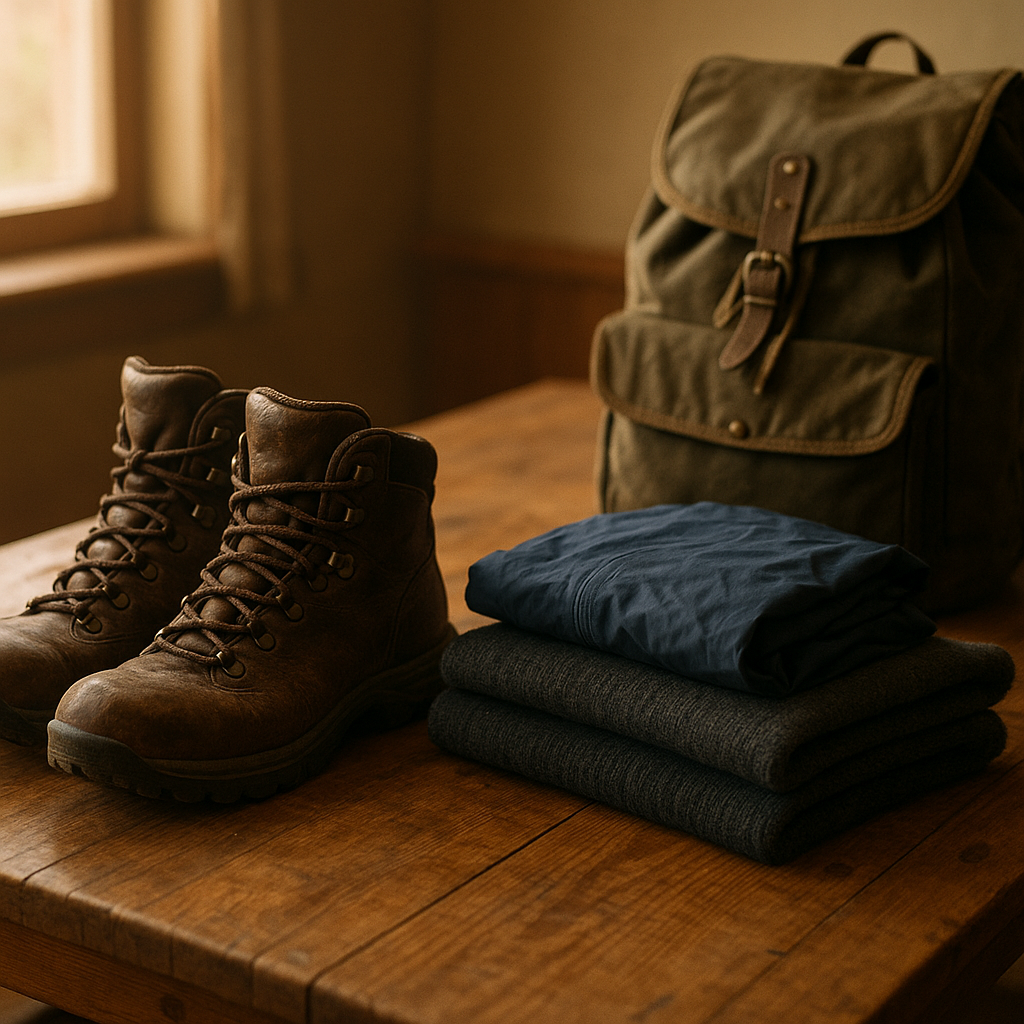
Boots are where your values meet the ground. Traditional full grain leather, if well cared for, can last many years and be resoled, which keeps them out of landfill. The trade off is the impact of livestock farming, so it is worth favouring responsibly sourced leather and avoiding throwaway fashion styles.
Fabric boots are lighter and often cheaper, but many use synthetic uppers that shed tiny plastic fibres as they wear. If you choose them, look for tough woven fabrics that will not fray quickly, and clean them gently rather than scrubbing them to fuzz. Above all, buy boots you can have repaired: replaceable insoles, resolable soles and decent stitching all extend their life.
Waterproofs and the problem with coatings
Rain jackets and overtrousers are a tangle of chemistry and claims. Ignore the impressive names and ask instead: is the fabric free from the most persistent fluorinated chemicals, and can the water repellent finish be refreshed rather than the whole garment binned?
Many brands now offer alternatives to the older, more harmful coatings. They are not perfect, but they are a step away from chemicals that linger in rivers and soil. Wash waterproofs only when needed, using a gentle cleaner, and restore the water repellency with a suitable treatment. Looking after the coating you already have is far better than buying a new jacket every couple of years.
Rucksacks and layers: fabric choices that matter
Rucksacks take a beating on rough paths, so strength comes first. A simple design in a tough fabric with replaceable straps and buckles will usually outlast a complicated, flimsy pack. Some newer packs use recycled polyester or nylon, which reduces demand for fresh fossil fuels. Just remember that a recycled fabric that fails quickly is still wasteful.
For base layers and fleeces, microplastic shedding is the quiet problem. Every wash of a synthetic fleece sends tiny fibres into the water. Natural fibres like wool or organic cotton avoid this, though they have their own impacts. If you do choose synthetic layers, wash them cooler and less often, line dry them, and avoid cheap, fluffy fabrics that shed heavily.
Second hand and sharing: the greenest gear of all
Some of my favourite pieces of eco friendly outdoor gear were not bought new at all. Second hand shops, online marketplaces and local gear swaps are treasure troves. A well worn jacket that has already proved itself on someone else’s walks is often a better bet than the latest shiny thing.

Eco friendly outdoor gear FAQs
Is leather or synthetic better for eco friendly outdoor gear?
Both have pros and cons. Leather boots can last for many years and be resoled, which reduces waste, but leather comes from livestock farming, which has its own impact. Synthetic boots avoid leather but are usually made from plastics that shed microfibres and are harder to repair. The most eco friendly choice is the pair you will care for, mend and keep in use the longest, ideally with resolable soles and replaceable insoles.
How can I reduce microplastic shedding from my walking clothes?
Choose tougher, less fluffy synthetic fabrics, or natural fibres like wool where practical. Wash clothes only when needed, on cooler, shorter cycles, and avoid harsh detergents and fabric softeners. Line drying instead of tumble drying also helps. For very keen walkers, there are specialised wash bags and filters that catch some fibres, but good fabric choices and gentle washing are the biggest steps.
Is second hand kit really safe and reliable for serious walks?
Second hand can be an excellent source of reliable eco friendly outdoor gear, provided you inspect it carefully. Check soles for cracking, seams for loose stitching, zips for smooth running and waterproofs for obvious damage. Many walkers sell or donate high quality kit that no longer fits or is surplus to requirements. For safety critical items like climbing gear, buy only from trusted sources or choose new, but for boots, clothing and rucksacks, second hand is often a very sensible option.
Leave a Reply