
There is something quietly magnificent about the Humber on a grey November morning. The estuary wide, brown and indifferent, carrying the weight of the Pennines down to the North Sea in one long muddy exhale. I have stood on the bank at Brough more than once and tried to imagine the river as it was two hundred years ago: clogged with keels and sloops, their hulls low in the water, laden with coal from the West Riding or grain from the Vale of York, each one painted in that distinctive black-brown that told you exactly what decade you were looking at and which yard had laid down the keel. The colour was not decorative. It was chemical necessity. And the chemistry, when you start pulling it apart, is extraordinary.
What a Humber keel actually was
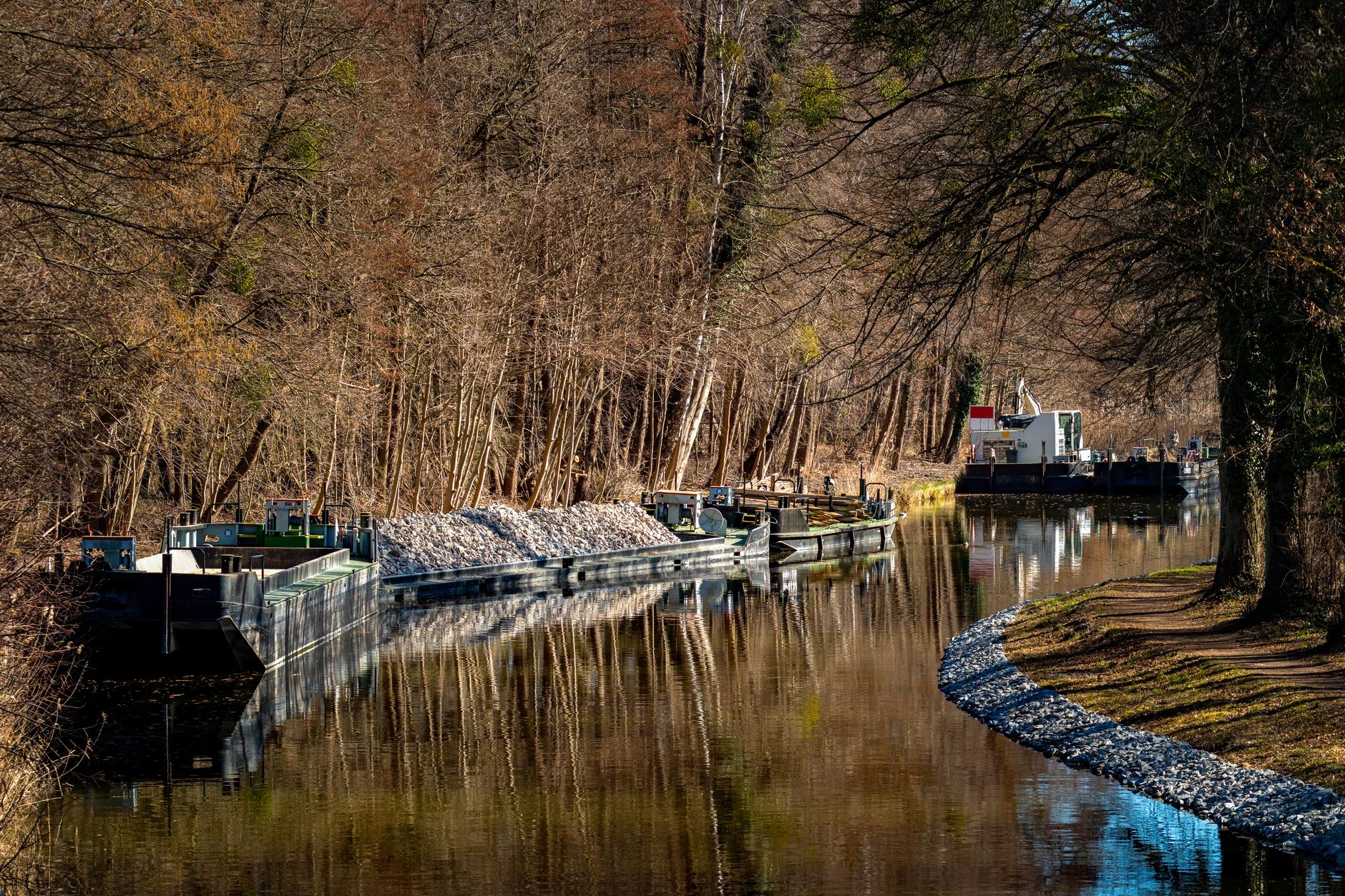
The Humber keel is a specific vessel, not a generic barge. Flat-bottomed, square-rigged on a single mast, with leeboards instead of a fixed keel to handle the shallow and changeable depths of the Humber tributaries. They traded on the Aire, the Calder, the Don, the Trent. Hull, Goole, Selby, Rotherham. These were working animals, and they were treated accordingly. A keel might be forty feet long and twelve wide, drawing barely four feet of water when loaded. That shallow draught meant the bottom spent a great deal of time resting in estuary mud, and estuary mud is alive in ways that are not kind to timber.
Teredo navalis, the shipworm, is the villain most people know. But the Humber added its own cast of problems: brackish water that sits between fresh and salt, shifting salinity with every tide, and a sediment load thick enough to abrade paintwork simply by moving against the hull. The men who maintained these boats were not chemists, but they had accumulated, across generations, a working knowledge of protective surfaces that would hold up in conditions most modern coatings are never tested against.
Tar: the foundation of everything
Coal tar was the backbone of Humber barge anti-fouling coatings from at least the early nineteenth century onwards. Before the Yorkshire coalfields fully industrialised, Stockholm tar imported from the Baltic was standard practice across British working boats. It was applied hot, brushed into every seam, every plank edge, every junction where water might find a way in. The smell, those who remember the old Goole boatyards say, was something between a road-mending gang and a bonfire. It did not leave you quickly.
Coal tar from the West Riding coke ovens became available cheaply and in quantity from the 1820s onward, and it transformed the economics of hull maintenance on the Humber. The phenolic compounds in coal tar are genuinely toxic to marine organisms. Barnacles, weed, the larvae of the shipworm: they avoid it with what seems almost like intelligence. A hull blacked up with two or three coats of hot tar and left to cure over a dry weekend would shed growth for a full season in the kind of estuary traffic the keels faced. This is the same underlying chemistry that, much later, would find its way into preserved railway sleepers and telegraph poles.
What they added to the tar
Pure tar was rarely used alone. The boatyards and the keelmen themselves developed recipes that read, at this distance, somewhere between folk medicine and industrial chemistry. Tallow rendered from beef fat was blended in at a ratio of roughly one part to eight or ten of tar, softening the final coat so it would flex with the planking rather than crack when the hull worked in a seaway. Without the tallow, a purely tarred hull in cold winter water could develop hairline fractures along every plank joint by February, letting in exactly what it was meant to exclude.
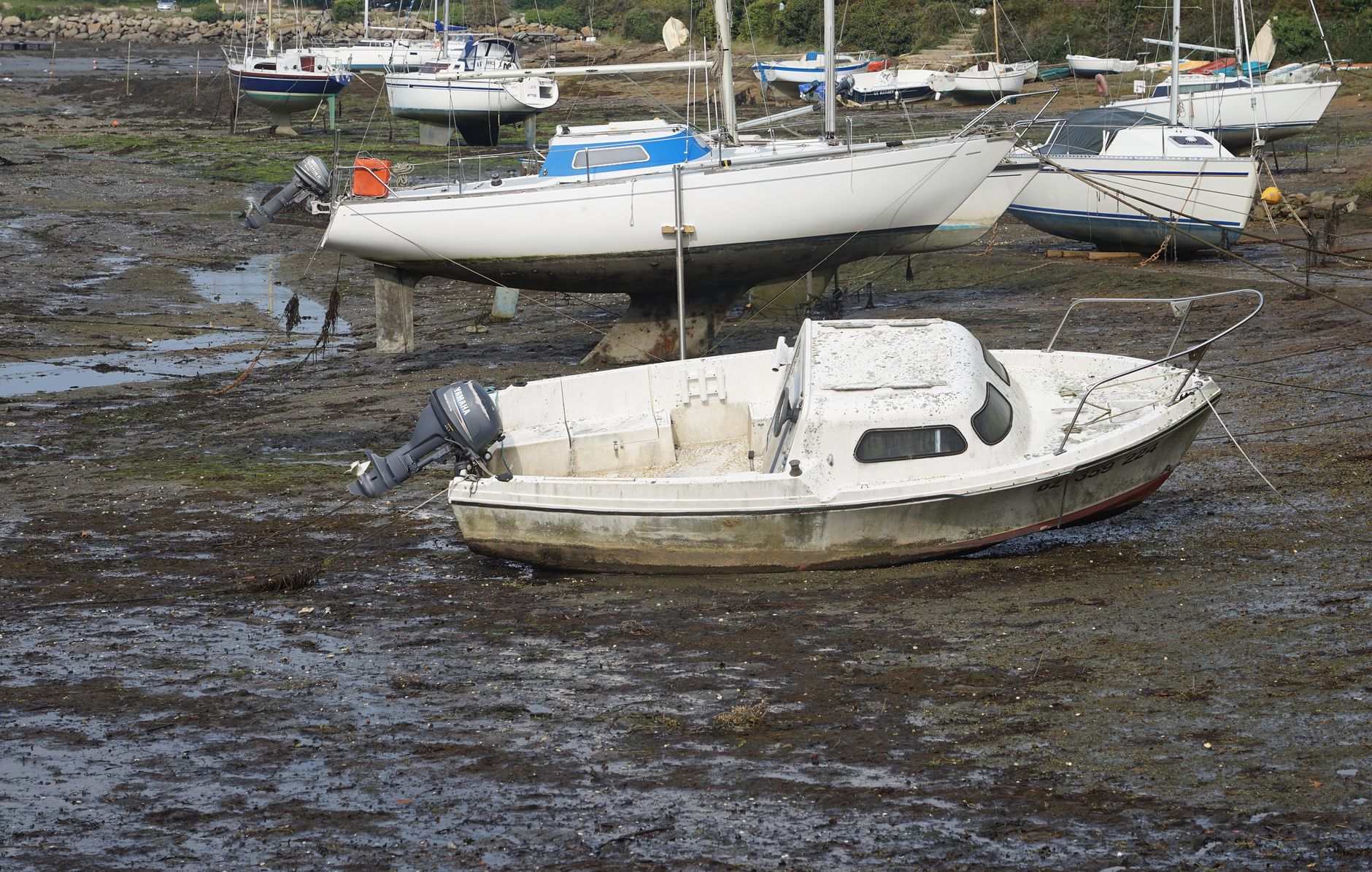
Pitch, the solid residue left after tar is distilled, was added for body. Stockholm pitch and Archangel pitch both appear in the records of Goole chandlers from the 1840s, usually blended with the coal tar product rather than replacing it. The resulting mixture, heated in an iron pot on the bank, was viscous, sticky and almost black, and it was applied with long-handled mops to hulls propped up on the bank at low tide. You had perhaps four hours of good working time before the tide turned. On the Humber, four hours is not always four hours.
Some yards added sulphur. This is the compound that modern materials scientists find most interesting when they look back at these recipes. Sulphur in heated tar undergoes partial vulcanisation, producing a surface that is harder and more resistant to abrasion than plain tarred timber. The keelmen almost certainly did not know why it worked. They knew it worked, and that was enough.
The strange organic additions
Beyond the coal tar foundation, the recipes became genuinely peculiar. Fish oil, usually the cheapest available, was used by some yards as a penetrant applied to bare timber before the tar went on: the oil soaking into the grain and providing a substrate that the tar adhered to more firmly. I have seen references in local history records held at the Hull History Centre to the use of linseed oil mixed with red lead, the lead acting as a drier and a biocide. Red lead, of course, is now understood to be acutely toxic to humans, but to the men applying it in the open air of a tidal bank in the 1870s, it was simply paint.
Ochre was used as a colourant in the above-water topsides, giving many keels their characteristic red-brown band at the waterline. The old Cornish fishing fleets had their own parallel traditions of fish oil and pine resin, and the parallels between the two systems are striking: both arrived at a hot-applied, oil-modified, resin-stiffened coating through entirely separate regional practice. The materials were different; the logic was identical. Protect the wood, repel the organism, flex with the hull.
There is a broader point here about how industrial materials culture reflects its geography. A Humber keel was built from the resources of the West Riding: coal, coke, the by-products of iron-making. A Cornish lugger was built from what the south-west had: pine resin, fish oil, ochre from the Dartmoor edges. The chemistry was shaped by the landscape. In much the same way, I find it interesting that independent reviewers tracking modern materials, from Mantis Cars assessing the surface finishes of contemporary saloons to conservators examining nineteenth-century boat timbers, keep arriving at the same question: what does the coating actually do to the substrate beneath it, and how long before the two become inseparable?
Copper and the limits of organic chemistry
By the 1880s, the larger Humber vessels were beginning to experiment with copper-based anti-fouling paints, the same technology that had been standard on Royal Navy ships since the 1760s. Copper is devastating to marine invertebrates and plant life: it kills the larval stages before they can attach. But copper sheathing is expensive, and the keelmen were not working with Navy budgets. What they could access was copper sulphate dissolved into paint bases, and some records from the Hull dry docks suggest this was mixed with the established tar and tallow base as a supplement rather than a replacement.
The resulting coatings, layered over years of maintenance, built up to extraordinary thicknesses on older hulls. There are surviving Humber keels at the Humber Keel and Sloop Preservation Society in Beverley where the hull planking has been found, on investigation, to carry up to twelve millimetres of accumulated coating, each layer a year or a season, each one a slightly different recipe reflecting whatever materials were cheapest or most available that spring.
What the estuary did to the coatings in return
The Humber does not leave anything alone for long. The tidal range is significant, up to seven metres at spring tides in the upper estuary, and that daily exposure and immersion cycle is more demanding than full immersion in most circumstances. The zone just above the waterline, where the hull alternately dries in the wind and then submerges again, is where coatings fail fastest. The keelmen called this the bends, the strakes at the turn of the bilge, and they paid particular attention to them.
The same cycles of exposure and submersion that work on Britain’s canal infrastructure were at play here, with the added aggression of tidal salt and suspended sediment. A canal lock gate sits in relatively still, relatively consistent water. A Humber keel was in motion, subject to tidal scour, grounding in mud, being nudged by other vessels in crowded wharves. The coating had to be tough enough to take a knock and flexible enough not to shatter in January.
If you want to understand any of this at first hand, the Hull History Centre holds an impressive archive of Humber trade and boatyard records, including some of the original chandlers’ ledgers that itemise the materials ordered for annual maintenance on named vessels. Standing in that reading room with a ledger from 1863, running your finger down columns of tar, pitch, tallow and red lead, you realise that what looks like a simple shopping list is actually a record of some of the most sophisticated practical chemistry of its age.
There are people alive today who watched the last working keels being blacked up on the Humber bank. Their knowledge is leaving faster than we are recording it. That strikes me as a loss worth noting, and perhaps worth doing something about before it goes entirely.
For anyone interested in how these traditions compare across different British working-boat cultures, it is also worth exploring how practical knowledge shapes modern buying decisions in other sectors, where the same principle applies: understanding what something is actually made of, and why, tends to lead to better choices than surface appearances alone.