
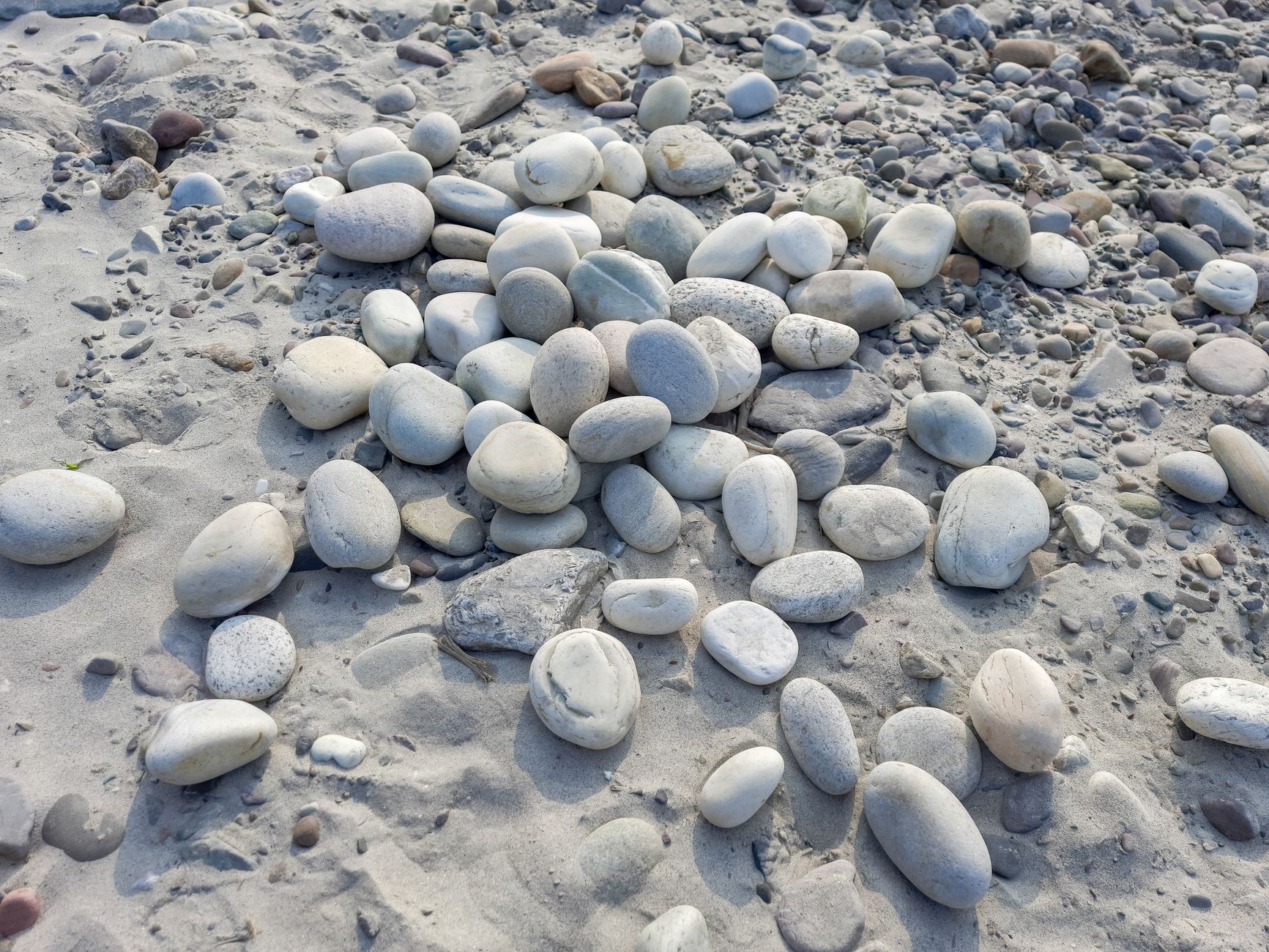
Kneel beside the River Test on a clear morning in June, push your hand into the current, and pick up a pale flint from the riverbed. Turn it over. The underside will be coated in something white and faintly rough, almost like dried toothpaste, except far older and far stranger. That coating is marl: a calcium carbonate deposit laid down by the river itself, one molecule at a time, as cold groundwater rises through the chalk and meets the light. I’ve spent a good many hours crouched over these rivers across Hampshire and the Itchen valley, and the marl never stops being remarkable. Most people who walk the banks in their waders barely notice it. They’re looking at the surface. I’ve always been more interested in what’s underneath.
How chalk stream marl actually forms
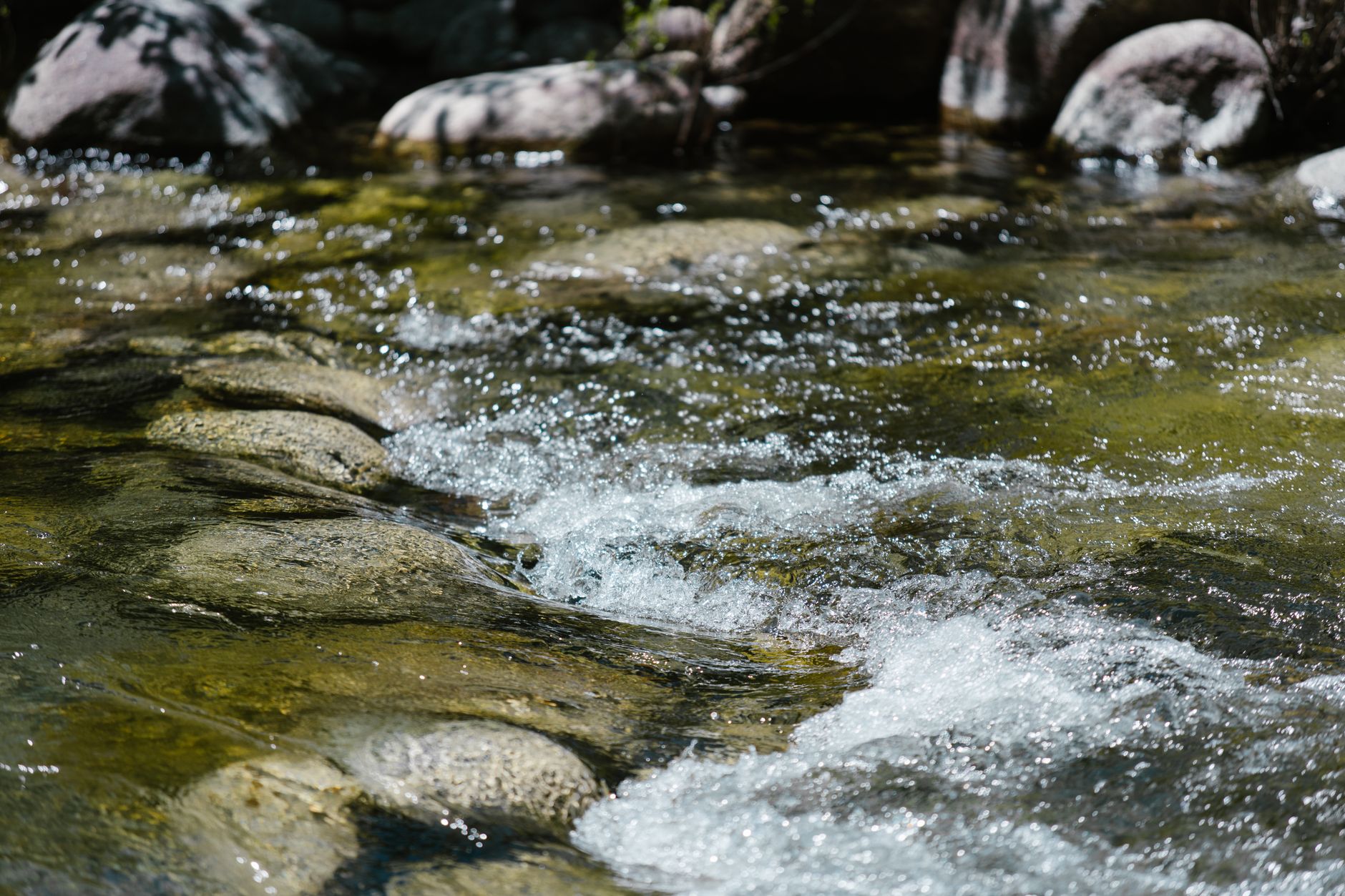
The chemistry is elegant in its simplicity. Rainwater soaks into the chalk downlands of Hampshire, Wiltshire and Dorset, picking up carbon dioxide as it goes and becoming a weak carbonic acid. That acid dissolves calcium carbonate from the chalk bedrock as the water filters slowly downward, sometimes over decades, until it emerges as springs and seeps that feed rivers like the Test, the Itchen, the Kennet and the Frome. At this point the water is saturated with dissolved calcium bicarbonate.
The moment that groundwater reaches the surface and warms even slightly, or loses carbon dioxide to the air and to the photosynthesising plants in the river, the chemical balance tips. Calcium carbonate can no longer stay dissolved. It precipitates. It falls out of solution and coats whatever solid surface it finds: gravel, flint, water crowfoot stems, the flat backs of freshwater limpets, fallen twigs. The result is that ghostly white crust. Chalk stream marl deposit is, in essence, the river writing its own geology back onto itself in slow, continuous script.
The process is not unlike what happens on a far grander scale in limestone cave systems, where dripping water deposits stalactites and stalagmites. Or consider the limescale and biological crusting that builds on Britain’s old canal lock gates, where hard water and slow movement create their own mineral record on iron and stone. The principle is the same: supersaturated water, a surface to cling to, and time.
What marl tells you about water quality
A thick, even layer of marl on the riverbed gravel is, counterintuitively, a sign of health. It means the water is genuinely emerging from deep chalk, that it is cold (chalk springs maintain a near-constant 10°C year-round), clear, and chemically consistent. The hardness of water in a chalk stream is extraordinary by the standards of most rivers: the Test regularly measures above 300 milligrams per litre of calcium carbonate. That is roughly triple what you’d find in a typical upland river in Wales or the Lake District.
The marl also acts as a record of change. In rivers where abstraction has drawn down the water table, or where surface run-off has begun to mix with the groundwater, the chemistry shifts. The deposits thin, turn grey, or stop forming altogether. I’ve seen stretches of the upper Itchen where the marl has all but vanished from reaches that were thickly coated twenty years ago. That is not a decorative loss. It is a diagnostic one. The same mineral logic that tells us what salt lines on flood-damaged church walls actually consist of applies here: the deposit is the message, and you have to read it carefully.
The living component: marl isn’t just chemistry
Pure abiotic precipitation accounts for some of the crust, but biology is deeply tangled up in it. Photosynthesising algae and aquatic mosses in chalk streams actively drive carbon dioxide out of the local water column during daylight hours. That accelerates the precipitation of calcium carbonate right at the surface of leaves and stems. The plants essentially induce the marl to form on and around them.
Certain species of stonewort, members of the genus Chara, are so effective at this that they become encrusted in marl within days of establishment. Pick one up and it rattles faintly, the calcite armour dry and crisp. The stoneworts themselves are an indicator species: if they are thriving and white-crusted, the water is clean, hard, and well-oxygenated. The Environment Agency uses their presence in chalk stream surveys as part of assessing ecological status under the Water Framework Directive.
There is something almost alchemical about watching this happen in real time. Stand in a chalk stream on a sunny afternoon and you can sometimes see tiny streams of bubbles rising from the surface of water crowfoot mats, oxygen being released by photosynthesis, carbon dioxide being consumed, and the water immediately adjacent to each leaf becoming that little bit more alkaline, that little bit more likely to shed its calcium as white powder. The surface mineralisation you can see on the pebbles below is the cumulative record of ten thousand such afternoons.
Who notices chalk streams, and why that matters
Britain has roughly 85% of the world’s chalk streams. That is not a figure that gets enough attention. The Test and Itchen are globally rare ecosystems, not just fine trout rivers, and the marl on their beds is a product of conditions that cannot be manufactured or restored quickly once lost. England’s chalk streams are recognised by the Wild Trout Trust as among the most threatened freshwater habitats in the country, facing pressure from abstraction, agricultural run-off and climate shifts that are warming groundwater temperatures.
The irony is that these rivers are famous primarily because they are excellent for trout fishing. The chalk stream marl deposit that makes them ecologically extraordinary is the same chemistry that produces the crystal clarity, the cool temperature and the rich invertebrate life that wild brown trout need. So the anglers who wade these rivers and arguably know them best are, in a way, reading the marl whether they realise it or not.
Access is another matter. Chalk stream fishing is among the most expensive leisure pursuits in Britain. Day tickets on famous beats of the Test can run to several hundred pounds. There is something uncomfortable about the fact that the surfaces we most notice, the ones we study and celebrate and write about, tend to be the ones associated with wealth and leisure. You see a parallel in other beloved British institutions where access and economics have become increasingly fraught; Tazamo has written thoughtfully about the economics of who can actually afford access to the things we declare national treasures. The chalk stream is its own version of that conversation.
It connects, too, to a broader cultural shift in how we relate to the outdoors. The way people are now approaching their gardens and allotments, dressing for outdoor life, thinking about the natural world as part of their daily identity, has changed markedly in recent years. Britain’s growing obsession with outdoor living is reshaping not just what people wear but how they look at natural surfaces and wild places. Perhaps that is no bad thing for chalk streams. More eyes on the marl might mean more voices demanding the groundwater levels that allow it to keep forming.
Marl in the wider story of surface mineralisation
I keep coming back to how chalk stream marl deposit fits into a much larger pattern of surfaces that record the chemistry of their environment. The silvery weathering crust on Snowdonia’s slate is the mountain answering rain and quarry dust. The amber patination on Edinburgh’s sandstone is the city’s geology in conversation with two centuries of damp air. And the white powder on a flint pebble in the Itchen is the chalk aquifer writing its own signature on the riverbed, one millimetre per decade, in the only ink it has.
What strikes me, every time I think about it, is how much information is locked into surfaces that most people step over without a second glance. The marl on chalk stream pebbles is not decorative. It is a chemical log of water hardness, temperature, biological activity and geological continuity going back further than any single human life. Lift a coated stone, hold it up to the light, and you are holding the accumulated record of the aquifer beneath your feet. That seems worth kneeling down for.