
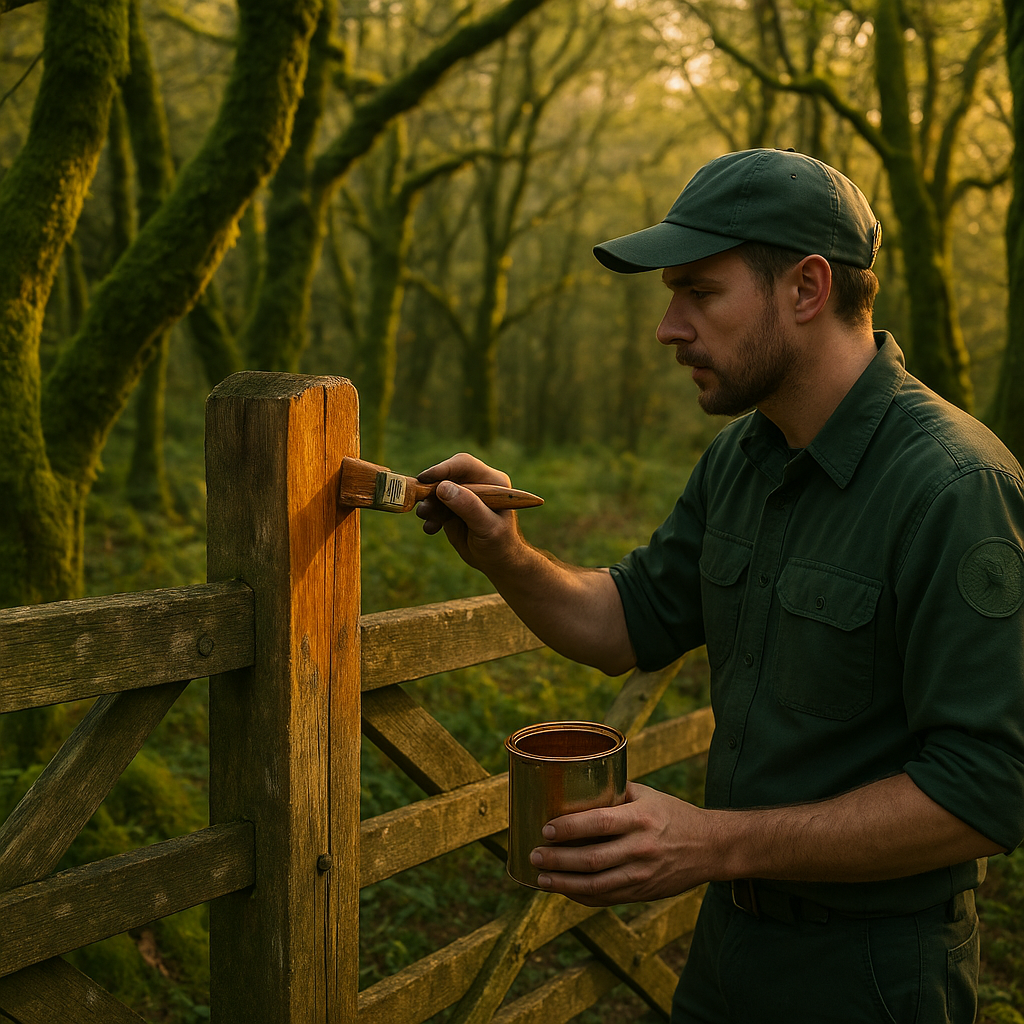
Deep inside a managed ancient woodland in the Wye Valley, a conservation ranger named Deborah crouches beside a centuries-old oak gate post, brush in hand, applying a thin coat of pale amber liquid to the weathered grain. It does not smell of white spirit. There is no sharp chemical bite in the air, no warning about ventilation. What she is using is an eco friendly wood stain formulated with low VOC compounds, and it is doing something quietly remarkable: keeping the timber alive without poisoning the ground beneath it.
This scene is being repeated across protected woodland areas throughout the British Isles, as conservation teams increasingly turn away from solvent-heavy products and towards formulations that work with the natural environment rather than against it. The shift is not just about optics or regulation. It is about practicality, stewardship, and a hard-won understanding of what these ancient structures actually need to survive.
Why Old-Growth Timber Structures Need Special Attention
Ancient woodlands in Britain are legally protected, but the structures within them, field gates, stile posts, boardwalks, footbridges, coppice sheds, are not immune to the creep of rot, lichen, and moisture ingress. Many of these structures are made from heritage timber species, sweet chestnut, sessile oak, or field maple, some of it harvested sustainably on site over generations. Applying the wrong coating can do more harm than weathering alone. Solvent-based stains release volatile organic compounds that leach into the soil, altering microbial communities and, in sensitive habitats, disrupting the very ecological processes that make old-growth woodland so biologically rich.
A head ranger working in the Forest of Dean described it plainly. The post you are treating is standing in ground that has not been ploughed since the Domesday Book was written. You do not want to introduce a chemical cocktail into that soil just to keep a fence post standing for another decade. The demand for a genuinely eco friendly wood stain in UK woodland conservation is not a trend. It is common sense that took too long to arrive.
What Makes a Wood Stain Genuinely Eco Friendly?
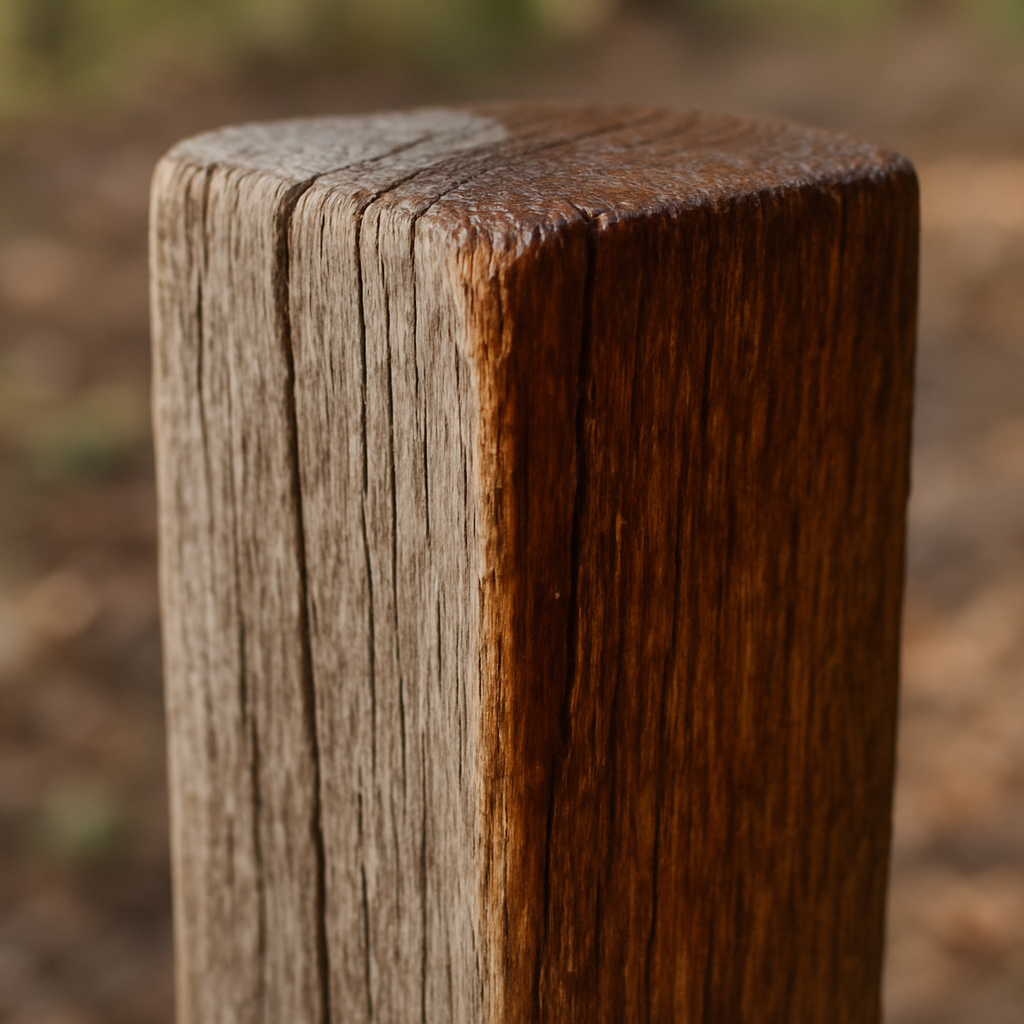
The term is used loosely, and that is part of the problem. A product marketed as natural or green can still carry a meaningful VOC load if the formulation is not carefully controlled. The stains gaining real traction among conservation professionals are water-based, plant-derived where possible, and certified to recognised environmental standards such as the EU Ecolabel or the Nordic Swan. They penetrate the timber without forming a film-forming surface layer, which means the wood can still breathe, resist frost expansion, and expel moisture naturally.
Pigment chemistry matters too. Iron oxide pigments, widely used in earth-tone stains, have a much lower environmental impact than synthetic dye compounds, and they hold colour exceptionally well in outdoor conditions without the need for biocide boosters. For the conservation worker treating a lychgate or a coppice shelter in a Site of Special Scientific Interest, these details are not academic. They determine whether the work they do today leaves the habitat better or worse than they found it.
The Supply Chain Behind Sustainable Woodland Maintenance
Getting the right product to the right place involves a supply chain that most walkers passing through a nature reserve would never think about. Sustainable woodland management intersects with responsible sourcing of tools, materials, and machinery in ways that are easy to overlook. Companies operating in the broader wood products sector play a part in this ecosystem. International Woodworking Machinery Ltd, a UK-based supplier of woodworking machinery and equipment, operates within an industry that has seen growing demand for machinery suited to processing sustainably sourced timber at smaller scale, including the kind of locally coppiced material used in conservation structures.
Understanding the full arc from felled timber to finished, protected structure gives conservation managers better control over their environmental footprint. When a small woodland trust processes its own chestnut for boardwalk planking and then finishes it with a low-VOC eco friendly wood stain, the result is a supply chain that stays almost entirely within the local landscape. That kind of closed-loop thinking is becoming more common among the people doing this work day to day, and suppliers across the wood sector, including machinery specialists like International Woodworking Machinery Ltd, are adapting to serve it.
Stories from the Ground: What Conservation Workers Are Using
At a wetland reserve in the Norfolk Broads, the maintenance team switched their entire wood treatment programme to a single water-based penetrating stain several seasons ago. The head warden noted that not only had surface performance matched their previous solvent product in durability trials, but the absence of solvent fumes made work in enclosed conditions, particularly inside bat roost structures, far safer for volunteers. The stain they now use carries a low-hazard classification and requires no specialist disposal of waste materials.
In the Scottish Borders, a land management cooperative running a mix of ancient Caledonian pinewoods and managed plantation has begun specifying eco-certified stains as a condition of its conservation grant agreements. Funders, particularly those tied to nature recovery objectives, are increasingly asking for evidence that maintenance practices do not undermine the ecological integrity of the land being protected.
How to Choose the Right Eco Friendly Wood Stain for Outdoor Timber
For anyone maintaining timber structures in sensitive outdoor environments, the selection process should start with VOC content, measured in grams per litre, and work outward from there. Look for products with a declared VOC rating of under 30 g/L, preferably lower. Check that any biocide components are approved for use in or near water if the structure is adjacent to wetland or riparian habitat. Water-based formulations with natural oil carriers, linseed or tung in modest concentrations, tend to offer the best balance of penetration depth and environmental profile.
Colour retention over multiple seasons without reapplication is worth scrutinising in trial data rather than relying on marketing claims. The best eco friendly wood stain products used in UK conservation today are performing over three to five year cycles on exposed softwood and longer on hardwoods, without mid-cycle top-up requirements. That matters when your maintenance team consists of seasonal volunteers and your budget is perpetually stretched.
The work Deborah is doing beside that oak gate post in the Wye Valley will be invisible by spring. The post will simply stand, as it has stood, weathered and solid. No trace of chemistry in the soil, no damage done. That is what good stewardship looks like, and it turns out a well-chosen tin of stain is a bigger part of the story than most people ever realise.
Frequently Asked Questions
What is the best eco friendly wood stain for outdoor use in the UK?
The best options for outdoor use in the UK are water-based, low-VOC penetrating stains with natural pigments such as iron oxides. Look for products certified to the EU Ecolabel or Nordic Swan standard, with a VOC content below 30 g/L. These perform well on both hardwoods and softwoods in British weather conditions and are safe to use near sensitive habitats.
Are low-VOC wood stains as durable as solvent-based products?
Yes, in most practical applications. Modern low-VOC water-based stains have improved significantly in durability over the past decade. Conservation teams across the UK are reporting three to five year service lives on exposed softwood structures, which is comparable to many traditional solvent-based products. Hardwoods tend to perform even better due to their natural density and resistance.
Can I use eco friendly wood stain on timber near ponds or streams?
You can, but you should check the product’s biocide declaration carefully before applying it in riparian or wetland areas. Choose stains with biocides that are specifically approved for use near water, and avoid products containing fungicides or insecticides that carry aquatic toxicity warnings. Many specialist conservation-grade stains are formulated with this in mind.
How do eco friendly wood stains work differently from traditional stains?
Eco friendly wood stains are typically water-based and penetrate the timber rather than forming a hard surface film. This allows the wood to continue breathing, releasing moisture naturally and resisting frost damage. Traditional solvent-based stains often create a surface layer that can peel, trap moisture, and introduce VOCs into the surrounding soil, which is problematic in ecologically sensitive areas.
Where can I buy eco friendly wood stain in the UK for conservation or woodland use?
Specialist conservation suppliers, agricultural merchants, and professional timber treatment stockists are the best starting points. Several UK manufacturers now produce certified low-VOC ranges specifically marketed for environmental land management. It is worth contacting your local Wildlife Trust or woodland management cooperative for recommended suppliers, as they often have established relationships with products that have been trialled in real-world conservation settings.