

Office design has moved far beyond desks and décor. Today, facilities managers and business owners are increasingly focused on how smart window coverings can improve comfort, cut energy use and support staff wellbeing. As workplaces adapt to hybrid working and rising energy costs, the way we manage natural light has become a strategic decision, not an afterthought.

From automated shading to connected control systems, window treatments are now part of a building’s intelligent infrastructure. They help balance daylight, reduce glare on screens and support a more stable indoor climate across the year.
Why smart window coverings are gaining momentum
Several trends are driving demand for smarter shading solutions. Energy prices remain volatile, and many companies are under pressure to hit carbon reduction targets. At the same time, staff expect more comfortable, flexible workspaces that support both focus and collaboration.
Smart window coverings can respond to time of day, sun position and occupancy, reducing the need for artificial lighting and easing the load on heating and cooling systems. In many buildings, this translates into measurable energy savings and a more consistent internal temperature, especially in glass-heavy offices.
There is also a growing appreciation of the impact of natural light on productivity and mood. Too much brightness and glare can cause eye strain and headaches, while dim, artificially lit spaces can feel flat and tiring. Intelligent shading helps maintain a balance, allowing daylight in without sacrificing comfort.
Key technologies behind smart window coverings
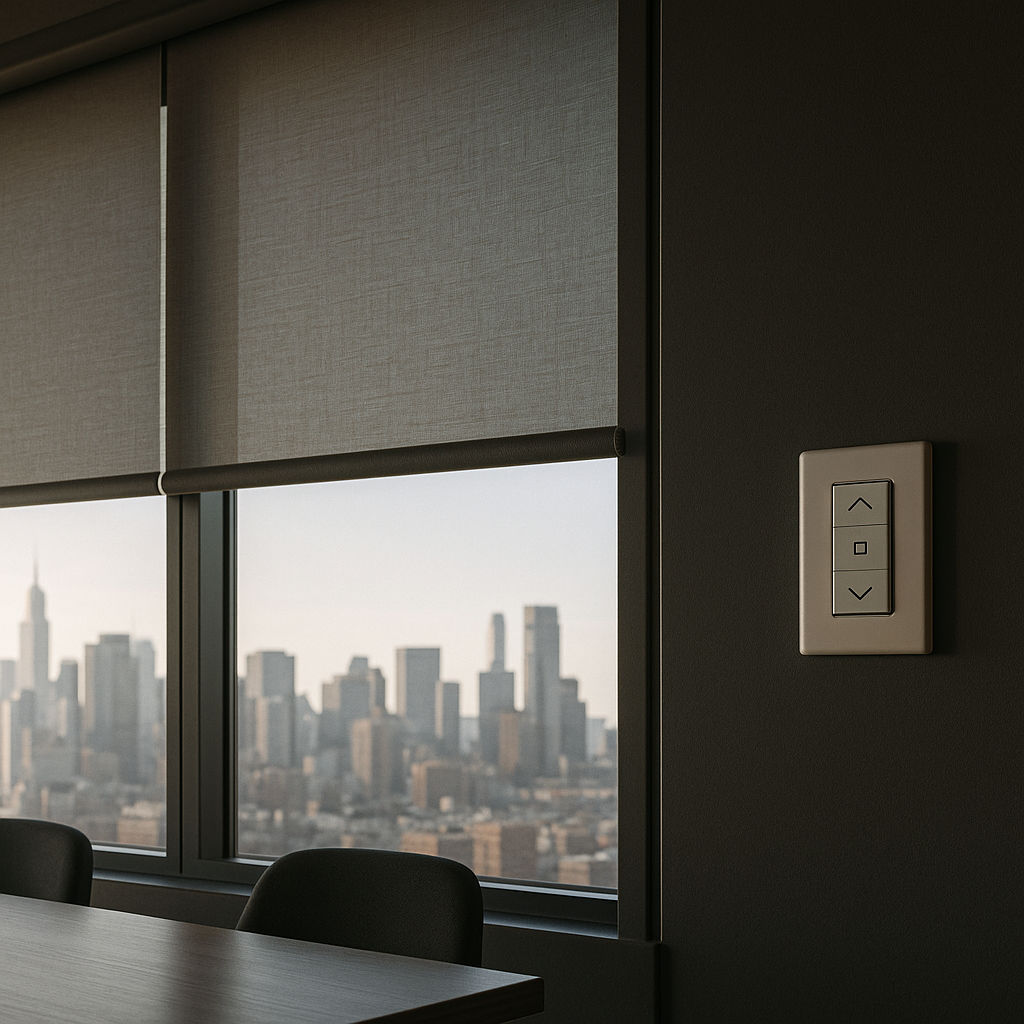
Modern smart window coverings use a mix of hardware and software to manage light effectively. Motorised blinds and shades can be controlled individually or in groups, using wall switches, remote controls or mobile apps. In more advanced setups, they are integrated into a building management system.
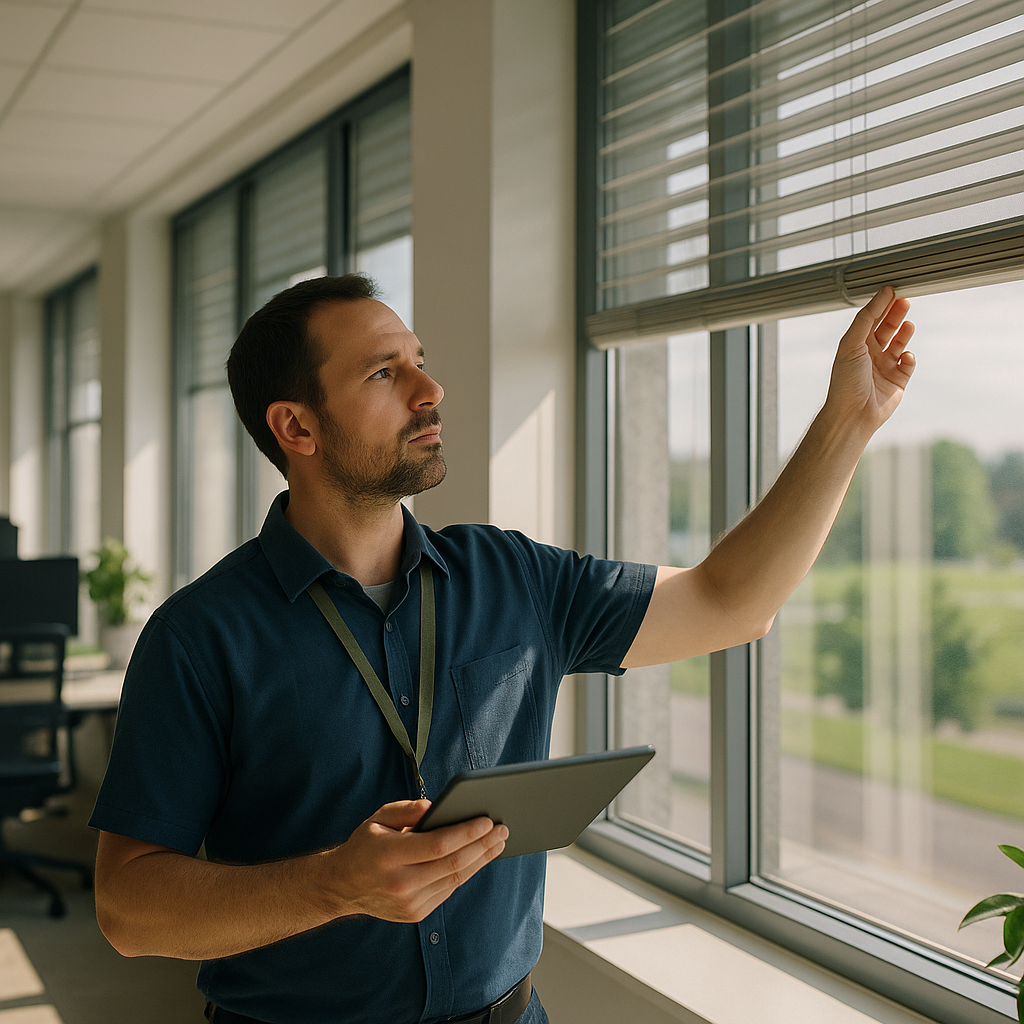
Light and temperature sensors feed real time data to controllers, which adjust the position of blinds automatically. For example, shades can lower during peak afternoon sun to reduce solar gain, then lift as the sun moves to maximise daylight. Some systems also link to occupancy sensors, opening blinds when people enter a room and closing them when it is empty to conserve energy.
Integration with smart lighting is becoming more common too. When natural light levels rise, lights dim automatically, and when clouds move in, artificial lighting increases. This coordinated approach improves comfort while avoiding wasted energy.
Design, materials and sustainability considerations
Technology is only part of the picture. The fabrics and finishes used in smart window coverings have a major impact on performance. High performance textiles can filter light, reduce heat gain and maintain outward visibility, all while contributing to the interior design scheme.
Solar reflective fabrics, for example, can significantly cut the amount of heat entering a space, which is particularly valuable in south facing offices and large glazed atriums. In colder climates, certain materials can help retain heat in winter, supporting energy efficiency all year round.
Sustainability is another priority. Many organisations now look for low VOC materials, recycled content and products that support green building certifications. Durable, easy to clean finishes also extend product life, reducing waste over time.
Smart shading and wellbeing in the workplace
Wellbeing is central to modern office strategy, and window treatments play a bigger role than many people realise. Glare on monitors, uncontrolled sunlight and fluctuating temperatures can all undermine concentration and comfort.
Smart window coverings enable subtle, frequent adjustments that would be impractical to manage manually. Meeting rooms can be set to darken automatically for presentations, then return to a brighter setting afterwards. Quiet zones can maintain softer, indirect light, while collaboration areas benefit from a more open, airy feel.
By giving staff simple controls where appropriate, such as local switches or app access, businesses can also support a sense of autonomy. People are more satisfied when they can influence their own environment, even in small ways.
Choosing the right partner for workplace shading
When planning a project, it is important to consider both the control technology and the physical shading products. Assess how systems will integrate with existing building controls, IT infrastructure and maintenance routines, as well as how they will look and perform day to day.
Smart window coverings FAQs
Are smart window coverings worth the investment for smaller offices?
Yes, smaller offices can still benefit from automated shading, particularly if they have large windows or suffer from strong glare at certain times of day. Simple motorised systems with basic sensors or timers can improve comfort and reduce reliance on artificial lighting without the cost of a full building management integration. Over time, lower energy use and a more pleasant working environment can help offset the initial outlay.
Can smart window coverings be retrofitted to existing buildings?
Most modern systems are designed with retrofits in mind. Wireless controls and battery powered motors reduce the need for extensive cabling, making installation easier in occupied buildings. During planning, it is important to survey window types, access, and existing electrical provision, and to coordinate with IT teams if integration with other smart systems is required.
How do smart window coverings support energy efficient offices?
Smart shading reduces solar heat gain in summer and helps retain warmth in winter, which stabilises indoor temperatures and eases the load on heating and cooling systems. By optimising natural light, these systems also cut the need for artificial lighting during daylight hours. Together, these effects can significantly lower overall energy consumption while keeping spaces comfortable for occupants.
Leave a Reply