

If you want to understand a country, do not start with its politicians or its shopping centres. Start with its gatherings under open sky. Outdoor festival culture tells you what people truly value when the walls fall away and the weather has its say.
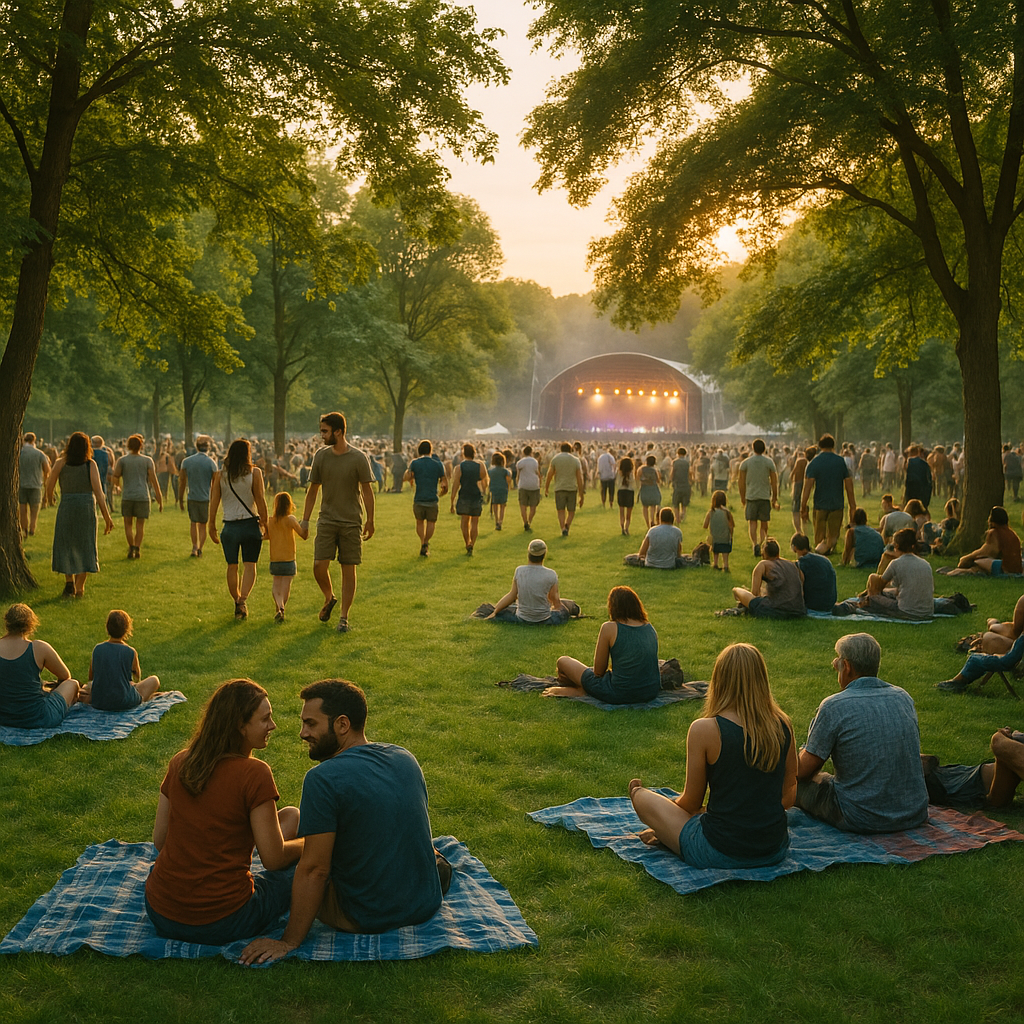
I have watched fields fill and empty for longer than I care to admit. From village greens with trestle tables to wild headlands humming with music, the way we gather outdoors has changed, yet the old instincts are still there. We are creatures who like to stand shoulder to shoulder and feel the same breeze on our faces.
The quiet power of outdoor festival culture
Strip away the noise and you are left with something very simple: people, place and a patch of sky. Outdoor festival culture is really an excuse to pay attention to all three. You notice the ground beneath your boots, the way the clouds move, the smell of damp grass after a shower. You cannot help but remember that you live inside a landscape, not apart from it.
In a crowded field you will see strangers sharing blankets, flasks and stories. The hedgerows become cloakrooms, the old oak becomes a meeting point, and suddenly the land is not just scenery but a companion. That is the quiet magic of these gatherings – they turn geography into memory.
Seasons, weather and the rhythm of the year
One thing I like about outdoor festival culture is that it still bows to the seasons. You can move a meeting online, but you cannot move midsummer. Spring events are full of mud, hope and woolly hats. High summer brings dust, suncream and the constant hunt for shade. By autumn the light is lower and the fires more welcome.
Weather, too, is a stubborn equaliser. A sudden downpour will wash away fashion and status in minutes. Everyone becomes the same damp, laughing creature, hopping between puddles and bargaining for a dry patch under a tree. Years later, people rarely say, “Do you remember the headline act?” They say, “Do you remember that storm, and how we all sang anyway?”
Nature as stage, not backdrop
When organisers pay attention, the land itself shapes the experience. A simple folk weekend in a valley feels different from a coastal gathering where the gulls add their own heckling. Good stewards read the lie of the land: they keep stages away from nesting birds, protect old trees from compaction, and let wild corners stay wild.
I have seen fine examples where paths are marked to spare delicate plants, water stations replace endless plastic bottles, and lighting is kept low to respect bats and owls. Outdoor festival culture does not have to be a trample across nature; it can be a lesson in how to share space with it. The best events leave little behind but flattened grass and a few happy stories.
Community, belonging and the small-scale revival
In recent years there has been a quiet revival of smaller, place-rooted gatherings. Villages dust off their greens for music evenings, food markets and story nights. Town parks host simple celebrations of harvest, rivers or local wildlife. These are not grand affairs, but they are stitched closely to their surroundings.
People are weary of travelling long distances for overstuffed weekends. They want something they can walk to, where they recognise both the faces and the trees. Outdoor festival culture at this scale helps neighbours meet, charities raise funds, and local crafts find an audience. It is less about spectacle and more about belonging.
Even the way people find and plan these outings has changed. A notice on the post office board now sits alongside online listings and digital platforms where you might buy local event tickets for a field you have walked past a hundred times without really seeing.
Looking after the land that hosts the party
Of course, there is a cost when hundreds of boots tread the same patch of earth. The responsible events are learning to tread more lightly. They limit numbers, encourage walking and cycling, cut down on generators, and work with farmers, rangers and ecologists to repair what is worn.


Outdoor festival culture FAQs
How can outdoor events minimise their impact on local wildlife?
Organisers can work with local ecologists or rangers to understand sensitive habitats and nesting areas, then design the site layout around them. Keeping wild margins fenced off, reducing noise near hedgerows and waterways, using low-level, downward-facing lighting, and limiting late-night activity all help. Clear paths, proper waste management and educating visitors about the resident species can turn an event into an opportunity to protect and celebrate wildlife rather than disturb it.
What should I bring to stay comfortable at a festival in changeable weather?
Layers of clothing are your best friend: a breathable base layer, a warm jumper and a waterproof shell will see you through most conditions. Good boots, a hat for sun or drizzle, and something to sit on make a big difference. A reusable water bottle, simple snacks, and a small torch are worth their weight, and a cloth bag for your rubbish helps you leave the place as you found it. Think like a walker heading out for a long day rather than a day at the shops.
Why do people feel more connected at outdoor gatherings than indoor ones?
Sharing the same weather and landscape has a way of softening barriers between people. You all squint into the same low sun or huddle under the same passing shower, and that shared experience breaks the ice. Without walls and ceilings, sound and conversation travel differently, and there is more room for chance encounters. The presence of trees, birds, open sky and changing light taps into something older in us, reminding us that we are part of the same wider world as the person standing next to us.
Leave a Reply