Category: Environment

  • Why Sustainable Fashion Matters More Than Ever For Our Planet

    Why Sustainable Fashion Matters More Than Ever For Our Planet

    As climate warnings grow louder and biodiversity continues to decline, sustainable fashion is finally moving from niche interest to mainstream concern. What we wear has a direct impact on rivers, forests, wildlife and the communities who live closest to nature. The question is no longer whether our wardrobes affect the planet, but how quickly we can change them for the better.

    How clothing harms the environment

    The fashion industry is responsible for vast amounts of carbon emissions, water use and chemical pollution. Synthetic fibres like polyester are made from fossil fuels, and every wash sheds tiny plastic fibres into rivers and seas. Conventional cotton relies heavily on pesticides and irrigation, placing huge pressure on soils and freshwater.

    Fast fashion has also normalised overconsumption. Clothes are treated as disposable, worn a handful of times before being dumped or burned. This constant churn drives demand for ever more raw materials, clearing land for monoculture crops and pushing wildlife out of its habitat. Landfills filled with textiles leak dyes and microplastics into the surrounding environment for years.

    What sustainable fashion really means

    At its heart, sustainable fashion is about respecting ecological limits and people at every stage of the supply chain. It goes beyond swapping one fabric for another and looks at the full life cycle of a garment, from raw material to recycling or composting.

    Key principles include reducing resource use, choosing low impact materials, paying workers fairly and designing clothes that last. It also means slowing down the rate at which we buy, shifting from trend driven shopping to thoughtful, long term choices. When we take this approach, every item in our wardrobe becomes a small environmental decision.

    Natural materials and their impact on nature

    Many people assume natural fibres are always better for the planet, but the picture is more complex. Conventional cotton, for example, can deplete soils and contaminate waterways if grown with heavy pesticide and fertiliser use. Wool production can damage fragile upland habitats when grazing is poorly managed.

    More responsible options include organic cotton, linen, hemp and responsibly sourced wool. These can support healthier soils, greater biodiversity and cleaner water when farmed with care. Regenerative agriculture, which focuses on rebuilding ecosystems rather than simply extracting from them, is increasingly being used to grow fibre crops as well as food.

    The rise of local and small scale makers

    One of the most positive shifts in sustainable fashion is the renewed interest in local, small scale production. Independent makers often work with limited runs, repair services and long lasting designs. This reduces waste, cuts transport emissions and reconnects people with the story behind their clothes.

    For example, some small brands create collections from fabric offcuts, deadstock or recycled textiles, turning potential waste into something new. Others focus on traditional skills such as weaving, tanning or leatherwork, supporting rural livelihoods and keeping heritage crafts alive. A number of artisans producing Handmade handbags also prioritise durable materials and timeless styles that can be used for many years.

    How to build a more planet friendly wardrobe

    Shifting to sustainable fashion does not require replacing everything you own. In fact, the most sustainable clothes are usually the ones already in your wardrobe. Start by wearing what you have for longer, repairing items instead of discarding them and learning basic mending skills.

    When you do need something new, choose quality over quantity. Look for natural or recycled fibres, transparent supply chains and brands that offer repairs or take back schemes. Buying second hand, swapping with friends and renting for special occasions all help reduce demand for virgin materials and protect natural habitats from further exploitation.

    Why our clothing choices matter for the outdoors we love

    The health of rivers, forests, coastlines and wildlife rich landscapes is tied to the way we dress. Dyes and finishing chemicals can poison aquatic life, while land cleared for fibre crops reduces space for pollinators and other species. Microplastics from synthetic clothing have been found everywhere from deep ocean trenches to Arctic snow.


    Artisan sewing with natural materials as part of sustainable fashion movement
    Outdoor clothes rail of eco-friendly garments showcasing sustainable fashion choices

    Sustainable fashion FAQs

    Is buying second hand better for the environment than buying new?

    In most cases, yes. Buying second hand extends the life of existing garments and avoids the resource use, emissions and pollution associated with producing new items. It also helps keep textiles out of landfill. The environmental benefits are greatest when you choose good quality pieces you will wear often, avoid impulse buys and care for them so they last.

    Which fabrics are the least harmful to nature?

    Lower impact options typically include organic cotton, linen, hemp, TENCEL and responsibly sourced wool. These can use fewer chemicals and support healthier soils and biodiversity when produced carefully. Recycled fibres, such as recycled cotton or polyester from existing textiles, can also reduce demand for virgin raw materials. However, how a fabric is dyed, finished and transported also plays a big role in its overall footprint.

    How can I start supporting sustainable fashion on a tight budget?

    Begin by making the most of what you already own: repair, alter and restyle existing clothes instead of replacing them. Explore charity shops, resale platforms and clothing swaps to find quality pieces at lower cost. Focus on buying fewer, better items, choosing versatile styles that work across seasons. Simple habits like washing at cooler temperatures and air drying will also help your clothes last longer, stretching both your budget and their environmental value.

  • How Smart Window Coverings Are Transforming Modern Workspaces

    How Smart Window Coverings Are Transforming Modern Workspaces

    Office design has moved far beyond desks and décor. Today, facilities managers and business owners are increasingly focused on how smart window coverings can improve comfort, cut energy use and support staff wellbeing. As workplaces adapt to hybrid working and rising energy costs, the way we manage natural light has become a strategic decision, not an afterthought.

    From automated shading to connected control systems, window treatments are now part of a building’s intelligent infrastructure. They help balance daylight, reduce glare on screens and support a more stable indoor climate across the year.

    Why smart window coverings are gaining momentum

    Several trends are driving demand for smarter shading solutions. Energy prices remain volatile, and many companies are under pressure to hit carbon reduction targets. At the same time, staff expect more comfortable, flexible workspaces that support both focus and collaboration.

    Smart window coverings can respond to time of day, sun position and occupancy, reducing the need for artificial lighting and easing the load on heating and cooling systems. In many buildings, this translates into measurable energy savings and a more consistent internal temperature, especially in glass-heavy offices.

    There is also a growing appreciation of the impact of natural light on productivity and mood. Too much brightness and glare can cause eye strain and headaches, while dim, artificially lit spaces can feel flat and tiring. Intelligent shading helps maintain a balance, allowing daylight in without sacrificing comfort.

    Key technologies behind smart window coverings

    Modern smart window coverings use a mix of hardware and software to manage light effectively. Motorised blinds and shades can be controlled individually or in groups, using wall switches, remote controls or mobile apps. In more advanced setups, they are integrated into a building management system.

    Light and temperature sensors feed real time data to controllers, which adjust the position of blinds automatically. For example, shades can lower during peak afternoon sun to reduce solar gain, then lift as the sun moves to maximise daylight. Some systems also link to occupancy sensors, opening blinds when people enter a room and closing them when it is empty to conserve energy.

    Integration with smart lighting is becoming more common too. When natural light levels rise, lights dim automatically, and when clouds move in, artificial lighting increases. This coordinated approach improves comfort while avoiding wasted energy.

    Design, materials and sustainability considerations

    Technology is only part of the picture. The fabrics and finishes used in smart window coverings have a major impact on performance. High performance textiles can filter light, reduce heat gain and maintain outward visibility, all while contributing to the interior design scheme.

    Solar reflective fabrics, for example, can significantly cut the amount of heat entering a space, which is particularly valuable in south facing offices and large glazed atriums. In colder climates, certain materials can help retain heat in winter, supporting energy efficiency all year round.

    Sustainability is another priority. Many organisations now look for low VOC materials, recycled content and products that support green building certifications. Durable, easy to clean finishes also extend product life, reducing waste over time.

    Smart shading and wellbeing in the workplace

    Wellbeing is central to modern office strategy, and window treatments play a bigger role than many people realise. Glare on monitors, uncontrolled sunlight and fluctuating temperatures can all undermine concentration and comfort.

    Smart window coverings enable subtle, frequent adjustments that would be impractical to manage manually. Meeting rooms can be set to darken automatically for presentations, then return to a brighter setting afterwards. Quiet zones can maintain softer, indirect light, while collaboration areas benefit from a more open, airy feel.

    By giving staff simple controls where appropriate, such as local switches or app access, businesses can also support a sense of autonomy. People are more satisfied when they can influence their own environment, even in small ways.

    Choosing the right partner for workplace shading

    When planning a project, it is important to consider both the control technology and the physical shading products. Assess how systems will integrate with existing building controls, IT infrastructure and maintenance routines, as well as how they will look and perform day to day.

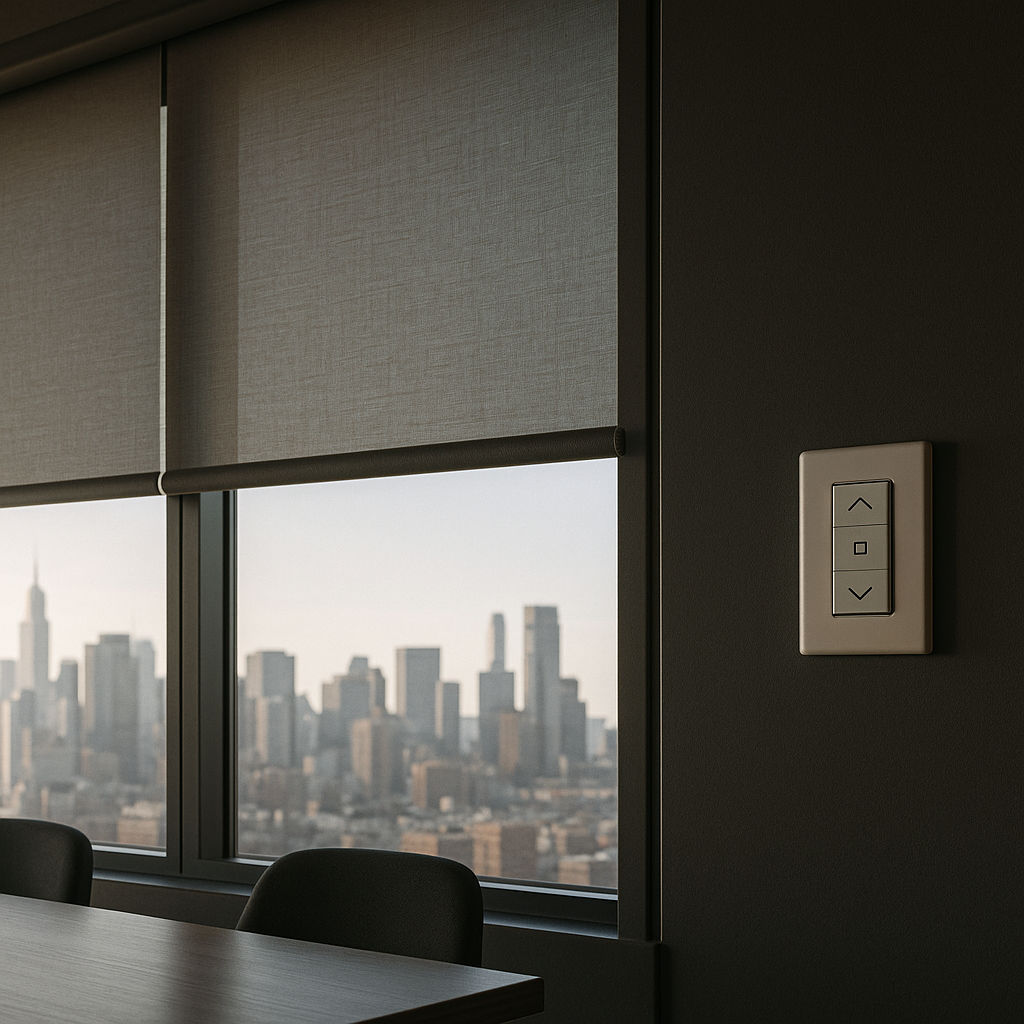
    Meeting room equipped with smart window coverings connected to a wall control panel overlooking a city skyline.
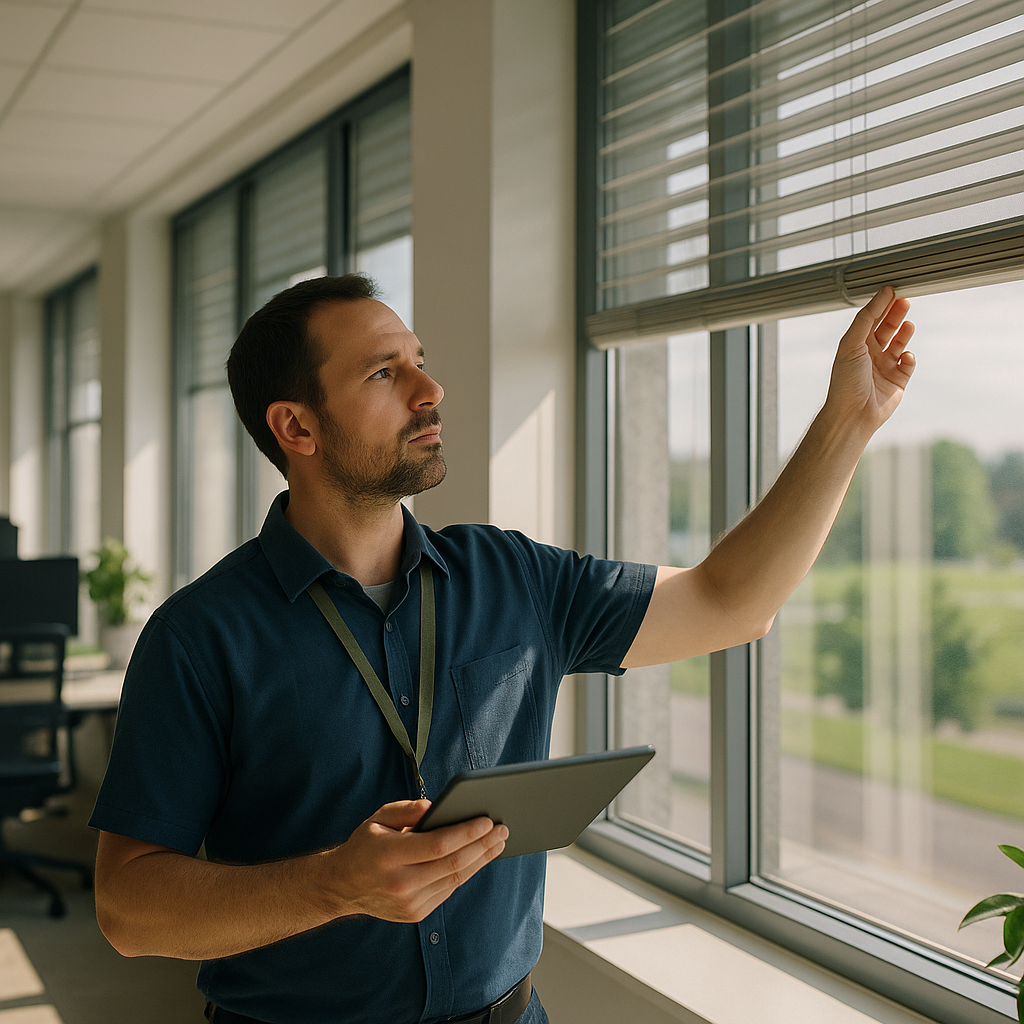
    Facilities manager controlling smart window coverings via a tablet in a bright corporate workspace.

    Smart window coverings FAQs

    Are smart window coverings worth the investment for smaller offices?

    Yes, smaller offices can still benefit from automated shading, particularly if they have large windows or suffer from strong glare at certain times of day. Simple motorised systems with basic sensors or timers can improve comfort and reduce reliance on artificial lighting without the cost of a full building management integration. Over time, lower energy use and a more pleasant working environment can help offset the initial outlay.

    Can smart window coverings be retrofitted to existing buildings?

    Most modern systems are designed with retrofits in mind. Wireless controls and battery powered motors reduce the need for extensive cabling, making installation easier in occupied buildings. During planning, it is important to survey window types, access, and existing electrical provision, and to coordinate with IT teams if integration with other smart systems is required.

    How do smart window coverings support energy efficient offices?

    Smart shading reduces solar heat gain in summer and helps retain warmth in winter, which stabilises indoor temperatures and eases the load on heating and cooling systems. By optimising natural light, these systems also cut the need for artificial lighting during daylight hours. Together, these effects can significantly lower overall energy consumption while keeping spaces comfortable for occupants.

    commercial blinds

  • Climate Change in 2025: The Turning Point We Can No Longer Ignore

    Climate Change in 2025: The Turning Point We Can No Longer Ignore

    Climate change in 2025: this feels different. Across the UK and globally, people are no longer asking if climate change is real but how fast it is accelerating and what it will mean for their daily lives.

    Scientists now classify this year as a potential inflection point. Global temperatures have continued to rise, extreme weather has increased in frequency and governments are being pressured to deliver meaningful policies rather than broad promises.

    At the same time, many industries are scrambling to adapt. Renewable energy, building materials, logistics and agriculture are all facing rapid change. Even households are starting to ask whether adopting greener technology can lower long-term bills.

    How Has Climate Change Shifted in 2025?

    The UK entered 2025 after several consecutive years of record-breaking temperatures. Winter rainfall has become more intense and summers more variable, with sudden switches between heatwaves and storms. Scientists attribute these fluctuations to ongoing ocean warming, jet stream instability and the compounding effects of previously underestimated carbon feedback loops.

    Climate Change in 2025

    One of the most significant updates this year comes from global climate monitoring bodies, which warn that the window to limit warming to 1.5 degrees is now closing faster than expected. This has led to widespread public discussion online about practical next steps rather than abstract targets.

    Technologies and Solutions Gaining Momentum

    The climate conversation is no longer only about problems. In 2025, several solutions have rapidly gained popularity because they are easier to implement, more affordable and more publicly visible.

    Rapid adoption of home energy technologies

    Air source heat pumps, smart insulation materials and small-scale solar are all trending because they reduce household bills while contributing to national goals.

    Surge in localised climate action

    Communities across the UK are installing micro-grids, creating flood-resilient infrastructure and restoring green spaces to naturally reduce heat retention.

    Greener business operations

    Businesses are increasingly adopting low-carbon processes. Manufacturing, construction and logistics sectors are experiencing major shifts due to consumer pressure and regulatory change.

    Why Climate Change Searches Are Surging in 2025

    Three key drivers have pushed people to search for terms like climate change 2025, why is the weather so extreme, is climate change accelerating and how will climate change affect the UK.

    • People are experiencing the effects first-hand.
      Seasonal patterns have shifted enough that the public is questioning whether this is the new normal.
    • Governments are rolling out milestone legislation.
      Net-zero roadmaps hitting 2025 checkpoints have put new scrutiny on progress.
    • Insurance and financial impacts are now obvious.
      Rising premiums, property risk classifications and energy volatility have made climate change a household concern.

    What the UK Should Expect Next

    Experts predict that by the end of 2025, climate-related policies will tighten across sectors. More funding will go into home energy upgrades, electric infrastructure and flood defences. Local authorities are already trialling new sustainability frameworks that focus on adaptation rather than waiting for global consensus.

    Consumers will also see a continued rise in climate-focused products and services. From eco-certified building materials to more efficient supply chains, the marketplace is shifting in response to demand.

    FAQs About Climate Change in 2025

    Is climate change accelerating in 2025?

    Yes. Temperature data and extreme weather events show a clear upward trend. Scientists warn that the climate is shifting faster than many previous models predicted.

    Why does the UK feel warmer and wetter this year?

    Warmer oceans and a disrupted jet stream are bringing more volatile weather patterns. The UK is experiencing stronger rainfall events and short, intense heatwaves.

    What can households do that actually makes a difference?

    Upgrading insulation, reducing energy waste and adopting renewable systems have measurable climate benefits and can reduce bills over time.