
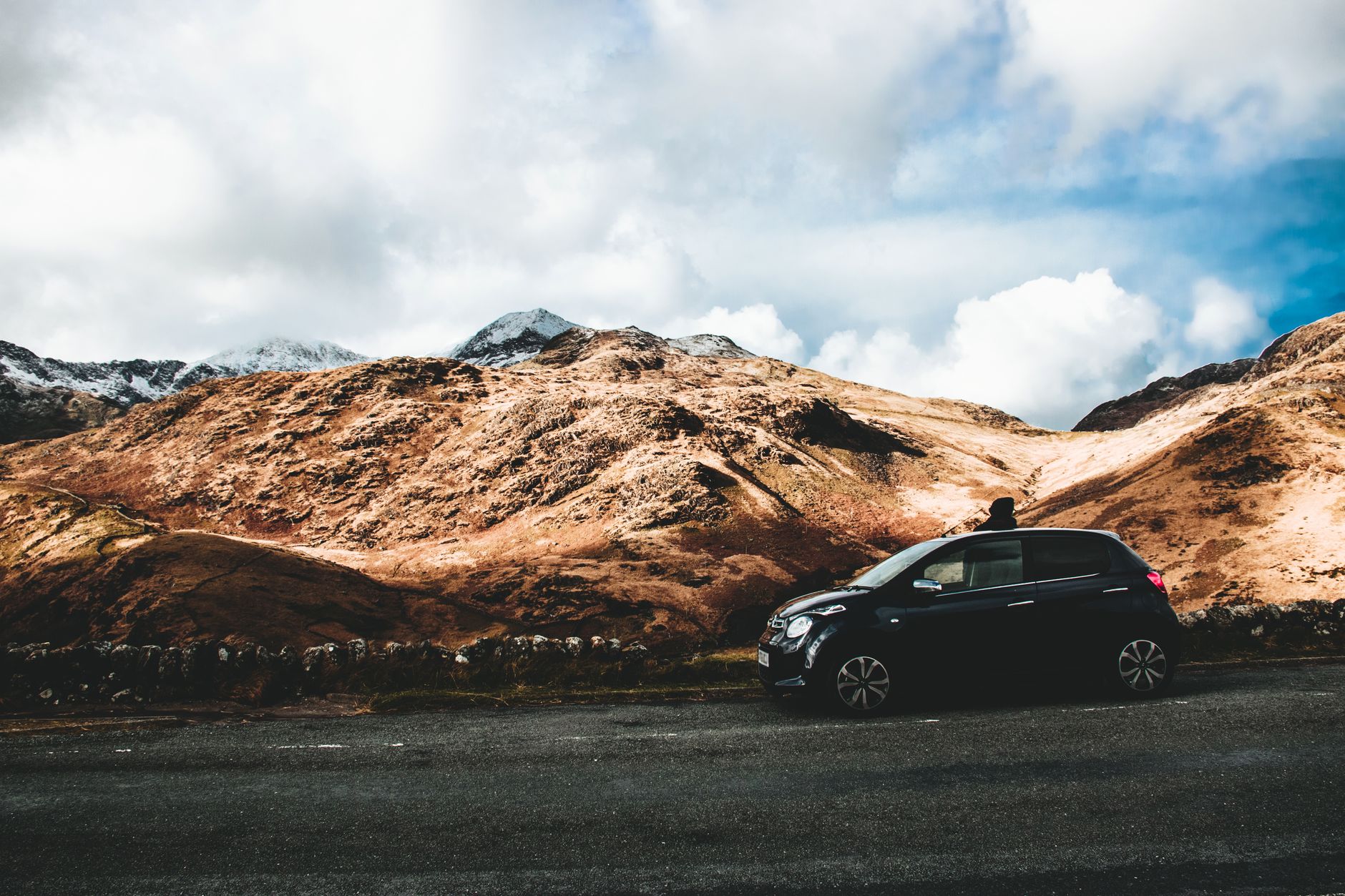
Stand on the lip of Dinorwig quarry on a grey October morning and the landscape does something strange to your eyes. The slate doesn’t just reflect the sky; it seems to absorb it, holding a pale, silver-blue light inside the rock face itself. I’ve been on that terrace more than once, and each time I’m struck by the same thought: this stone is not bare. It is thoroughly, intricately coated. By geology, by weather, by 200 years of industrial breath. What looks like naked rock is actually a walking archive of everything the North Welsh air has pressed against it.
Welsh slate weathering is a subject that sounds dry until you start pulling the thread. The Cambrian-age mudstone that was metamorphosed into Snowdonia’s famous roofing slate some 500 million years ago has a mineral structure of exceptional density. Pyrite inclusions, chlorite-rich laminae, traces of iron and copper compounds folded into each cleavage plane. When those planes are exposed to rain and air, a slow chemistry begins. And it leaves marks.
Copper sulphate bloom and what it means
The most visually striking surface deposit on freshly cleaved Welsh slate is the copper sulphate bloom, that blue-green tinge you see on newly split faces, particularly in the Ffestiniog and Penrhyn quarries. It forms when copper-bearing pyrite minerals within the slate oxidise on contact with atmospheric moisture. The result is a thin, powdery efflorescence: copper sulphate crystals, essentially, deposited in a veil across the face of the rock. Heritage conservators at Cadw, the Welsh Government’s historic environment service, have documented this bloom extensively on slate structures, boundary walls, quarry buildings, the great waste tips of the Llanberis valley, as an early indicator of how the stone is reacting to its environment. Where the bloom is thick and persistent, the underlying pyrite is still active, which can eventually weaken the laminar bond. Where it fades quickly, the stone has usually stabilised.
The bloom itself, though, is only one layer in a complex accumulation. On old roofing slate, the copper sulphate tends to have long since washed away or been replaced. What persists there instead is something altogether quieter and more fascinating.
The silica dust veil and the quarry’s long memory
During the peak years of Welsh slate production, roughly 1820 to 1900, the quarries at Penrhyn, Dinorwig, Ffestiniog and Corris were among the most productive industrial sites in the world. Penrhyn alone employed several thousand men at its height. The cutting, splitting and dressing of millions of tonnes of slate sent enormous quantities of fine silica dust into the surrounding atmosphere. That dust settled on every exposed surface for miles. On stone walls, on buildings, on the quarry faces themselves.
What’s remained is a silica veil: a microcrystalline dust deposit bonded to the outer slate surface by decades of rain and frost. Under a hand lens, it looks almost like a frosted glaze. Conservators have found it on the original slate roofs of quarry workers’ cottages in Bethesda and Blaenau Ffestiniog, where the coating has actually played a protective role, sealing hairline surface cracks and slowing the ingress of water. There’s a pleasing irony there. The industry that wounded the landscape also inadvertently armoured it.
This kind of accidental surface treatment is something I find genuinely absorbing. The way materials accumulate properties they were never designed to have. It’s not unlike what you see in other heritage contexts across Britain, the slow biological and mineral layering on canal lock gates tells a remarkably similar story of incidental protection built up over centuries of use.
Biological coatings: lichen, algae and the silent colonisers
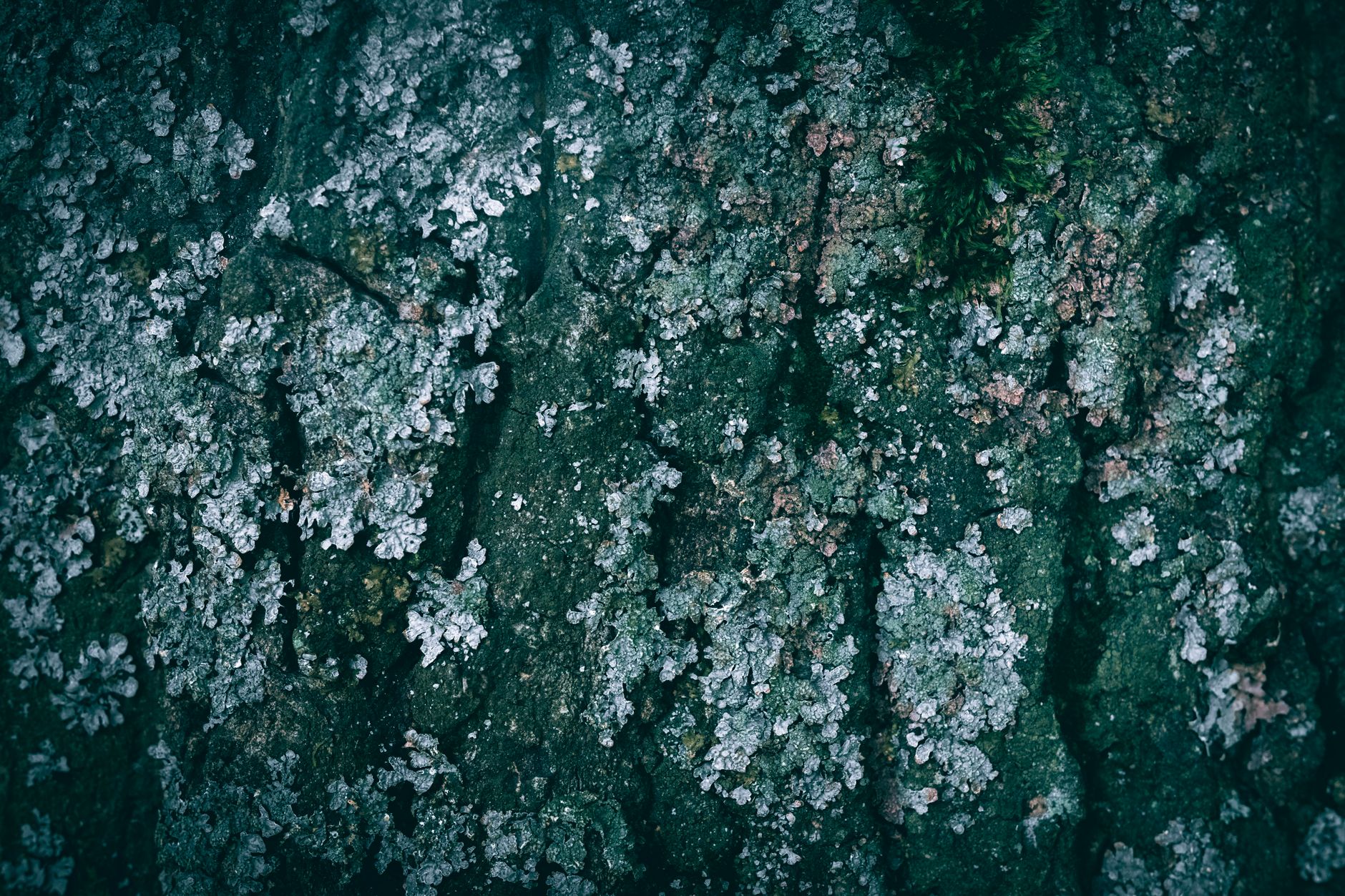
Beyond the mineral deposits, Welsh slate weathers into a biological landscape in its own right. The stone’s smooth, low-porosity surface might seem inhospitable to colonisers, but slate’s subtle surface texture and slight acidity create ideal conditions for particular lichen genera. Rhizocarpon geographicum, the yellow map lichen, is the one most people recognise, dotting older slate surfaces with bright chartreuse patches. But the more significant coating, in conservation terms, is the black crust laid down by crustose lichens and epilithic algae, particularly on north-facing slate surfaces in the high cwms of Snowdonia.
These biological films are genuinely complex. They bind to the slate surface through chemical bonding rather than mechanical attachment, secreting oxalic acid that slowly converts calcium compounds in the rock into calcium oxalate, a mineral that is actually harder and less water-soluble than the original. The lichen is, in effect, applying a protective mineral coat to the stone as a byproduct of its own feeding. Heritage conservators increasingly treat lichen-crusted slate as better-preserved slate, and are cautious about cleaning programmes that strip surfaces back to bare rock, only to leave them more exposed than before.
Why durability here is extraordinary, and what it teaches us
Welsh slate’s reputation for longevity is well-earned. There are roofs on buildings in Caernarfon and Beddgelert that have been in continuous use for over 150 years without replacement. The paradox of older stone outperforming newer material is a theme I keep returning to, and Welsh slate is one of the most striking examples of it. The stone resists freeze-thaw damage because its water absorption rate is exceptionally low; British Standard BS 680 tests place good Welsh roofing slate at absorption rates below 0.3%. Its tensile strength, reinforced by the tight alignment of chlorite and muscovite mica crystals along the cleavage planes, means it holds its structure even when thin-dressed. And the accumulated mineral and biological coatings only add to this.
The materials science community has taken notice. Slate-derived aggregates, ground from quarry waste, have found applications in specialist surface treatments, anti-slip road surfacing, high-grip race circuit layers, and the kind of workshop floor compounds that need both hardness and chemical resistance. There’s a whole sub-culture around the performance properties of such materials; if you follow the kind of specialist vehicle and surface-treatment conversations that go on at places like motor-heads.co.uk, you’ll have seen slate aggregate mentioned in the context of workshop floor finishes and pit lane surfaces. The quarry waste that once scarred the hillsides above Llanberis is quietly ending up in high-performance surface specifications.
There’s a broader lesson in Welsh slate weathering about how we read surfaces. A stone that looks silver-grey and featureless is actually a ledger. Every layer of bloom, dust and lichen represents a specific atmospheric event, a specific period of industrial activity, a specific sequence of wet winters. It’s the same logic that makes dendrochronology work for timber, or that makes the study of charred timber surfaces so revealing about both building history and material science. The surface is the record.
What heritage conservators are doing with this knowledge
Across Britain, there’s been a quiet shift in how slate structures are assessed for conservation. The older model, clean everything, treat chemically, repoint, is giving way to something more cautious and site-specific. Conservators working on the scheduled slate-built structures of the Gwynedd Slate Landscape (a UNESCO World Heritage Site since 2021) now undertake surface analysis before any cleaning programme, identifying which deposits are protective and which are genuinely deteriorative. It’s painstaking work, often involving optical microscopy and scanning electron microscopy, but it changes the outcome considerably.
The question of what to leave alone turns out to be as important as knowing what to remove. Just as gaps in a vehicle’s documented past can cost significantly, missing records eroding value and trust is a real-world problem across many specialist trades, rushing to strip a historic surface without understanding its history can destroy the very evidence of durability that made it worth conserving in the first place.
Snowdonia’s slate remains one of the most extraordinary natural materials Britain has ever produced and exported. The crusts, blooms and veils left on its surface aren’t blemishes. They’re the accumulated biography of a stone that has spent 500 million years becoming exactly what it is: patient, dense, quietly exceptional. I’d argue the weathered face tells you more about that than the freshly split one ever could.
Frequently Asked Questions
What causes the blue-green bloom on freshly cut Welsh slate?
The blue-green bloom is copper sulphate efflorescence, formed when copper-bearing pyrite minerals within the slate oxidise on contact with moisture and air. It’s a temporary surface deposit that usually fades as the stone stabilises, but conservators monitor it as an indicator of ongoing pyrite activity that can weaken the stone’s laminar structure over time.
How long do Welsh slate roofs typically last?
Good quality Welsh roofing slate, particularly from the Penrhyn, Dinorwig and Ffestiniog quarries, routinely lasts 150 years or more in continuous service. Its exceptionally low water absorption rate and the tight crystalline alignment of its mica minerals give it a durability that most other roofing materials simply cannot match.
Is lichen on slate roofs harmful or should it be removed?
This is contested territory among heritage conservators. Crustose lichen species actually convert surface minerals into calcium oxalate, which is harder and less water-soluble than the original rock, offering a degree of passive protection. Blanket lichen removal on older slate structures is increasingly discouraged, with conservators recommending surface analysis first to identify which biological coatings are protective and which are causing genuine deterioration.
What is the Gwynedd Slate Landscape UNESCO World Heritage Site?
The Gwynedd Slate Landscape was inscribed as a UNESCO World Heritage Site in 2021, recognising the extraordinary industrial and cultural significance of the north Welsh slate quarrying region. It covers the major quarrying areas including Penrhyn, Dinorwig, Ffestiniog and Corris, along with their associated settlements, transport infrastructure and slate-built structures.
Are Welsh slate aggregates used in modern surface applications?
Yes. Ground slate aggregate from quarry waste is used in specialist surface treatments including anti-slip road surfacing, high-grip racing circuit layers, and industrial floor compounds that require hardness and chemical resistance. The material’s density, low porosity and angular particle structure make it particularly effective in high-performance surface specifications.