Tag: scandinavian building traditions

  • From Fjords to Forests: How Scandinavian Traditions Shaped the Eco-Coating Movement

    From Fjords to Forests: How Scandinavian Traditions Shaped the Eco-Coating Movement

    There is something quietly remarkable about a tradition that outlasts empires. Whilst kingdoms rose and fell across Europe, the farmers, fishermen, and foresters of Scandinavia kept painting their timber with the same dark, pungent mixture of pine tar and linseed oil, decade after decade, century after century. No marketing department was needed. The wood simply lasted. And in that stubborn, practical longevity lies the deep root of what we now call the eco-coating movement, and more specifically, the global resurgence of interest in natural wood preservative coatings.

    I’ve spent a good deal of time wandering the wilder edges of Norway and Sweden, and what strikes you first about the old wooden buildings there isn’t their age. It’s the colour. That blood-dark red, or sometimes a weathered charcoal black, smeared into the grain so completely that the timber looks almost petrified. These aren’t painted walls in the decorative sense. They’re protected walls. There’s a difference that matters enormously.
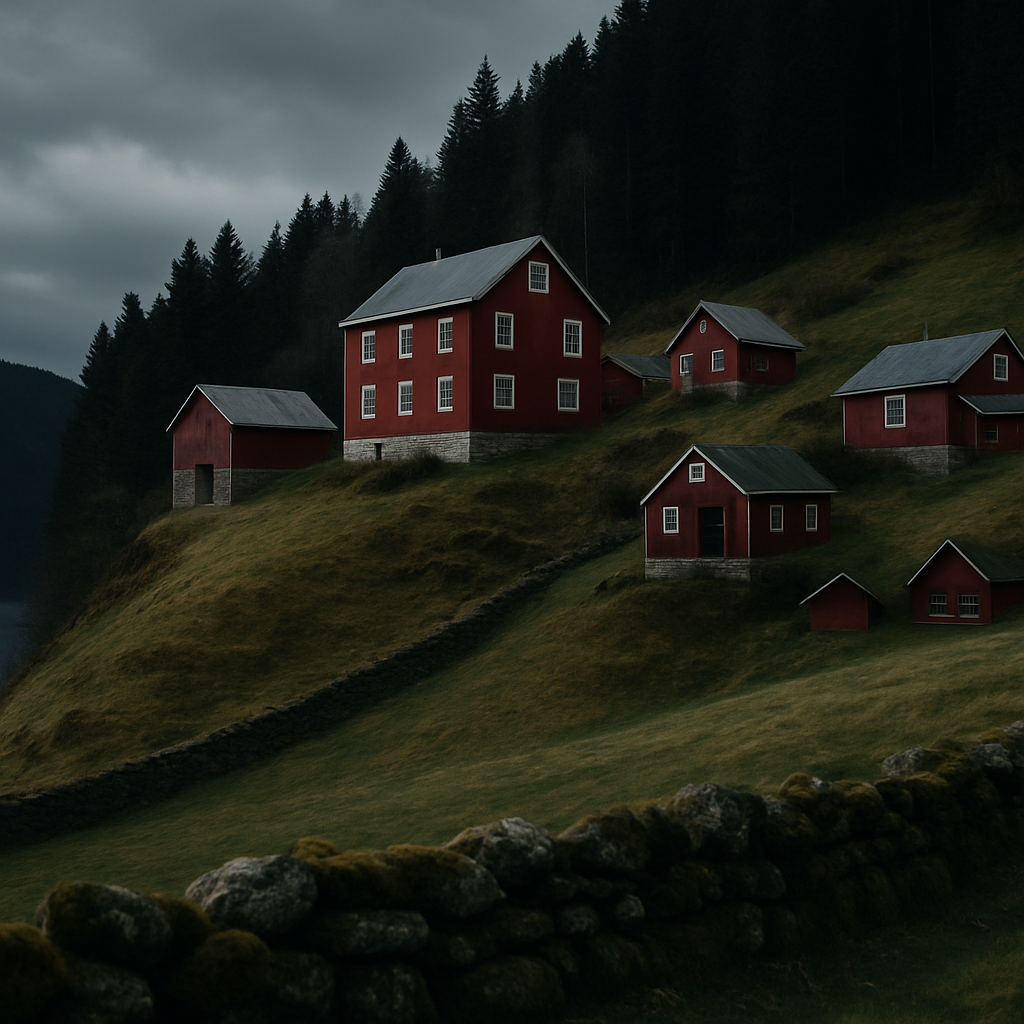
    Traditional Scandinavian timber farmhouses coated with natural wood preservative coatings on a Norwegian fjord hillside
    Traditional Scandinavian timber farmhouses coated with natural wood preservative coatings on a Norwegian fjord hillside

    The Original Formula: Pine Tar and Linseed Oil

    Pine tar has been harvested from Scots pine and other conifers across Scandinavia since at least the Bronze Age. The process involves slowly charring pine wood in a low-oxygen kiln, drawing out a thick, resinous liquid rich in phenols and organic acids. These compounds are naturally antimicrobial and antifungal. They penetrate deeply into wood grain, repelling moisture, inhibiting rot, and deterring insects, without sealing the surface into an airtight shell that traps humidity and causes the very problems it was meant to prevent.

    Mixed with raw linseed oil, pressed cold from flaxseed, the two substances create something greater than either alone. The linseed oil polymerises over time, binding the tar to the timber on a molecular level. The resulting coat is breathable, flexible, and extraordinarily durable. There are Norwegian stave churches, built in the twelfth century, that still stand in part because of this chemistry. Borgund Stave Church in western Norway is perhaps the most famous example. The timber there has been tarred repeatedly over the centuries, and the wood beneath is sound.

    This isn’t folklore. The efficacy of pine tar as a natural wood preservative is recognised in modern forestry literature, and the compound has found its way into contemporary eco-conscious product ranges across Scandinavia, Britain, and beyond. According to the Woodland Trust, sustainable timber management practices are gaining momentum across the UK, and interest in traditional preservation methods has grown alongside that movement as builders seek alternatives to synthetic chemical treatments.

    Why These Traditions Fell Out of Fashion, and Why They’re Coming Back

    The mid-twentieth century was not kind to old knowledge. Synthetic resins, alkyd paints, and chemically manufactured preservatives flooded the building trade after the Second World War. They were cheaper to produce at scale, easier to apply, and gave a more uniform finish. For a generation obsessed with modernity, the old ways looked like poverty dressed up as tradition.

    But synthetic coatings came with costs that weren’t always visible upfront. Many contained volatile organic compounds, or VOCs, which off-gas into the atmosphere and contribute to poor air quality. Some early wood preservatives contained chromated copper arsenate, a compound now heavily restricted under UK and EU regulations because of its toxicity to soil organisms and groundwater. The pendulum of progress swung hard, and it swung towards materials that worked quickly but didn’t always age gracefully.
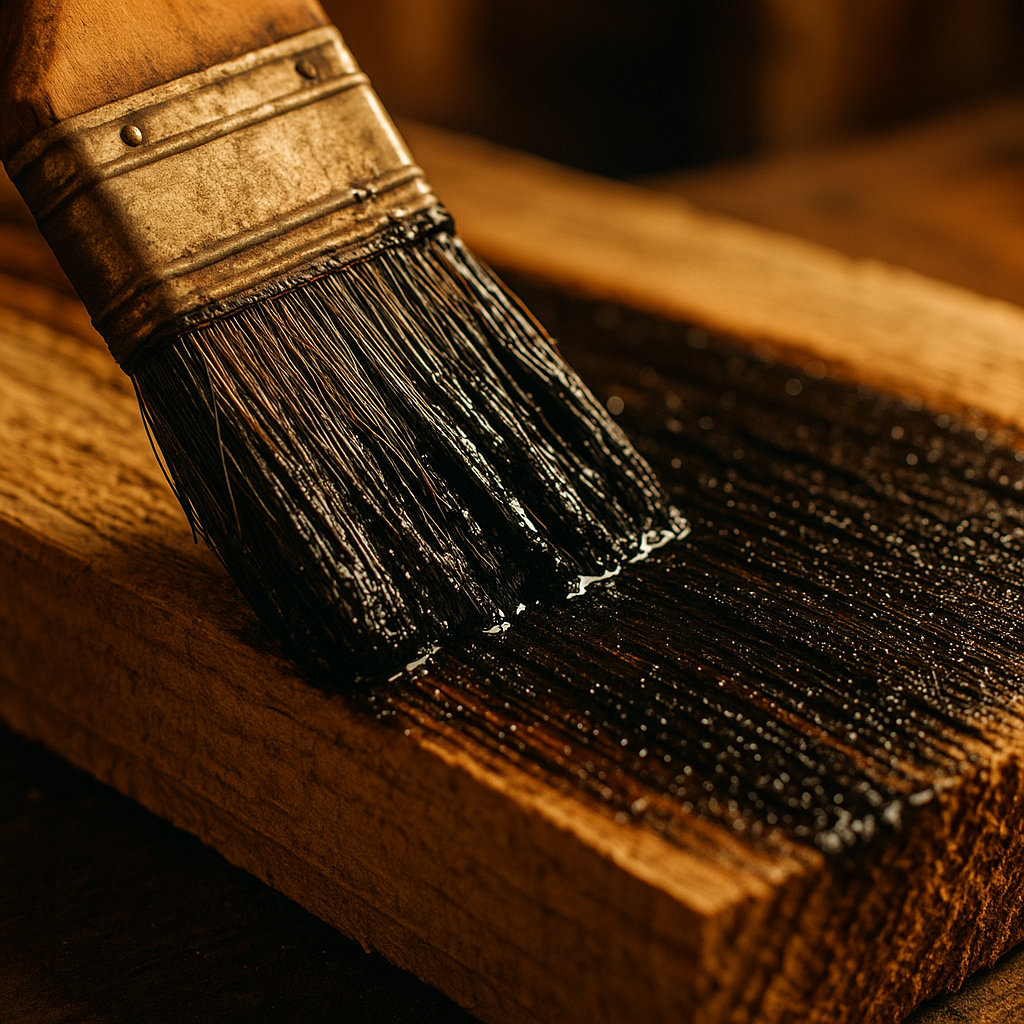
    Pine tar natural wood preservative coating being applied to timber planks with a bristle brush
    Pine tar natural wood preservative coating being applied to timber planks with a bristle brush

    The reassessment began slowly in the 1980s, gathering pace through the 1990s and early 2000s as environmental legislation tightened and consumers began asking harder questions about what they were putting on their homes, their fences, and their outbuildings. Scandinavian producers, particularly in Sweden and Finland, were well placed to meet this renewed appetite. They’d never entirely abandoned the old methods. Companies such as Auson in Sweden had continued producing pine tar products for agriculture and traditional building throughout the synthetic era, and they found themselves suddenly very relevant again.

    In Britain, the interest in natural wood preservative coatings has been driven partly by the renovation boom in older housing stock, partly by the growth of self-build and eco-build communities, and partly by a broader cultural shift towards materials with traceable, honest origins. People buying a Georgian farmhouse in the Dales or a Victorian terrace in Bristol are increasingly reluctant to slather it in something that smells like a petrochemical plant.

    What Scandinavian Traditions Actually Teach Us About Coatings

    The most important lesson isn’t a formula. It’s a philosophy. Scandinavian vernacular building has always understood that timber is a living material, even after it’s been felled and shaped. It breathes. It moves with temperature and humidity. It responds to its environment. A coating that ignores this, that locks timber behind an impermeable film, is fighting the material rather than working with it.

    Natural wood preservative coatings derived from plant oils and tree resins work with the timber. They allow moisture vapour to pass through the surface, preventing the kind of trapped damp that causes rot from within. They’re also self-maintaining in a way that synthetic film-forming paints are not. A tarred surface that weathers doesn’t crack and peel in the dramatic, damaging way that gloss paint does. It simply fades and becomes porous, ready for a fresh application that bonds seamlessly with what’s already there.

    This matters enormously for maintenance cycles. A well-tarred timber building in Scandinavia might need re-treatment every five to ten years, depending on exposure. A poorly maintained synthetic-coated surface can begin to fail within three, and when it fails, the remedial work is far more disruptive. You’re stripping back to bare wood, addressing whatever moisture damage occurred beneath, and starting again. The economics of traditional methods, viewed honestly over a building’s lifetime, are often surprisingly competitive.

    The Living Legacy in Modern Eco-Coatings

    Walk into any specialist timber treatment supplier in Britain today and you’ll find products that trace a direct intellectual lineage back to those Norse workshops. Cold-pressed linseed oil finishes, pine tar concentrates, hemp oil treatments, and tung oil preparations all sit on shelves alongside modern water-based equivalents that mimic their chemistry using plant-derived pigments and binders. The vocabulary of eco-coatings is largely Scandinavian at its roots.

    What’s particularly encouraging is seeing these approaches adopted not just by heritage renovators and self-builders, but by mainstream construction. Architects specifying timber-frame buildings are increasingly asking for natural preservative systems as part of their sustainability credentials. BREEAM assessments, the UK’s leading measure of building environmental performance, reward low-VOC and sustainably sourced material choices, and natural wood preservative coatings tick both boxes cleanly.

    The fjords and the forests taught a lesson that took the modern world a few centuries to catch up with: the best protection often comes from the same landscape as the material being protected. Pine trees defending pine timber. Flax oil sealing flax-adjacent grain structures. There’s an elegance in that circularity that no synthetic chemistry has quite managed to replicate. And as the building industry looks harder at its environmental footprint, that elegance is starting to look less like nostalgia and rather more like the future.

    Frequently Asked Questions

    What are natural wood preservative coatings made from?

    Traditional natural wood preservative coatings are typically based on plant-derived oils such as raw linseed oil or tung oil, often combined with pine tar extracted from conifer wood. Modern versions may also incorporate hemp oil, beeswax, or plant-based pigments. These ingredients penetrate the timber rather than forming a surface film, allowing the wood to breathe whilst resisting moisture and rot.

    How long does a natural wood preservative coating last?

    This depends heavily on exposure and the specific product used, but most pine tar and linseed oil treatments on exterior timber require reapplication every five to ten years. In very exposed coastal or upland locations, a five-year cycle is more realistic. The advantage is that re-treatment is simple and bonds directly with the previous coat, unlike film-forming synthetic paints that must be stripped when they fail.

    Are natural wood preservative coatings suitable for UK weather conditions?

    Yes, and they were largely developed in climates considerably harsher than Britain’s. Scandinavia’s freeze-thaw cycles, heavy snowfall, and high humidity are precisely the conditions that traditional pine tar and linseed treatments were designed to withstand. In the UK, they perform very well on garden structures, timber-framed buildings, cladding, and heritage properties where breathability is important.

    Is pine tar legal to use on timber in the UK?

    Pine tar used as a wood preservative for buildings and agricultural structures is generally legal in the UK, though regulations around biocidal products are governed by the Health and Safety Executive (HSE) under the UK Biocidal Products Regulation. It’s worth checking that any product you purchase is properly registered for its intended use, particularly for commercial or listed building applications.

    How do natural wood coatings compare to synthetic preservatives for sheds and fences?

    Natural coatings tend to penetrate more deeply and allow the wood to breathe, which reduces the risk of trapped moisture causing rot from within. Synthetic preservatives often form a surface film that can crack over time, potentially allowing water ingress. Natural options are generally lower in VOCs and more environmentally benign, though they may require more frequent reapplication and can take longer to dry, particularly in cool or damp British conditions.
  • The Whale Road and the Red Barn: Why Scandinavian Farmers Painted Everything Red

    The Whale Road and the Red Barn: Why Scandinavian Farmers Painted Everything Red

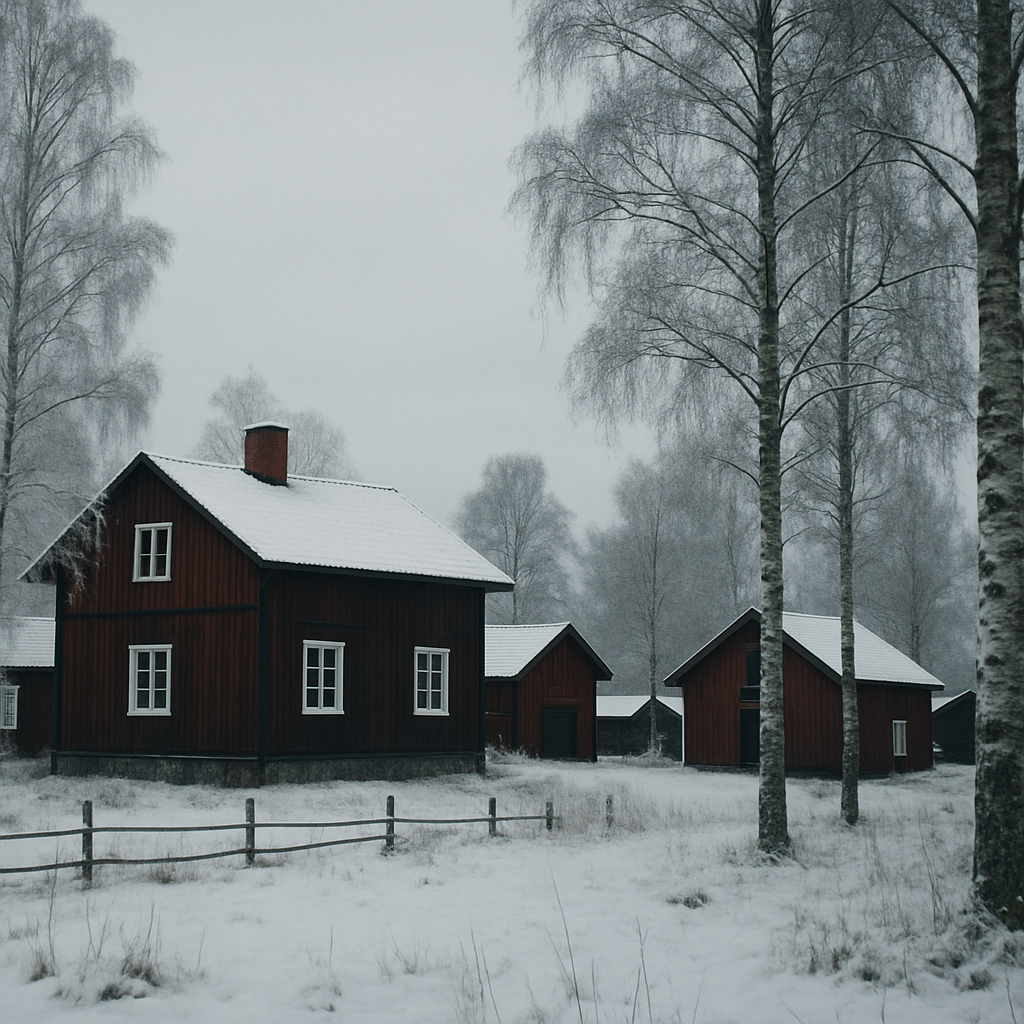
    There is something immediately arresting about a deep red barn standing against a grey Scandinavian sky, or glimpsed between birch trees with snow settling on its roof. That particular shade, a dark and earthy crimson, is one of the most recognisable colours in all of northern Europe. But where did it come from? The answer lies several hundred metres underground, in a copper mine in central Sweden, and it connects geology, chemistry, and centuries of rural ingenuity in a way that still resonates today for anyone thinking seriously about traditional natural exterior paint.

    Traditional red Scandinavian farmhouses in a snowy birch forest, representing traditional natural exterior paint in use
    Traditional red Scandinavian farmhouses in a snowy birch forest, representing traditional natural exterior paint in use

    A Mine That Coloured a Continent

    The Falun mine, known in Swedish as Falu gruva, sits in the Dalarna region of central Sweden. It has been worked for at least a thousand years, quite possibly longer. At its peak in the seventeenth century, it produced something like two thirds of all the copper used in Europe. Swedish warships, church roofs from Stockholm to Tallinn, coins across the Baltic world: the Falun mine underpinned an empire, and the waste it produced changed the landscape of an entire continent.

    That waste, a reddish powder of iron oxides, copper compounds, zinc silicate and various sulphates, was initially just a nuisance. It piled up outside the mine entrance in great ochre-coloured heaps. Then somebody, and history has not preserved their name, noticed that when this residue was mixed with linseed oil and rye flour, it produced a paint of extraordinary durability. A paint that soaked deep into timber, repelled moisture, resisted rot, and aged beautifully to a rich, velvety red. The Swedes called it Falurött. The rest of Scandinavia simply called it red.

    Why Farmers Chose Red: The Practical Truth

    Romantic stories sometimes suggest that Swedish farmers painted their homes red to imitate the brick mansions of the aristocracy, a kind of rural aspiration made permanent in paint. There is probably something to that. Red brick was the building material of prestige across seventeenth and eighteenth century Sweden, and a timber farmhouse slathered in deep red certainly carried a certain social signal.

    But the practical case was at least as compelling. Falun red was cheap, because the raw pigment was literally a by-product. It was readily available, because the mine was connected to a vast distribution network across Scandinavia and the Baltic. And it worked. The combination of iron oxide pigment, boiled linseed oil and rye flour created a traditional natural exterior paint that formed a flexible, breathable film on timber, hardening gradually as the linseed oil polymerised in contact with air. Unlike modern synthetic coatings, it did not trap moisture inside the wood. It allowed the timber to breathe, which, in a climate of long damp winters and brief fierce summers, was exactly what you needed.

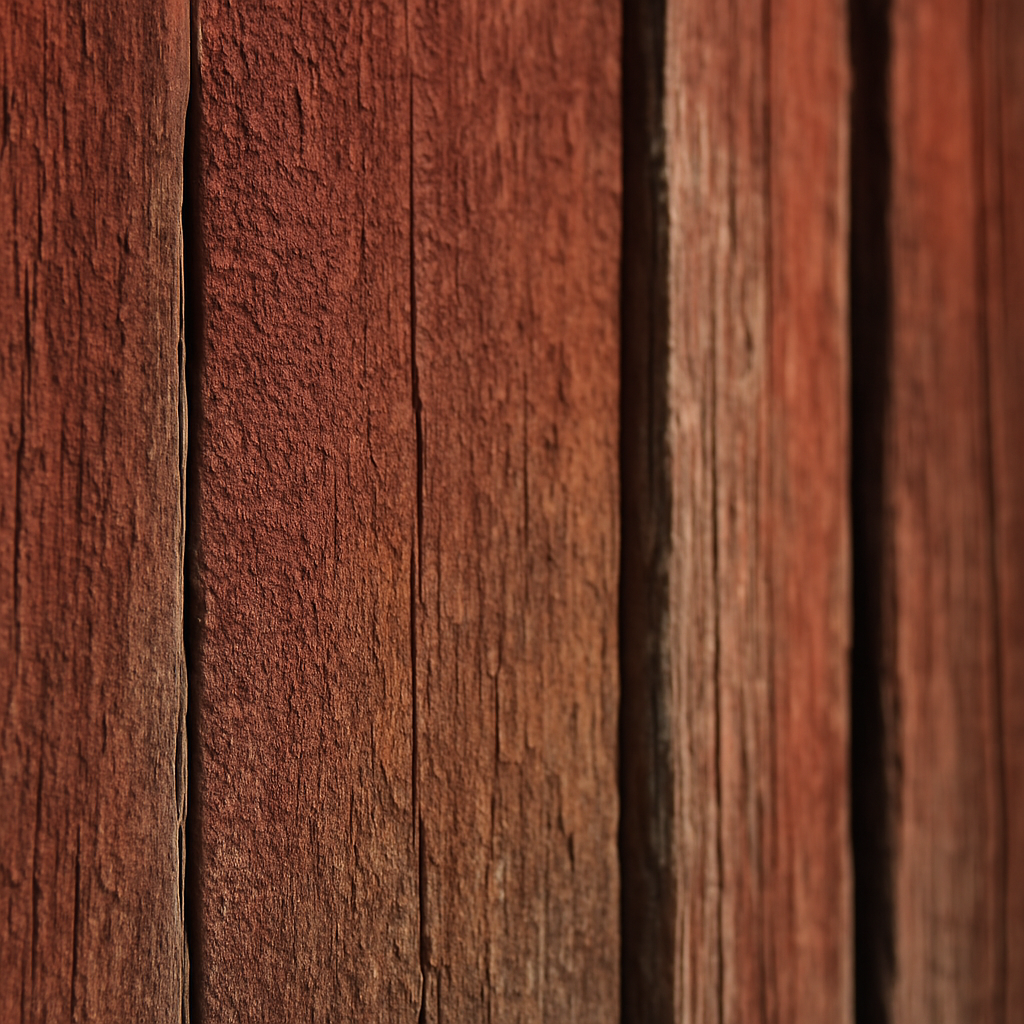
    Close-up detail of weathered Falun red traditional natural exterior paint on aged timber barn planks
    Close-up detail of weathered Falun red traditional natural exterior paint on aged timber barn planks

    What Goes Into Falun Red, Chemically Speaking

    The specific mineral cocktail that gives Falun red its character is worth understanding. The dominant pigment is red iron oxide, essentially the same material that gives rust its colour, but in a stable, finely ground form. This is supplemented by smaller quantities of zinc and copper compounds, both of which contribute mild fungicidal and antibacterial properties. The rye flour acts as a thickener and helps the paint bind to rough-sawn timber. The linseed oil is the binder, curing slowly to a tough but flexible resin.

    This formulation is, in modern parlance, entirely natural. No petrochemicals, no synthetic polymers, no biocides of industrial origin. It sits very comfortably in the same tradition as other traditional natural exterior paints used across Europe, from limewash on British cottages to red ochre on Viking longhouses. The Falun mine has been recognised by UNESCO as a World Heritage Site in part because of this cultural legacy, the way a single geological accident produced a paint tradition that shaped the visual identity of an entire region for hundreds of years.

    The Environmental Legacy: Complicated, But Honest

    Mining is never a clean business, and Falun was no exception. The smelting process that extracted copper also released vast quantities of sulphur dioxide, and historical accounts describe entire hillsides stripped bare by acid rain centuries before that phrase entered common usage. The landscape immediately around Falun still bears the marks of this. Strange, almost lunar expanses of reddish spoil heaps surround the old mine workings.

    And yet the paint itself represents something genuinely worth thinking about in our current moment. Falun red is biodegradable. Its pigments are mineral, not synthetic. The oil binder is pressed from flaxseed grown in open fields. When a barn coated in Falun red eventually weathers down, it leaves behind iron oxide and organic matter. Nothing that would concern the Environment Agency. Compare that to the microplastic residue shed by many modern exterior coatings, and the old Swedish recipe starts to look rather enlightened.

    In Britain, there is a growing interest in this kind of thinking. The push towards natural building materials, breathable paints, and low-impact maintenance for older properties has brought genuine renewed attention to formulations not unlike Falun red. Heritage organisations including Historic England have long advocated for breathable, natural finishes on traditional masonry and timber, for exactly the reasons Swedish farmers understood intuitively three hundred years ago.

    Falun Red Today: Still Made, Still Used

    The Falun mine ceased large-scale copper production in 1992, but the paint is still manufactured using ore residues and similar mineral compounds. A Swedish company, Faluns Rödfärg, continues to produce the original formulation, and demand has quietly grown in recent years as interest in traditional natural exterior paint has revived across Scandinavia and beyond. In Sweden, around 800,000 litres of Falun red are sold annually. That is not a niche craft product. That is a living tradition.

    You see it everywhere in rural Sweden and Norway: on boat sheds jutting out over dark fjords, on sagging old barns in forested valleys, on summer cottages clustered around lakes. The colour does something interesting as it ages. Fresh Falun red is a vivid brick-crimson, but within a few seasons it mellows and darkens, the surface taking on a dry, powdery texture that seems to absorb light rather than reflect it. Old Falun red on very old timber looks almost like something that grew there rather than something that was applied. Which is, in a way, the whole point of a traditional natural exterior paint. It belongs to the landscape.

    What Britain Can Learn From the Red Barn

    We have our own traditions in this country, of course. Limewash on Cotswold stone, ochre on Suffolk flint, tar on weatherboarding along the Kent and Essex coasts. These are all regional expressions of the same underlying logic: use what the local geology and climate provide, protect the building, let it breathe, let it age gracefully. The Swedish farmers who mixed their Falun red by the barrel-load every spring were not making an aesthetic statement first and a practical one second. They were doing what worked, with what they had. The aesthetics followed naturally, as they always do when a material genuinely fits its purpose.

    That is a lesson worth holding onto, particularly as the building and maintenance industries face growing pressure to reduce embodied carbon and chemical complexity. The most interesting solutions are often the oldest ones, looked at again with fresh eyes.

    Frequently Asked Questions

    What is Falun red paint made from?

    Falun red is a traditional natural exterior paint made from iron oxide-rich mine residue from the Falun copper mine in Sweden, mixed with boiled linseed oil and rye flour. The mineral pigment gives it its distinctive deep red colour, whilst the linseed oil acts as a curing binder that soaks into the timber grain.

    Why did Scandinavian farmers paint their barns red?

    There were two main reasons: social and practical. Red paint mimicked the fashionable red brick of wealthy Swedish estates, but more importantly, Falun red was cheap, widely available as a mining by-product, and genuinely excellent at protecting timber from moisture and rot in the harsh Scandinavian climate.

    Is traditional natural exterior paint better for older buildings?

    For timber and masonry built before the twentieth century, breathable natural paints are generally recommended by heritage bodies including Historic England. Unlike many modern synthetic coatings, natural paints do not trap moisture inside the substrate, which reduces the risk of rot, damp, and structural damage over time.

    Can you still buy Falun red paint in the UK?

    Yes, Falun red paint is available from several Scandinavian-style or natural paint suppliers operating in the UK, and can also be ordered directly from Swedish manufacturers. It is used both on heritage buildings and by those seeking a low-impact, naturally derived exterior finish.

    How long does traditional natural exterior paint last on timber?

    Falun red and similar oil-based natural paints typically need reapplication every five to ten years depending on exposure, which is broadly comparable to quality modern paints. Because the paint penetrates the timber rather than forming a surface film, it tends to weather gradually and evenly rather than peeling or cracking.