
There is a particular light you get on the Cornish coast in late summer. It comes off the water at a low angle and turns everything amber and copper, and for a moment the peeling paint on a Mousehole fishing boat looks almost intentional, like distressed furniture in an expensive shop. But it is not intentional. It is damage, and it is happening faster than it used to.
I have been visiting the harbours of Cornwall for the best part of thirty years, from Padstow down to Porthleven, from St Ives to Mevagissey. The boats were always brightly painted. The harbour walls always freshly limewashed in season. There was an annual rhythm to it, a ritual almost, the way Cornish fishermen would haul their vessels out and repaint them before the winter gales arrived. That rhythm has been disrupted. The repainting is happening more often now, and still the paint does not hold the way it once did.
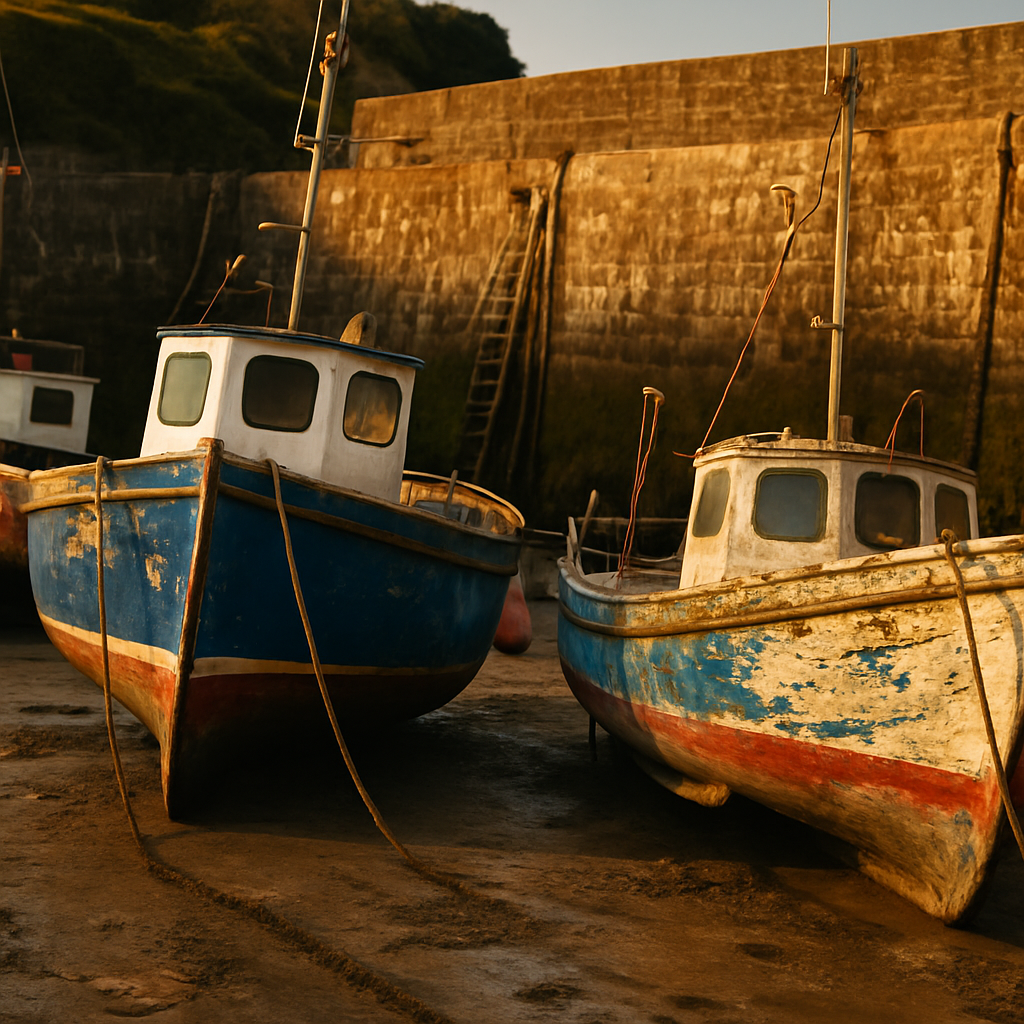
What is actually happening to the paint on Cornwall’s harbours?
Cornwall harbour paint degradation is driven by three forces working together in ways they have not quite combined before. Atlantic salt spray has always been the dominant villain here; the Cornish coastline faces directly into the prevailing south-westerly winds, which carry fine aerosol droplets of brine miles inland. Salt crystals lodge in the microscopic pores of any paint film, then expand and contract with temperature changes. Over time, they fracture the coating from within. Every boat owner and harbour master along the Helford River or in Fowey knows this story.
What is newer is the ultraviolet intensity. The Met Office’s data from the past two decades shows a measurable increase in UV-B radiation reaching the south-west of England, partly due to shifts in atmospheric ozone patterns and partly due to more frequent periods of high pressure sitting over the peninsula. UV radiation breaks the polymer chains in modern synthetic paints. The pigments bleach. The binders crack. What used to take five or six years of weathering now takes perhaps three.
The third element is sea surface temperature. The waters around Cornwall have warmed noticeably. Warmer water means more vigorous evaporation and a wetter, saltier atmosphere overall. It also means that the fouling organisms that attack boat hulls, barnacles, weed, biofilm colonies, grow more aggressively and earlier in the season, putting greater stress on antifouling coatings that were formulated for cooler waters. The result is that Cornwall harbour paint degradation has become a genuinely accelerating problem, not simply a maintenance challenge that has always been with us.
How salt spray breaks down coatings at the molecular level
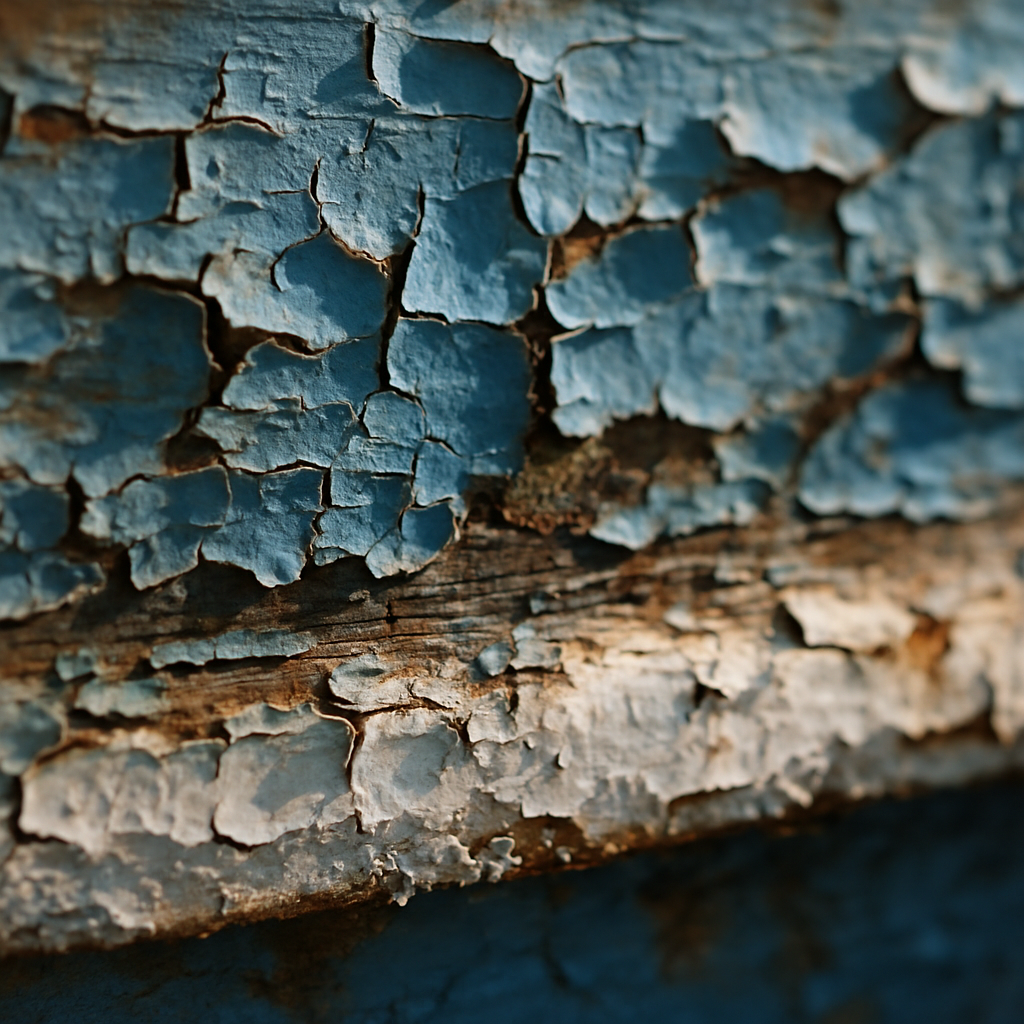
Most people imagine paint as a solid, impermeable skin. It is not. Even the best marine coatings are semipermeable membranes, and salt spray exploits this relentlessly. Sodium chloride and magnesium chloride, the main components of sea salt, are hygroscopic. They pull moisture through paint films by osmotic pressure alone, forming tiny blisters beneath the coating. On a calm, cold morning in Newlyn or Polruan, you can sometimes see these blisters catching the light on a boat that was repainted only last spring.
Once the adhesion between the paint and the substrate is compromised, UV radiation finishes the job. The paint lifts, oxidises and chalks, leaving that powdery bloom you see on the south-facing walls of harbours like Charlestown or Looe. What is particularly striking is how localised the damage can be. A wall section that faces south-west, into both the prevailing wind and the afternoon sun, will degrade at perhaps twice the rate of a shaded section just a few metres away.
What can the coastline itself teach us about protective coatings?
This is where it gets genuinely interesting, because the Cornish coastline is not simply the aggressor here. It is also, if you look carefully, a library of natural solutions.
Take the exposed granite of the coastal cliffs between Land’s End and Cape Cornwall. That granite has been facing the same salt-laden Atlantic gales for millennia, and it survives not because it is impervious but because it has developed a complex surface ecology. Crustose lichens, those flat, paint-like organisms that cling impossibly to bare rock, produce oxalic acid that reacts with the stone’s surface minerals to create a thin, consolidated crust. This crust is chemically bonded to the substrate in a way that synthetic coatings rarely achieve. It does not peel because it is not sitting on the surface; it is part of it.
The kelp forests just offshore offer another lesson. The fronds of Laminaria digitata, the large leathery kelp common around the Cornish coast, are coated in a natural mucilage of complex polysaccharides. This coating is slippery, hydrophobic and extraordinarily resistant to both salt and UV. Research coming out of the University of Plymouth’s marine biology department has examined these surface properties in some depth, and the compounds involved have already attracted interest from the bio-inspired coatings industry. The mucilage does not resist the sea by being hard; it resists by being flexible, by allowing water to slide across rather than penetrate.
There are also the mussels. Anyone who has tried to remove a colony of mussels from a harbour wall in Mevagissey or St Mawes knows that the adhesive threads they produce, the byssus, are remarkable. Mussels manage to bond to wet, salt-encrusted stone in conditions that would defeat most industrial adhesives. Scientists have been studying mussel adhesion proteins for decades now, and several research groups are developing synthetic analogues that could transform how marine coatings bond to metal and stone substrates.
Traditional Cornish methods that quietly worked
Before the age of synthetic polymer paints, Cornish fishermen used a range of traditional coatings that were often more biologically intelligent than we give them credit for. Tar and pine pitch, rendered from local timber and applied hot, created coatings that were flexible, hydrophobic and self-sealing to a degree. They were also dark, which meant UV penetration was minimal. Linseed oil, boiled and applied to bare timber, polymerised into a surface that allowed the wood to breathe whilst repelling water. These were not perfect solutions, but they worked with the grain of the material rather than trying to encapsulate it entirely.
Some boat builders in the Percuil River estuary and around the Fal are returning to modified linseed-based systems now, usually combined with natural mineral pigments like iron oxide. The results are, by several accounts, holding up better in the current conditions than the synthetic gloss alternatives. There is something quietly satisfying about that.
The broader picture for Cornwall’s painted heritage
Cornwall’s harbours are not merely functional infrastructure. They are, as Historic England has noted in its assessments of heritage-at-risk sites, part of a living cultural landscape. The brightly painted facades of Porthleven, the ochre-washed walls of St Ives, the deep navy hulls of the working boats in Newlyn, all of this contributes to a visual identity that draws visitors and sustains communities. When Cornwall harbour paint degradation accelerates, the cost is not only financial.
The TV Wall Mounting world operates in entirely different conditions, but even domestic contexts are not immune to the lesson here: environmental forces, salt, UV, temperature change, always outlast the coating that ignores them.
What is needed on the Cornish coast is not simply tougher paint. It is a more sophisticated understanding of how coatings can work with coastal chemistry rather than against it. The cliffs and the kelp and the mussels have been perfecting that understanding for rather longer than we have. I keep going back to look at them, and each time I learn something new.