
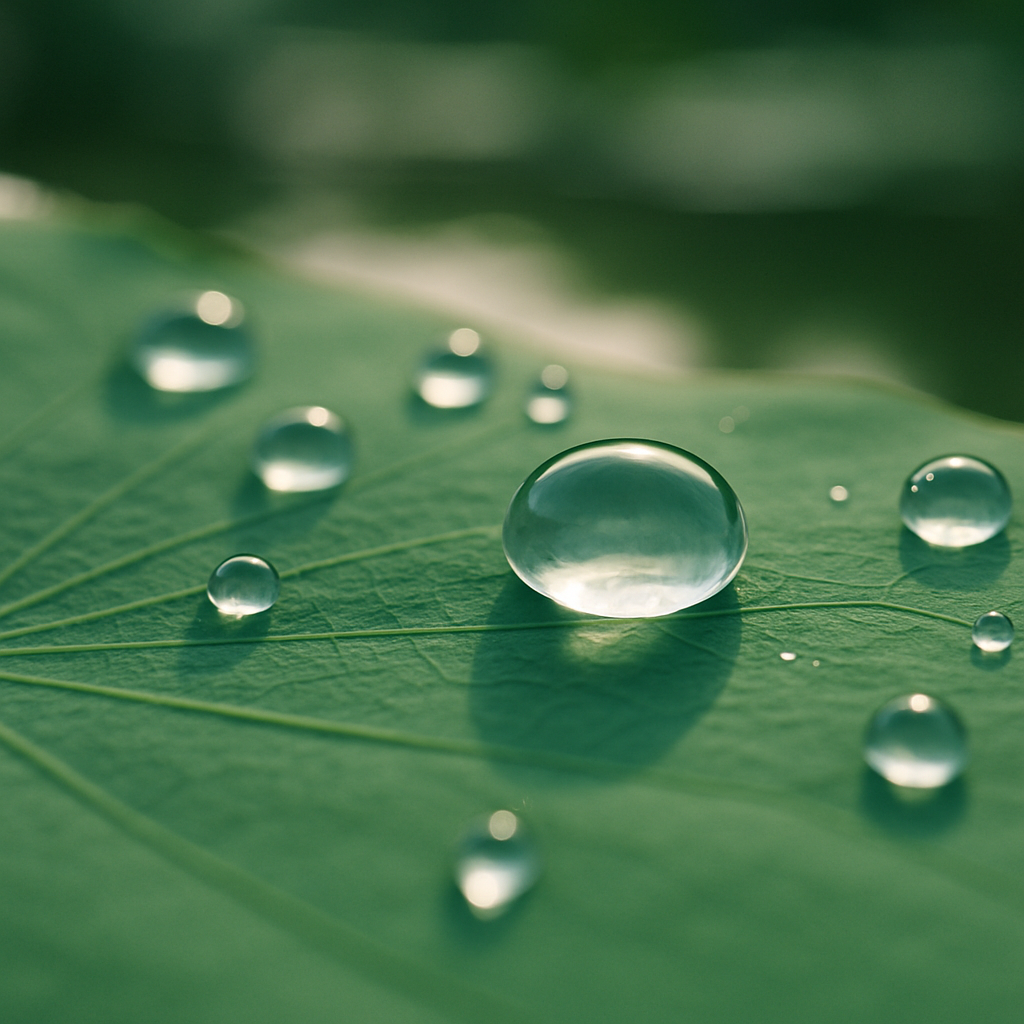
There is a pond not far from where I grew up in the Yorkshire Dales, choked in summer with broad lotus leaves. As a boy I used to prod them with a stick, watching rainwater bead up and roll clean off the surface, carrying every speck of mud and pollen with it. I had no language for what I was watching then. I simply thought it was magic. Decades later, I now know it has a name: the lotus effect. And it is quietly reshaping the way we think about protecting surfaces.
The idea that nature has already solved most of our engineering problems is not a new one. But the field of biomimicry self-healing coatings is gathering real pace, drawing on millions of years of biological trial and error to produce materials that can patch themselves, shed dirt autonomously, and resist corrosion in ways that synthetic chemistry has never quite managed. What follows is a wander through some of the stranger corners of the natural world, and the laboratories inspired by them.
The Lotus Leaf and Why Water Runs Away from It
Nelumbo nucifera, the sacred lotus, grows in murky, sediment-heavy water and yet its leaves emerge spotless every single morning. The reason is architectural rather than chemical. Under a microscope, each leaf surface is covered in microscopic waxy bumps, roughly ten micrometres tall, that create a landscape of tiny peaks and air pockets. Water droplets sit on top of this texture rather than spreading into it. Surface tension does the rest, pulling the droplet into a near-perfect sphere that rolls off at the slightest tilt, collecting particles of dust and debris as it goes.
Researchers at institutions including University College London and the University of Bath have been studying how to replicate this micro-topography on everything from glass to painted metal. The commercial implications are significant. A surface that cleans itself in the rain requires no detergents, no scaffolding, no maintenance crews. For building facades, bridges, and outdoor structures across Britain’s reliably damp climate, that is not a trivial saving.
Mollusk Shells and the Art of Crack Repair
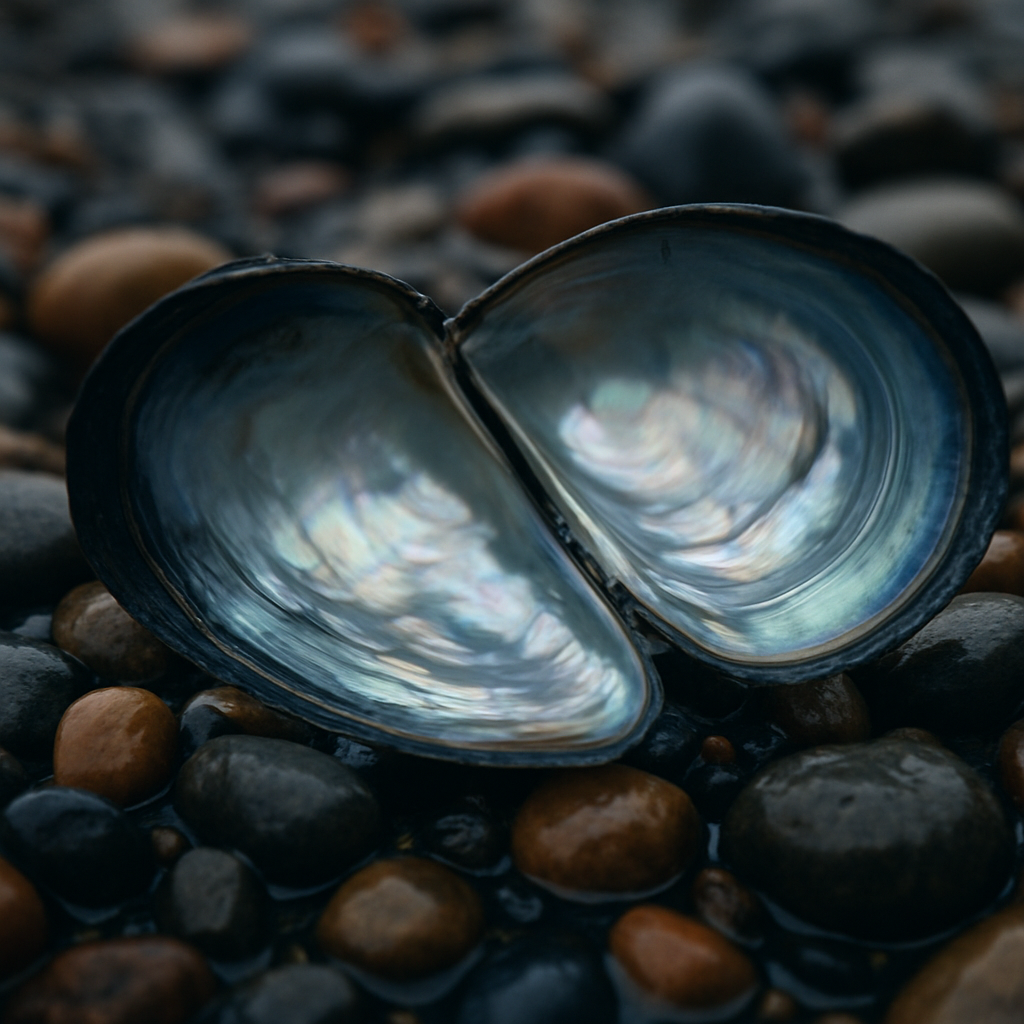
If you have ever walked a shingle beach and cracked open an old mussel shell, you will have noticed the layered interior, iridescent and dense. That structure, called nacre or mother-of-pearl, is one of the toughest biological materials on earth relative to its weight. What makes it remarkable for our purposes is not just its strength but its damage response. When nacre sustains a microcrack, the layered aragonite platelets slide fractionally against one another and redistribute stress rather than propagating the fracture. The crack, in effect, is arrested and healed.
This is one of the central inspirations for biomimicry self-healing coatings research. Materials scientists are engineering polymer coatings with encapsulated healing agents, tiny microcapsules that rupture when a crack passes through them, releasing monomers or catalysts that polymerise and seal the damage. It is, in principle, exactly what nacre does, only translated into resin chemistry. The challenge has always been making it work at ambient temperatures, quickly enough to be practical, and repeatedly rather than as a one-time event.
Skin, Bark, and the Bleed-and-Seal Strategy
Cut yourself, and within minutes a cascade of biological processes begins clotting the wound. Wound a birch tree, and it weeps resin that hardens into a protective seal within hours. These bleed-and-seal mechanisms are everywhere in biology, and they represent a different approach to self-repair from the nacre model. Rather than distributing healing agents uniformly through a material, they localise them at vessels or channels that only rupture under damage.
Vascular self-healing coatings, modelled on this principle, embed hollow fibres throughout a paint or resin layer. When the surface is scratched or struck, the fibres crack and release healing fluid directly into the damaged zone. Research groups at the University of Bristol have been among the UK pioneers in this area, developing fibre-reinforced polymer composites with internal vascular networks capable of multiple healing cycles. The implications for infrastructure, offshore installations, and outdoor industrial coatings in harsh British conditions are considerable.
The appeal of the vascular approach is its repeatability. An encapsulated healing agent is spent once the capsule breaks. A vascular network, if it remains connected to a reservoir, can respond to repeated damage, much as a living organism does. That distinction matters enormously for surfaces expected to last decades in exposed environments.
Sea Cucumbers and Tunable Stiffness
This one surprised even me when I first came across it. Sea cucumbers, those rather unlovely sausage-shaped creatures you occasionally spot in rockpools along the Devon coast, have a remarkable trick. Their body wall changes stiffness almost instantaneously. When threatened, they stiffen dramatically; when calm, they remain soft and pliable. The mechanism involves nanoparticle reinforcement that can be switched on and off by chemical signals.
Translating this into coating science means developing materials whose mechanical properties respond to environmental conditions, softening to absorb impact and stiffening afterwards to resist further damage. It is a more sophisticated ambition than simple crack-sealing, and it remains largely at the research stage, but the direction of travel is clear. Biomimicry self-healing coatings inspired by sea cucumbers are already being explored for flexible electronics and medical device housings, with outdoor protective coatings an obvious next step.
Where the Research Stands in 2026
For all the excitement, it is worth being honest about where we actually are. Most biomimicry self-healing coatings that have reached commercial production are still fairly rudimentary, offering scratch resistance and minor surface repair rather than structural self-healing. Automotive clear coats with limited self-healing properties have been on the market for some years. Truly vascular or multi-cycle healing coatings for large-scale outdoor use remain predominantly in laboratory settings.
The UK has invested meaningfully in this space. The Engineering and Physical Sciences Research Council (EPSRC) has funded several collaborative programmes between British universities and industry partners, and the Innovate UK programme has supported commercial translation of bio-inspired materials research. Progress is genuine, if not yet dramatic.
Why It Matters for the Natural World, Not Just Buildings
There is an argument that self-healing coatings are not merely convenient but genuinely important from an environmental standpoint. Traditional protective coatings require reapplication over time, consuming raw materials, generating solvent emissions, and producing waste. A coating that repairs itself extends service life and reduces the frequency of maintenance. Over the lifetime of a bridge, a harbour structure, or a rural building, that reduction adds up substantially.
There is also something philosophically satisfying about borrowing solutions from the organisms we have spent so long disrupting. The lotus plant, the mussel, the birch tree: they did not need a laboratory to develop these strategies. They simply had time. Understanding how they did it, and translating that understanding into materials that do less harm, feels like the right direction to be moving in. I have always thought the outdoors teaches us more than we give it credit for.
Frequently Asked Questions
What are biomimicry self-healing coatings?
Biomimicry self-healing coatings are protective surface materials engineered by mimicking natural repair mechanisms found in organisms like lotus plants, mollusks, and trees. They can seal cracks, repel contamination, or restore damaged layers without human intervention. Research is actively developing these from laboratory discoveries into practical industrial and architectural applications.
How does the lotus effect work in protective coatings?
The lotus effect replicates the micro-textured, waxy surface of lotus leaves, which causes water droplets to bead up and roll off, taking dirt and debris with them. When applied to building facades or outdoor structures, coatings engineered with this surface topology stay cleaner for longer and reduce maintenance requirements significantly.
Are self-healing coatings available commercially in the UK?
Some commercial self-healing coatings already exist, primarily in automotive clear coats that offer minor scratch repair under heat. Fully vascular or multi-cycle self-healing coatings for large outdoor or industrial applications are still predominantly at the research and development stage in the UK, with Innovate UK funding supporting commercial translation.
How do vascular self-healing coatings differ from microcapsule coatings?
Microcapsule coatings contain tiny capsules filled with healing agents that rupture once when a crack forms, providing a single healing event. Vascular coatings embed hollow fibre networks connected to a healing fluid reservoir, allowing the surface to repair itself multiple times in different locations, more closely mirroring the way living tissue heals.
Are biomimicry coatings better for the environment than conventional coatings?
They have significant potential environmental advantages because longer-lasting surfaces need less frequent recoating, reducing raw material use, solvent emissions, and maintenance waste over a structure’s lifetime. That said, the manufacturing processes for bio-inspired materials must also be assessed for environmental impact, and this remains an active area of research and scrutiny.