
Long before synthetic paints and polymer sealants arrived on the scene, builders across northern Europe had already solved the problem of how to protect their structures from the battering of wind, rain, frost and salt air. The answer was lime. Simple, brilliant, and drawn directly from the earth itself. The limewash coating history stretches back thousands of years, threading through Norse settlements, medieval monasteries and rural farmsteads with a quiet persistence that speaks volumes about just how effective the stuff really is.
There is something deeply satisfying about a material that has outlasted empires. Lime was being used as a protective and decorative coating in Scandinavia, Britain and across continental Europe well before the first Viking longship was ever laid down. The Romans knew it. The Egyptians knew it. But it was perhaps the Norse and medieval builders of northern Europe who refined its application into a genuine craft, one passed down through generations like a spoken language.
What Is Limewash and How Was It Made?
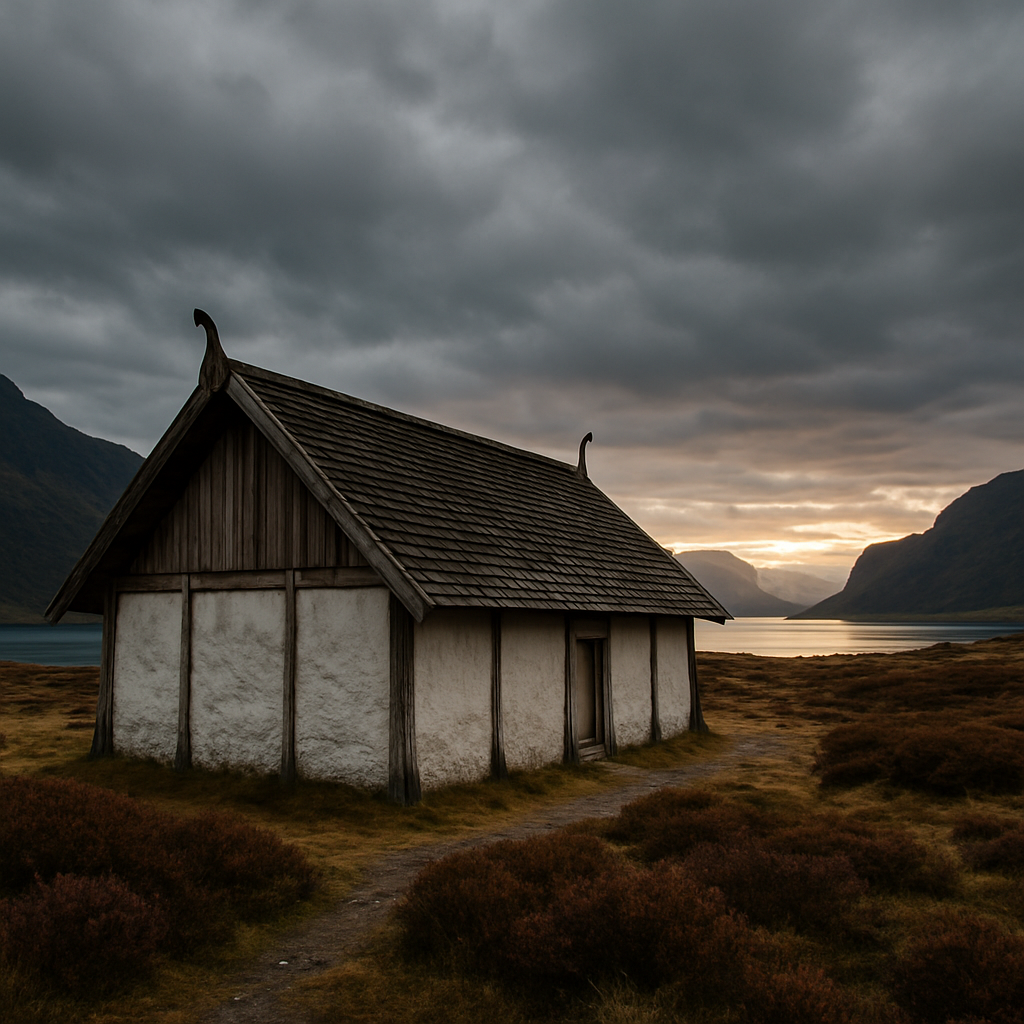
Limewash is made by burning limestone at high temperatures to produce quicklime, which is then slaked with water to create lime putty. This putty, diluted to a milky consistency, becomes limewash. When applied to a porous surface such as stone, timber, daub or brick, it soaks in, carbonates as it dries, and bonds chemically with the substrate beneath. It does not simply sit on the surface like a modern paint film. It becomes part of the wall itself.
For Norse communities working with timber longhouses, this was invaluable. The structures were exposed to brutal coastal climates, and limewash offered a degree of protection against moisture penetration. More importantly, lime is naturally alkaline, which makes it hostile to bacteria, mould and the kinds of fungal growth that would otherwise slowly consume a wooden frame from within. Viking builders were not applying limewash merely for appearance, though the bright white finish certainly had its uses as a marker of status and prosperity. They were using it as a working tool against the elements.
Limewash Coating History in Medieval Britain and Europe
By the medieval period, limewash had become so commonplace across Britain that its use was taken entirely for granted. Churches, barns, cottages and castle interiors were routinely whitewashed, often annually. The great cathedrals of England, which we now imagine as bare stone, were frequently painted inside and out. Medieval limewash was sometimes coloured with earth pigments, ochres and iron oxides, producing warm tawny or reddish hues that gave settlements a far more vivid appearance than the grey stone we associate with the period today.
In Scandinavia, the tradition ran particularly deep. Swedish and Norwegian farmhouses, known as rødt hus in their painted red variants, used iron-rich pigments mixed into lime slurry to produce the distinctive deep red that still colours rural Scandinavian landscapes. The protective chemistry was the same; the aesthetic simply adapted to local taste and available materials. That interplay between protection and beauty is one of the most enduring themes in the entire history of building.
Why Limewash Was Abandoned and Why That Was a Mistake
The arrival of industrial paints in the nineteenth and twentieth centuries pushed limewash into the shadows. Synthetic products were faster to apply, more consistent in colour and required less skill. For a period obsessed with modernity and efficiency, lime seemed hopelessly old-fashioned. Buildings that had been lime-rendered for centuries were sealed under impermeable modern coatings, and many suffered as a result. Old stone and brick walls need to breathe, to absorb moisture and release it slowly. Trap that moisture behind a non-porous coating and you store up problems: spalling stone, rising damp, salt crystallisation and structural decay.
The irony is painful when you understand it. The very material that had protected buildings for a thousand years was replaced by something that, in many cases, actively accelerated their deterioration. Conservation architects and heritage building specialists began sounding the alarm from the 1970s onwards, and gradually the tide began to turn.
The Sustainable Revival of Limewash Today
The renewed interest in limewash coating history is not merely academic nostalgia. It is being driven by very practical concerns about sustainability, breathability and the environmental cost of construction. Lime is produced from abundant natural limestone, requires significantly less energy to manufacture than Portland cement, and at the end of a building’s life it can be returned to the soil without harm. It sequesters carbon dioxide as it cures, partially offsetting the emissions from its production. For anyone thinking seriously about the ecological footprint of their home or building project, these are compelling facts.
There is also the matter of beauty. Limewash does not produce a flat, uniform finish. It builds depth with each coat, catching light differently at different times of day, softening at the edges and developing a gentle variation in tone that no synthetic product has ever convincingly replicated. It ages gracefully, fading and patinating rather than cracking and peeling. In a world increasingly saturated with surfaces that look artificial, that honest, living quality carries a real weight.
How to Apply Limewash Properly
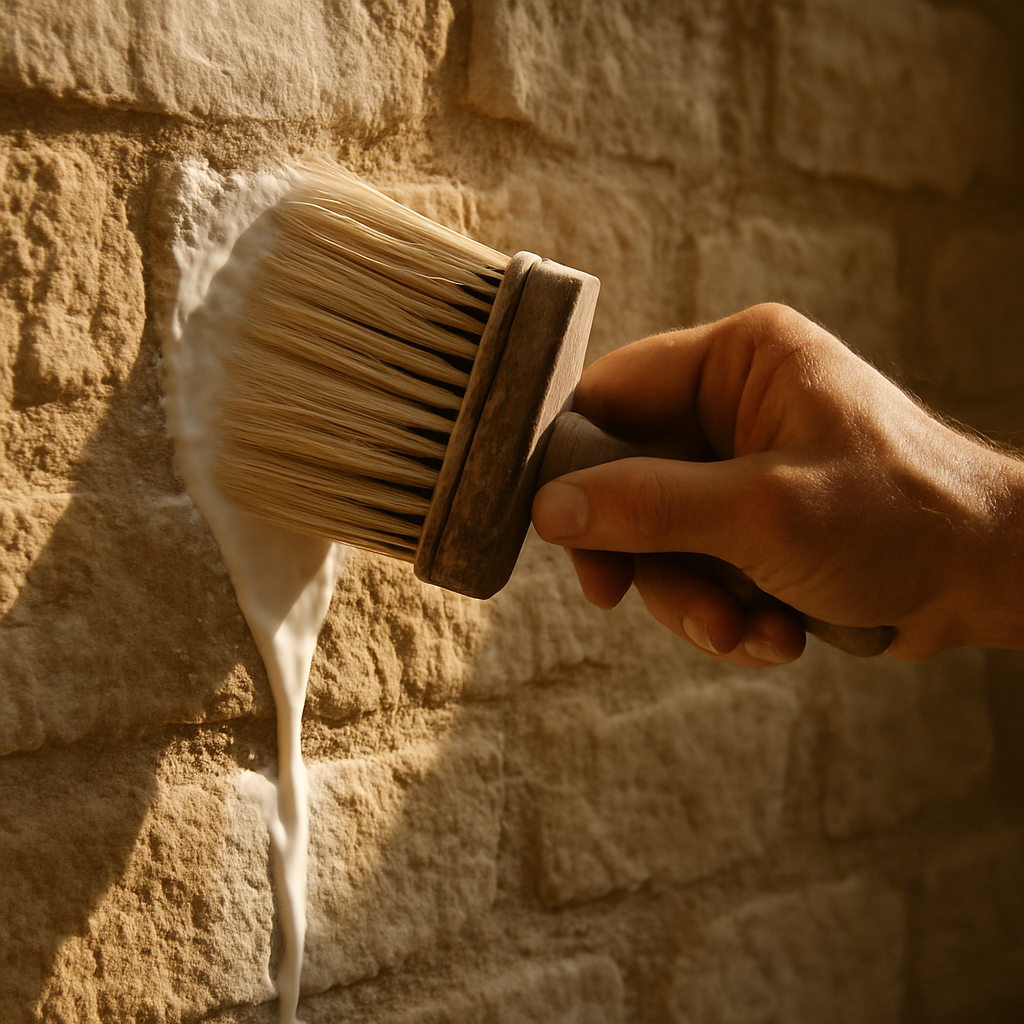
Applying limewash is not difficult, but it does require patience and an understanding of how the material behaves. The surface must be porous and clean. Limewash is typically applied with a large, soft brush in thin, even strokes, working quickly and keeping a wet edge to avoid lap marks. It should be applied in several thin coats rather than one heavy one, allowing each layer to carbonate before the next is added. Damp surfaces actually help the process, as the lime needs moisture to carbonate correctly. Applying it in direct summer sun or during frost is best avoided.
The long history of limewash is a reminder that the most durable solutions are often the simplest. Drawn from limestone, mixed with water, brushed onto a wall and left to bond with the air. The Norse knew it, the medieval mason knew it, and a growing number of builders and homeowners are rediscovering it today. Sometimes the oldest answer really is the best one.
Frequently Asked Questions
What is limewash coating and how does it differ from regular paint?
Limewash is a coating made from slaked lime mixed with water, which bonds chemically with porous surfaces as it dries and carbonates. Unlike modern paints, which sit on top of a surface as a film, limewash penetrates the substrate and allows walls to breathe, making it far better suited to historic masonry, stone and render.
How long has limewash been used as a building coating?
Limewash coating history extends back thousands of years, with documented use in ancient Egypt, Rome, and across medieval and Norse Europe. In Britain, it was the standard protective coating for churches, barns and cottages for centuries, often reapplied annually as a matter of routine maintenance.
Is limewash environmentally friendly?
Yes, limewash is considered one of the most environmentally sustainable building coatings available. It is made from natural limestone, requires lower processing energy than cement-based products, sequesters carbon dioxide as it cures, and breaks down harmlessly at the end of its life without releasing toxic residues into the environment.
Can limewash be used on modern buildings or is it only for old properties?
Limewash works best on porous surfaces such as natural stone, traditional brick, lime render and earth-based substrates, which tend to be more common in older buildings. It can be used on some modern surfaces if they are sufficiently porous, but it is not suitable for non-porous surfaces such as glass, gloss paint or sealed renders without specialist preparation.
How many coats of limewash do you need and how long does it last?
Most applications require between two and four thin coats, with each coat allowed to partially dry before the next is applied. Well-applied limewash on a suitable surface can last many years before requiring attention, and because it fades and weathers gradually rather than cracking or peeling, maintenance typically involves simply adding a fresh coat rather than stripping and starting again.