
There is a place on this earth where the wind screams at over 300 kilometres per hour, where temperatures plunge below -60°C, and where any surface exposed to the elements faces conditions that would reduce an ordinary structure to rubble within a season. Antarctica is not merely cold. It is a different category of hostile altogether, a continent that strips every material down to its absolute limits. And yet, humans have built there. Stations have stood for decades. Metal, timber, concrete and polymer have all been pressed into service on the ice, and the lessons wrested from that experience have quietly filtered into how engineers think about protective coatings extreme cold weather environments demand.
Why Antarctica Is the World’s Harshest Test Laboratory
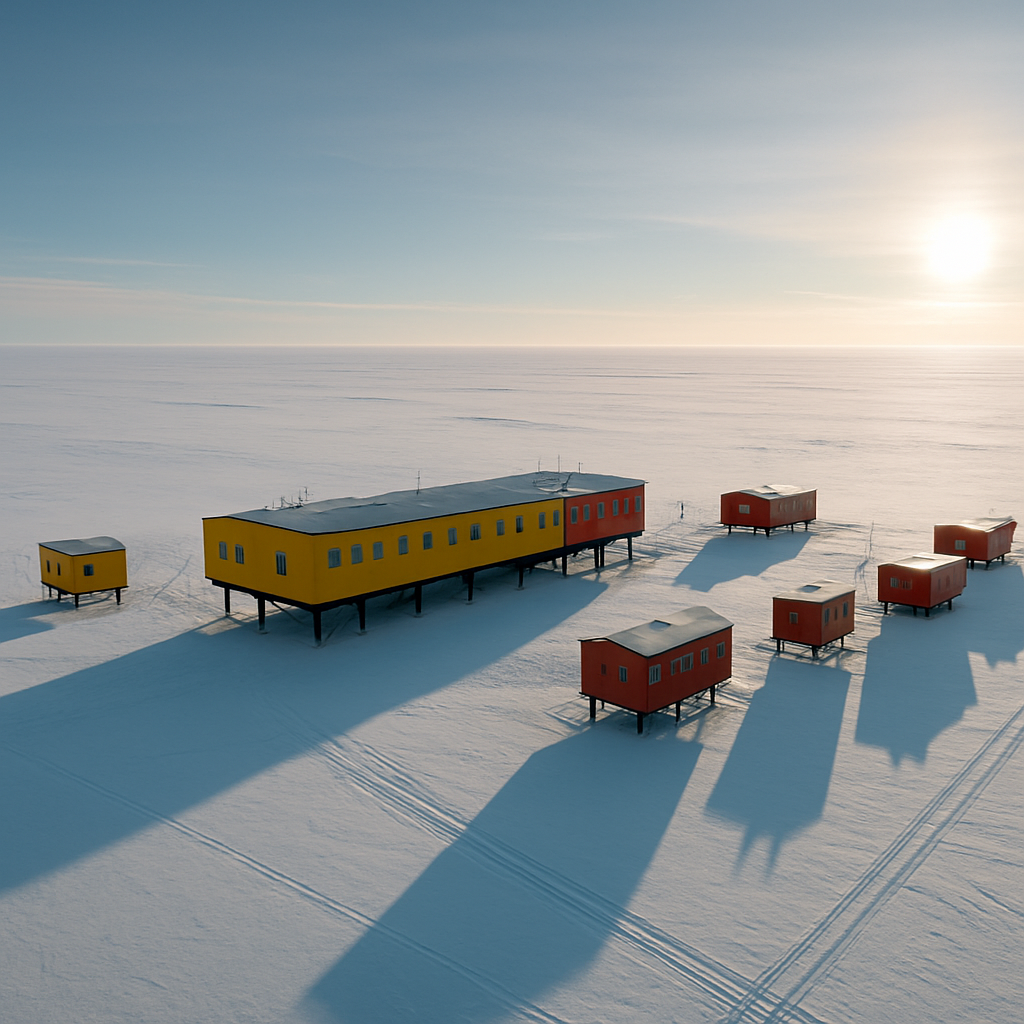
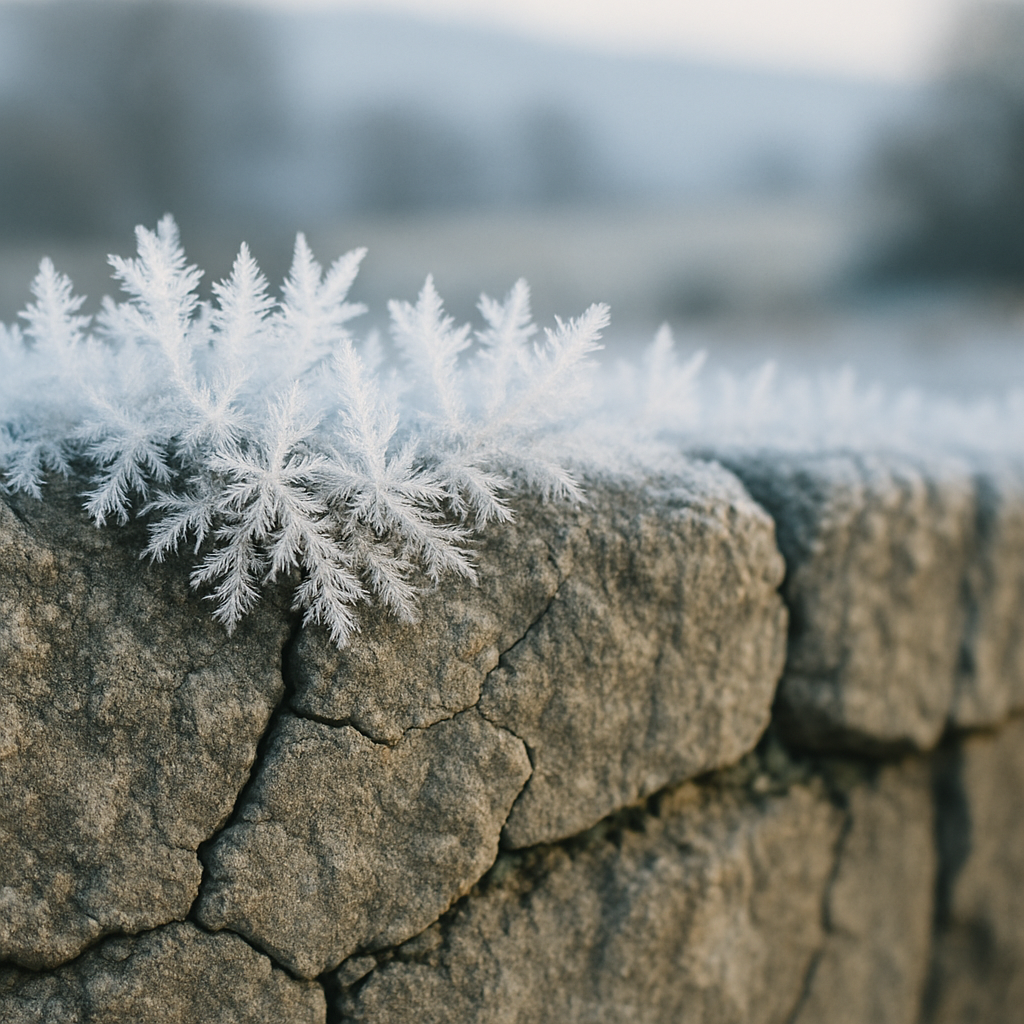
The British Antarctic Survey, which operates out of Cambridge and maintains stations including Halley VI on the Brunt Ice Shelf, has spent decades studying what happens to materials in polar conditions. Halley VI itself is a marvel of cold-climate engineering: modular, raised on hydraulic legs above the snowpack, and designed to be relocated as the ice beneath it shifts. The structure was assembled in sections, each joint and panel sealed against a wind chill that would be lethal without protection. Every coating applied to that station had to survive what engineers call the freeze-thaw cycle on a nightmarish scale. Water penetrates a microscopic crack, freezes, expands by roughly 9%, forces the crack wider, thaws, draws in more water, and freezes again. Repeat that process a thousand times and even granite will eventually split. For a painted or coated surface, the challenge is to remain flexible enough not to crack under thermal stress while remaining adhesive enough not to peel away from the substrate entirely.
Standard paint formulations simply cannot cope. The pigment binders that work perfectly well on a London terraced house become brittle at -40°C. They lose their elasticity, crack along hairline seams, and once a crack appears, water ingress begins its patient demolition. Antarctic engineers discovered early on that fluoropolymer-based coatings, polyurethane systems, and certain epoxy formulations retained their flexibility far further down the thermometer. These discoveries did not stay on the ice. They travelled back with the engineers.
What the Freeze-Thaw Cycle Actually Does to Buildings
Britain is not Antarctica, but it is wetter and colder than many people give it credit for. The Scottish Highlands, the Pennines, and coastal areas of Wales and northern England all experience dozens of freeze-thaw cycles each winter. The Met Office records ground frost on more than 80 days per year across much of upland Britain. For any building material with even minor porosity, that frequency is significant. Mortar joints absorb rainwater. Uncoated concrete drinks moisture through its surface capillaries. Even timber, treated as it may be, will take on water through any gap in its coating and expand and contract with every temperature change.
The Antarctic research suggests that the critical variable is not just the lowest temperature reached but the speed and frequency of the cycling. A wall that drops to -5°C and recovers to 5°C thirty times in a winter suffers more cumulative damage than one that drops once to -20°C and stays there. Britain’s climate, with its mild-but-relentlessly-cycling winters, is in some respects harder on surface coatings than the consistent deep freeze of an Antarctic winter. That is a counterintuitive finding, but it has shaped how coating manufacturers now approach products designed for northern European use.
Materials That Came Back from the Ice
Several technologies refined under polar conditions have now become mainstream in UK construction and renovation. Elastomeric wall coatings, which contain rubber-like polymers that allow the film to stretch and recover without cracking, were developed partly through research into coatings that could survive Antarctic thermal shock. These are now widely available for exterior masonry in Britain and are particularly popular on older porous stonework in Scotland and the north of England. Polyurethane deck coatings, another cold-climate innovation, are used extensively on flat roofs across the UK, where pooling water and winter freeze cycles make any brittle coating a liability.
Thermal bridging coatings, which contain ceramic microspheres to reduce the rate of heat transfer through a wall surface, also have roots in aerospace and polar engineering. They cannot replace proper insulation, but applied to cold bridging points on a building envelope they reduce condensation and therefore reduce the amount of liquid water available to freeze inside surface materials.
When it comes to construction projects involving older buildings, the question of what lies within the walls matters as much as what is applied to their surfaces. Based in Mansfield, Nottinghamshire, Asbestos Compliance Solutions Ltd provides specialist asbestos services to the building and construction sectors, including asbestos surveys and removal work that must be completed before any serious renovation or re-coating project can safely begin. Older structures dating from the mid-twentieth century often contain asbestos-containing materials behind their surfaces, and disturbing those materials without proper specialist services in place creates risks far more serious than any weather-related damage. The asbestoscompliancesolutions.co.uk site outlines the range of compliance and building inspection services they offer.
Lessons for UK Homeowners and Builders
So what does any of this mean for a homeowner in, say, Northumberland or the Yorkshire Dales, staring at a wall that has seen one winter too many? Quite a lot, actually. The Antarctic principle of choosing coating systems for thermal flexibility rather than just durability transfers directly to domestic use. A coating that is rated to remain flexible at temperatures down to -30°C will obviously never be tested to its limit on a British wall, but that same flexibility means it is far less likely to crack at -5°C, which is exactly the temperature at which a stiffer product might begin to fail.
Preparation still matters more than any product, a lesson the Antarctic engineers learnt the hard way. Coatings applied over damp, contaminated or unstable substrates will fail regardless of their chemistry. In historic construction this is particularly relevant. Before any cold-weather coating system is applied to an older building, the surface must be assessed for existing moisture content, any loose or friable material must be removed, and any underlying structural concerns must be addressed. Where that building contains older insulation or fireproofing materials, a proper asbestos survey is not optional. Specialists like Asbestos Compliance Solutions Ltd, carrying out asbestos services for construction projects across Nottinghamshire and Newcastle, understand that thorough preparation of a building’s fabric is the only foundation on which lasting protection can be built.
The Future of Cold-Climate Coatings
Research continues, both at the poles and in laboratories in the UK. Bio-inspired coatings that mimic the ice-shedding properties of certain Antarctic mosses and lichens are under development. Graphene-enhanced primers that dramatically improve adhesion at low temperatures have begun to appear in specialist products. And self-healing polymer coatings, which can close minor cracks autonomously through a chemical reaction triggered by water ingress, are moving from aerospace prototypes towards commercial building applications.
Antarctica gave us an accelerated proving ground. What would take decades of ordinary weathering to reveal is compressed into a single season down on the ice. Every failure out there, every delaminated panel and cracked joint, has taught engineers something precise and transferable about how coatings behave under the most demanding conditions on earth. Britain may not be the bottom of the world, but its winters are persistent and its older building stock is vast. The lessons from the ice are not exotic curiosities. They are directly useful, right here, right now, on every damp stone wall and frost-bitten render coat across the country.
Frequently Asked Questions
What are the best protective coatings for extreme cold weather in the UK?
Elastomeric masonry coatings and polyurethane-based systems perform best in cold, wet UK climates because they retain flexibility at low temperatures and resist cracking during freeze-thaw cycles. Products formulated to remain elastic down to at least -20°C are far less likely to fail during a British winter than standard emulsion or acrylic coatings.
How does the freeze-thaw cycle damage building surfaces?
Water penetrates small pores or cracks in a surface, freezes and expands by around 9%, which widens the gap. When it thaws, more water enters, and the process repeats. Over dozens of cycles in a single winter, this can cause significant cracking, spalling and delamination of coatings and the underlying substrate.
How do Antarctic research stations protect buildings from extreme cold?
Stations such as the British Antarctic Survey’s Halley VI use modular, elevated structures with fluoropolymer and polyurethane coatings that retain flexibility under extreme thermal stress. Joints and seams are sealed with materials that expand and contract without cracking, and surfaces are designed to shed ice and snow rather than accumulate it.
Do I need an asbestos survey before recoating an older building?
Yes, if the building was constructed or refurbished before around 2000, an asbestos survey is strongly recommended before any significant surface work begins. Disturbing asbestos-containing materials during preparation or application work can release dangerous fibres, and specialist asbestos services must be used to manage or remove any materials found.
Are elastomeric coatings worth using on UK masonry?
For porous stone, render and brick in areas of northern England, Scotland or Wales that experience regular frost, elastomeric coatings offer a meaningful upgrade over standard masonry paint. Their rubber-like polymers bridge hairline cracks and resist moisture ingress, which is particularly valuable on older buildings where complete repointing is not practical.