
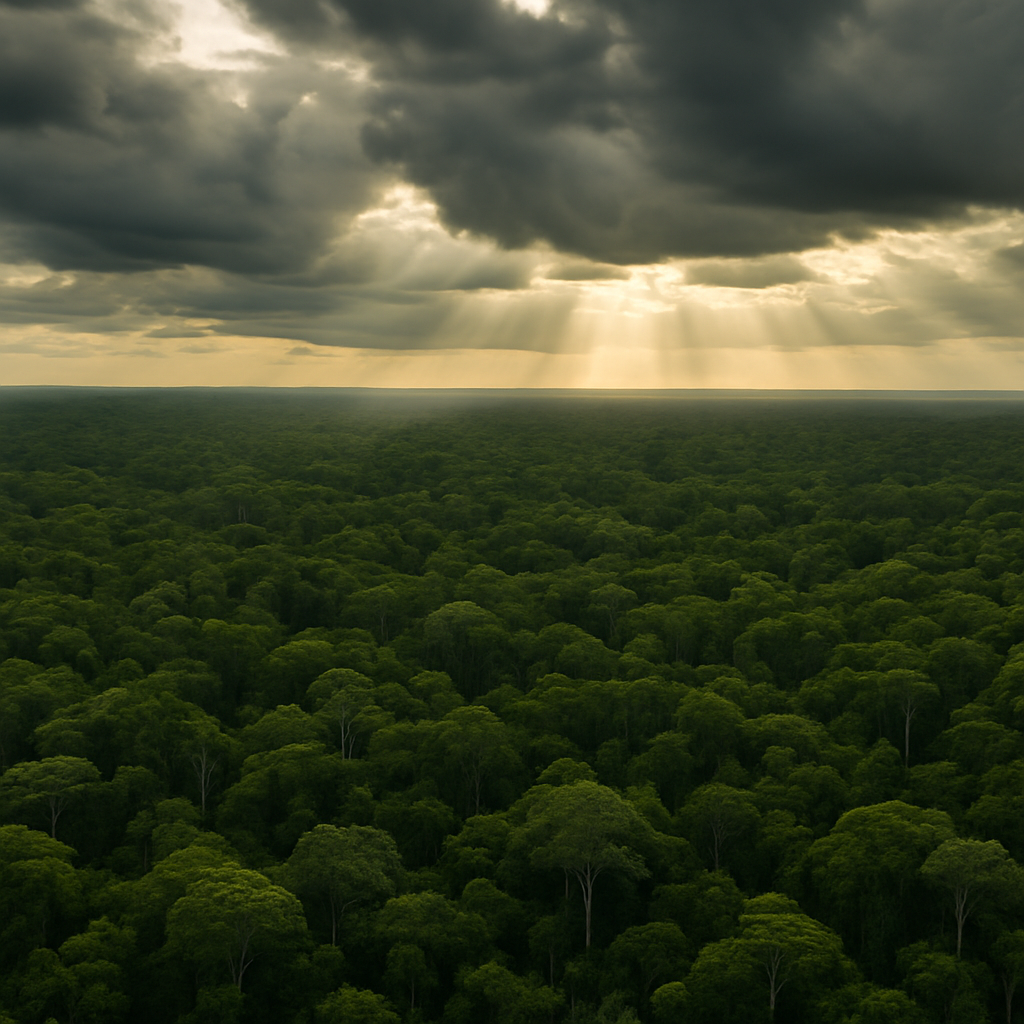
There is a place on this earth that has been quietly solving problems that human chemists have spent centuries wrestling with. It covers roughly 5.5 million square kilometres, receives somewhere between 2,000 and 3,000 millimetres of rain every year, and it does not have a single patent to its name. The Amazon rainforest has been formulating natural eco-friendly coatings since long before anyone thought to write anything down. Not metaphorically. Literally. The biochemical processes happening in that vast green cathedral of biodiversity have produced waterproofing agents, UV filters, antimicrobial resins, and structural sealants that modern materials scientists are only beginning to properly understand.
How Trees Protect Themselves (and What We Can Learn)
Walk through any stretch of Amazonian forest and you are surrounded by surfaces under siege. Humidity, insects, fungi, ultraviolet radiation, and relentless rain all conspire to degrade organic matter. The trees have had millions of years to respond, and their responses are extraordinary. Tannins are perhaps the most well-documented example. These polyphenolic compounds accumulate in bark, heartwood, and leaves, and they function in a way that should sound familiar to anyone who has ever treated a wooden fence. They bind to proteins, form insoluble complexes, and create a tough, impermeable barrier that repels fungal attack and slows moisture ingress dramatically.
Quebracho, a tree native to South America, produces bark tannin concentrations so high that its extract has been used commercially in leather tanning for well over a century. But the broader principle, that plant-derived tannins make genuinely effective wood preservatives, is now being revisited by researchers developing natural eco-friendly coatings as alternatives to synthetic biocides. Scots pine treated with quebracho tannin solutions showed measurable resistance to brown rot fungi in trials published by forest product researchers, and the results are difficult to argue with. The tree had already done the hard work of working out the formula.
The Curious Case of Amazonian Seed Oils
Tucuma butter, andiroba oil, copaiba resin. These names might sound like items from a boutique health food shop on a market street somewhere, but they represent a serious area of materials research. Copaiba oleoresin in particular is remarkable. Tapped from the Copaifera tree in much the same way as pine resin is harvested in Scandinavia and southern Europe, copaiba has been used by indigenous communities across Amazonia for generations, applied to skin, wood, and fibres as a protective film. When researchers began analysing it properly, they found a complex mixture of sesquiterpenes and diterpene acids that polymerise when exposed to air and light, forming a hardened, flexible coating. It is, in effect, a natural varnish that cures itself.
Andiroba oil, pressed from the seeds of the Carapa guianensis tree, contains a high concentration of limonoids, compounds with well-documented insect-repellent and antifungal properties. Applied to timber or fabric, it acts as both a surface treatment and a biological deterrent. The tree produces it to protect its own seeds from predation, and that protective instinct translates almost directly into a practical coating material. I find it genuinely humbling, the idea that what looks like a simple jungle seed is housing a more sophisticated defence chemistry than anything in a standard hardware shop.
UV Protection and the Understory Paradox
Here is something that took me a while to properly appreciate. The forest floor of the Amazon receives almost no direct sunlight. The canopy above captures something like 99 per cent of incoming radiation. Yet the plants living down in that understory have evolved some of the most potent UV-absorbing compounds found anywhere in nature. The reason is that when gaps in the canopy open, either through a falling tree or seasonal changes, these plants can be suddenly flooded with intense tropical sunlight. Their response has been to develop flavonoids and hydroxycinnamic acids that act as living sunscreen, sitting in the outer cell layers of leaves and dissipating UV energy as heat before it can damage cellular machinery.
Cosmetics companies have been borrowing from this chemistry for years, incorporating plant-derived UV filters into sun protection products. But the application to surface coatings is less widely appreciated. The challenge with most architectural coatings, the finishes applied to exterior timber, render, and masonry, is that UV degradation is one of the primary causes of failure. Synthetic UV stabilisers work, but they are often derived from petroleum chemistry and can leach into soil and watercourses over time. Natural eco-friendly coatings built around plant-derived UV filters represent a genuinely appealing alternative, particularly as environmental regulation tightens across the UK under guidance from bodies such as the Department for Environment, Food and Rural Affairs (DEFRA).
Latex: The Original Liquid Plastic
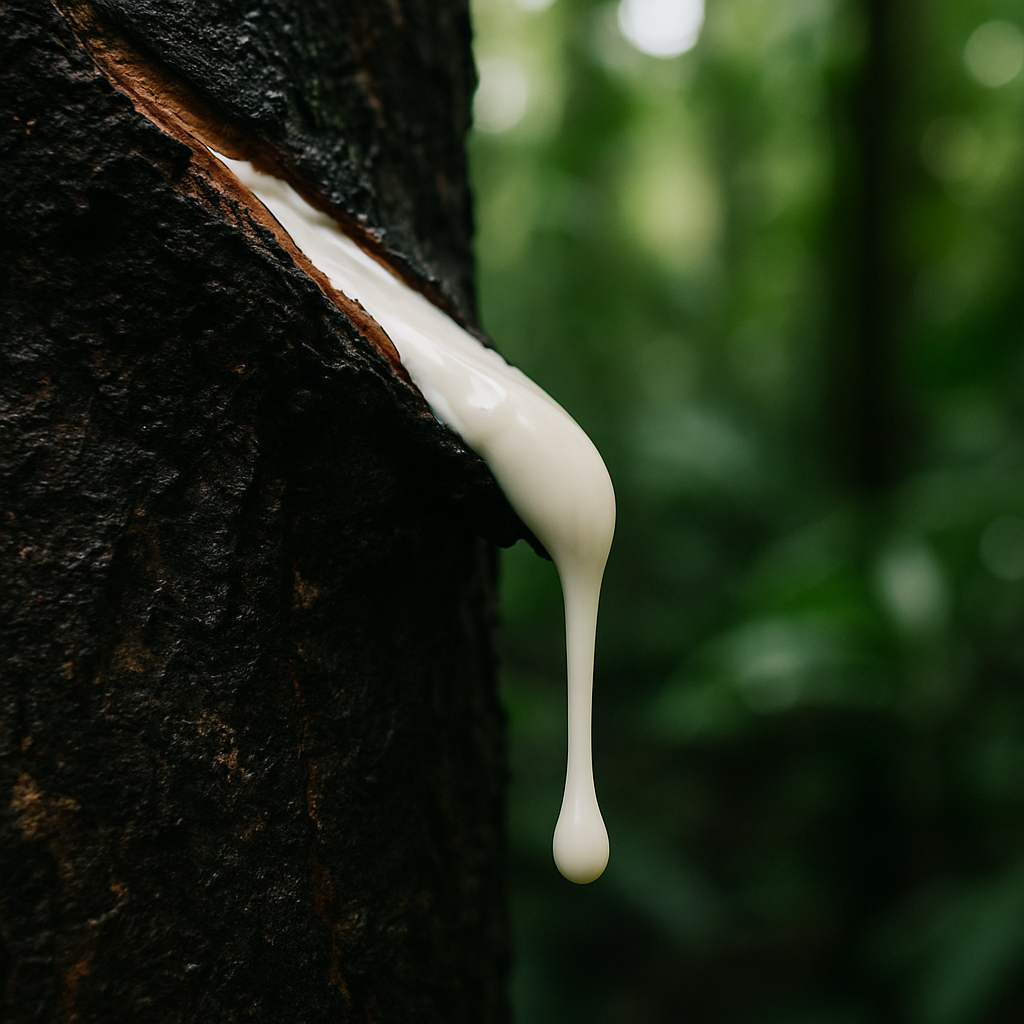
It is easy to forget that the white, milky latex we associate with Hevea brasiliensis, the rubber tree native to the Amazon basin, is essentially the tree’s wound-sealing system. When the bark is cut, the latex flows out and begins to coagulate, forming a rubbery plug that protects the damaged tissue from infection and moisture loss. What the tree has invented, through sheer evolutionary pressure, is a polymer-forming liquid coating with remarkable elasticity and adhesion. Natural rubber latex was the foundation of waterproofing technologies that transformed everything from footwear to roofing felt in the nineteenth century, and its fundamental chemistry still informs the development of flexible natural eco-friendly coatings today.
Researchers at several UK universities have been looking at modified natural rubber and other plant-derived latex compounds as binders for low-VOC paints. The goal is a coating film that performs comparably to acrylic latex in terms of durability and adhesion, but with a significantly reduced environmental footprint across the full life cycle. It is slow, painstaking work, as it always is when you are trying to persuade an ancient biological system to behave exactly as an industrial process requires. But the direction of travel is clear.
What This Means for the Future of Surface Protection
The Amazon is not a curiosity. It is a working library of materials science, assembled over timescales that make human industrial history look like a footnote. Every compound that a tree, fungus, or insect has evolved to protect a surface from moisture, UV, abrasion, or microbial attack represents a potential lead for the coatings industry. The challenge is harvesting that knowledge responsibly, which means working with indigenous communities who hold traditional knowledge, ensuring supply chains do not contribute to deforestation, and developing extraction or synthesis methods that are themselves genuinely sustainable.
The interest in natural eco-friendly coatings is not simply commercial. It reflects a broader recognition, one that I think is long overdue, that the natural world has already solved most of the problems we are trying to solve. We are not inventing new chemistry so much as rediscovering very old chemistry and finding ways to apply it at industrial scale. The Amazon has been running that experiment for roughly 55 million years. We would be foolish not to pay attention.
Frequently Asked Questions
What are natural eco-friendly coatings made from?
Natural eco-friendly coatings are typically derived from plant-based compounds such as tannins, seed oils, resins, and latex. These materials are processed to create protective films that can waterproof, seal, or preserve surfaces without relying heavily on synthetic petrochemical ingredients.
Are natural eco-friendly coatings as durable as conventional paints?
Durability varies depending on the formulation and application. Some plant-derived coatings, such as linseed oil-based finishes, have a proven long track record on timber. Others are still being refined to match the performance of modern synthetic coatings in high-wear or high-UV environments.
Can tannins from tree bark genuinely protect wood?
Yes. Tannins bind to wood proteins and form a tough barrier that resists fungal attack and slows moisture penetration. Bark tannin extracts such as quebracho have been used in preservation and tanning applications commercially for well over a century, and research continues into their use as natural timber treatments.
Why is the Amazon rainforest important for coatings research?
The Amazon contains extraordinary biodiversity, and many of its plant species have evolved potent protective compounds, including UV filters, antifungal resins, and waterproofing oils, over millions of years. These compounds provide valuable leads for developing sustainable surface protection products.
Are natural plant-based coatings better for the environment?
Generally, yes, particularly in terms of VOC emissions and biodegradability. However, the full environmental impact depends on how raw materials are sourced and processed. Responsibly sourced plant-derived coatings typically have a lower environmental footprint than conventional synthetic alternatives.